How Long to Rest Between Sets
Updated November 16, 2026 · 8 minute read · Free PDF
Rest too little and the next set falls apart. Rest too long and a 30 minute workout turns into an hour. The right rest depends on two things: what you are training for, and how hard the last set was. Here is a chart for both, what the research says, and rest times for push-ups, pull-ups, squats and kettlebell swings.
The short answer
Rest 2 to 5 minutes between heavy sets when you train for strength, and 1.5 to 3 minutes between hard sets for muscle growth. For endurance, keep rest short: under a minute after sets of 10 to 15 reps, 1 to 2 minutes after longer ones. New to training? 1 to 2 minutes works for most sets. Whatever the goal, the closer a set took you to your limit, the longer the rest it needs.
Rest between sets chart
| Strength and power | 2 to 5 minutes. Heavy sets of 1 to 6 reps, explosive work like jumps or hard kettlebell swings, and any set close to your max. The longer you rest, the more you can do in the next set. |
|---|---|
| Muscle growth | 1.5 to 3 minutes. Sets of about 6 to 15 reps that end close to failure. Take the longer end for big exercises like pull-ups. Beginners do well with 1 to 2 minutes. |
| Endurance | 30 seconds to 2 minutes. Under a minute after sets of 10 to 15 reps, 1 to 2 minutes after long sets of 15 to 20 or more. Starting again before you have fully recovered is part of the training. |
| Easy practice sets | 30 to 60 seconds. Sets of about half your max that stop far from failure, like 100 push-ups a day in sets of 5. They recover fast. |
| Intervals and circuits | Set by the clock. A Tabata rests 10 seconds, an EMOM rests for whatever is left of the minute, and a circuit rests only as long as it takes to reach the next exercise. See HIIT intervals for work to rest ratios. |
These are rests between two sets of the same exercise. Moving on to a different exercise is covered further down.
What the research says
Rest is one of the best studied parts of strength training. Four findings matter most:
- Short rest costs reps. In one study, 20 men with about two years of lifting did 4 sets of as many squats as they could with a heavy weight. With 1 minute of rest, their fourth set was down to about 2 reps, from almost 8 in the first. With 5 minutes of rest, the fourth set was still close to 5 reps, and the four sets added up to about 25 reps instead of 18 (Rahimi, 2005). The American College of Sports Medicine sees the same pattern across studies: 3 to 5 minutes of rest keeps your reps up better than 30 seconds to 2 minutes.
- Longer rest builds more strength once you are trained. A review of 23 studies with 491 people found good strength gains even with rests under a minute. For people who already train, rests over 2 minutes worked best. For beginners, 1 to 2 minutes was enough (Grgic and colleagues, 2018).
- For muscle growth, more than a minute helps, but past 90 seconds adds little. A 2024 analysis of 9 studies found a small benefit to resting longer than 60 seconds, perhaps because shorter rests mean fewer reps in the sets that follow, and no clear difference once rests passed 90 seconds (Singer and colleagues, 2024). In an 8 week study of 21 trained men, 3 minutes of rest beat 1 minute for both strength and thigh muscle (Schoenfeld and colleagues, 2016).
- Endurance training keeps rest short on purpose. The American College of Sports Medicine recommends short rests for muscular endurance: under a minute after sets of 10 to 15 reps, and 1 to 2 minutes after sets of 15 to 20 or more.
Many charts online still give 30 to 90 seconds for muscle growth. Much of that advice came from what happens within a single workout, such as the short rise in hormones after short rests. Studies that measured muscle over weeks favor resting longer than a minute.
Free PDF. The rest chart, the bodyweight rest times below and the research in four lines are on page 2, ready to print and keep with your gear. Download it
Rest between sets for push-ups, pull-ups, squats and swings
Bodyweight exercises have no weight on a bar to tell you how heavy a set was, so go by your max instead: the most reps you can do in one set. Eight push-ups is an easy set if your max is 30, and an all-out set if your max is 9.
| Push-ups | 2 to 3 minutes after a set close to your max. 30 to 60 seconds between easy sets of about half your max, like 100 a day in sets of 5. |
|---|---|
| Pull-ups | Hard for most people, so most sets count as heavy: 2 to 3 minutes between hard sets, and a full rest between single reps while you work toward your first few. About a minute between easy sets of half your max: an EMOM does this for you. See the pull-up progression. |
| Squats | Bodyweight squats are light for most people: 30 to 60 seconds between sets, as in 100 squats a day. Jump squats and other explosive sets: 2 to 3 minutes, so every rep stays fast. |
| Kettlebell swings | For conditioning, short and steady: an EMOM of 10 swings, or 30 seconds on and 30 off, as in the kettlebell swing guide. For heavy, powerful swings, 2 to 3 minutes, like any power work. |
| Burpees | Almost always conditioning, so the interval sets the rest: 30 seconds on and 30 off, an EMOM or a Tabata. See the burpee workouts. |
When in doubt, rest until you could do the next set with the same clean form. A rep that only counts because you rushed it is not worth the seconds you saved.
Find your own rest time
The chart is a starting point. Short rest costs reps, so the reps in your later sets tell you whether your rest was long enough. Test it over three sessions:
- Pick one exercise and one effort. For example, 3 sets of push-ups, each stopped about 2 reps before you would fail.
- Rest 1 minute between the sets and write down the reps of each one.
- Next session, rest 2 minutes. Same exercise, same effort. The session after, rest 3 minutes.
- Compare the totals. Pick the shortest rest that keeps your total close to the best one. That is your rest for that exercise and that goal.
For endurance work, a small drop from set to set is fine: that is the training. For strength and muscle, a big drop means the rest was too short.
Free PDF. Page 3 turns this test into a sheet to fill in, with a set log for your next workouts. Download it
What to do between sets
- Keep moving lightly. Walk around, shake out your arms or legs, and breathe.
- Time it. A rest you judge by feel tends to drift, and two minutes of checking messages can quietly become five. A timer keeps the whole workout on track.
- Get set for the next one. Drink some water, dry or chalk your hands, set your grip or your position.
- Or work something else. Pair two exercises that use different muscles, like push-ups and squats, and alternate them. Each one rests while the other works, so you get the same rest in less time.
Rest between sets or between exercises?
Between two different exercises, give the next exercise the rest it needs from the chart. If the two use different muscles, you can cut it short: the muscles you are about to use are already rested. In a circuit you rest only as long as it takes to reach the next exercise, which is how circuits fit so much work into so little time.
Common questions
Is 30 seconds of rest enough?
For easy sets, endurance work and intervals, yes. For heavy or all-out sets, no: 30 seconds is too short to recover, and the next set will lose reps. Give those 2 minutes or more.
Is 1 minute of rest enough to build muscle?
It works: people still build muscle on 1 minute rests. Studies find a little more growth with rests longer than a minute, and nothing extra past about 90 seconds. If you only have time for short rests, an extra set gives back some of the reps that short rests take away.
Can you rest too long between sets?
Not for your results. Longer rest does not undo any of your work, it only makes the workout longer. For muscle growth, rests past about 90 seconds add little. For heavy strength work, 5 minutes is normal.
How long should you rest between sets to lose weight?
Rest is a small part of it. The total work you do and what you eat matter far more. Shorter rests do pack more work into the same time and keep your heart rate up, which is why circuits and intervals suit a busy day.
How to time your rest with RankTime
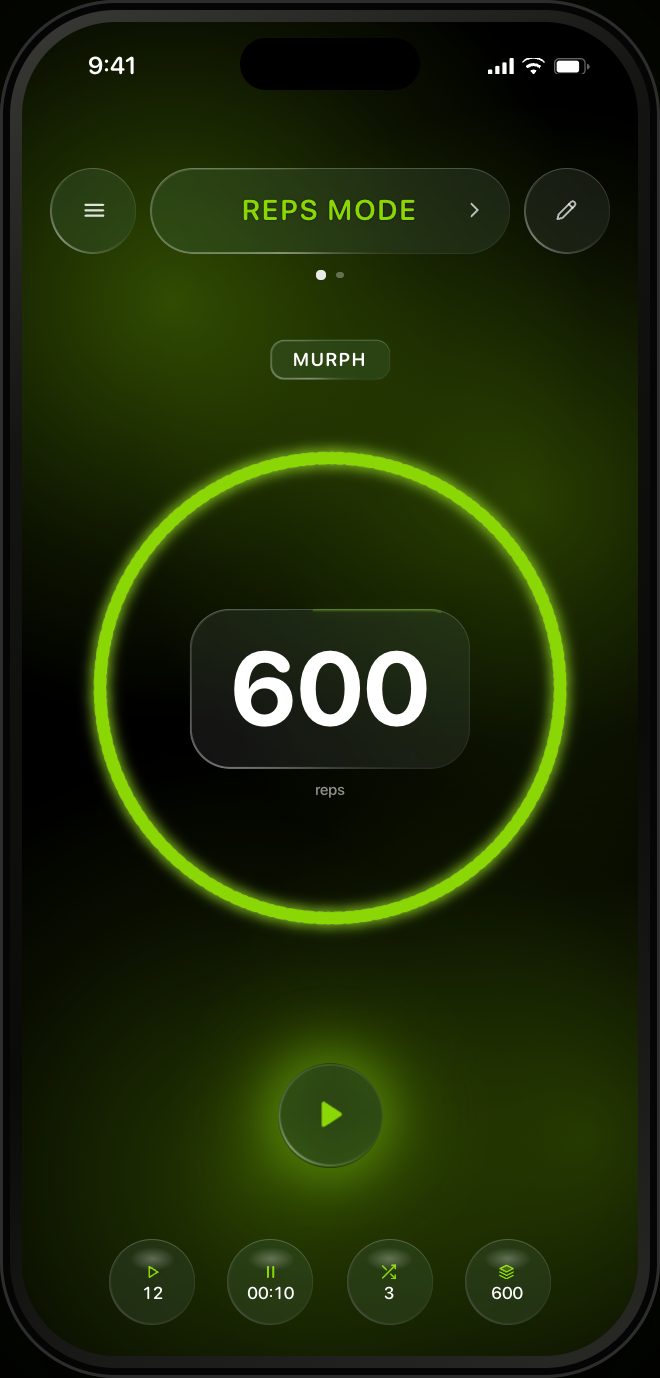
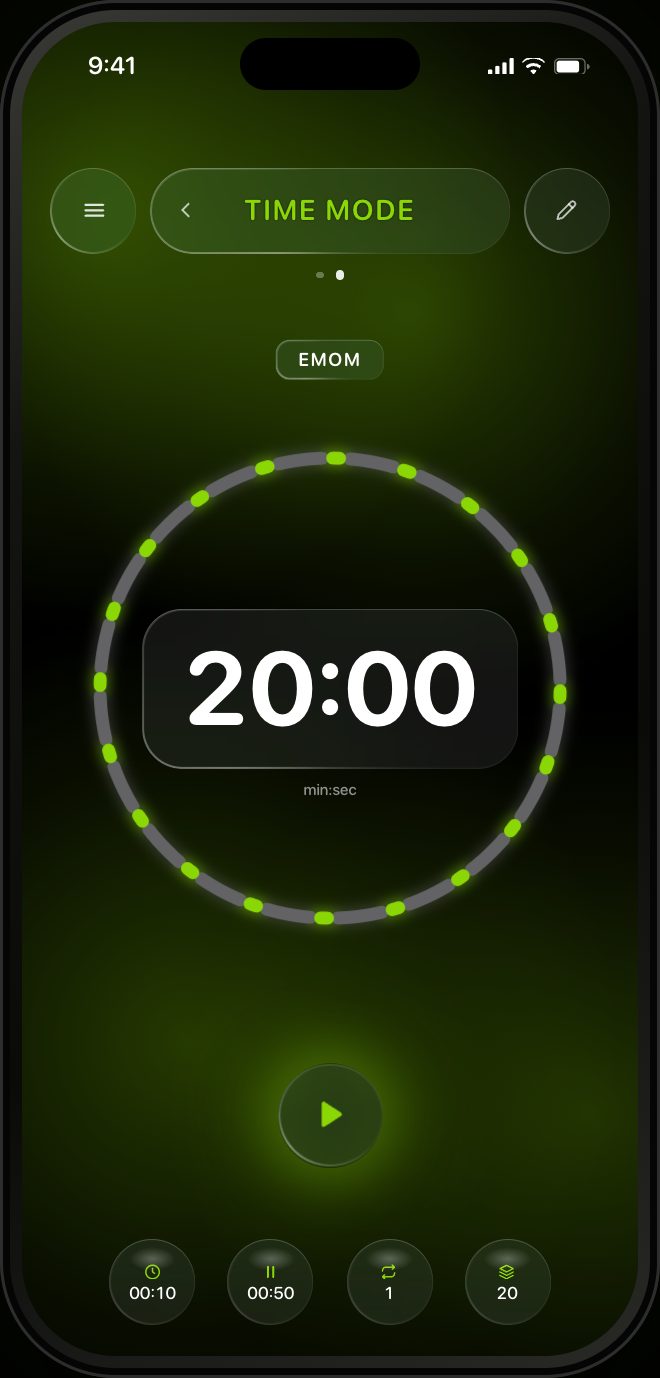
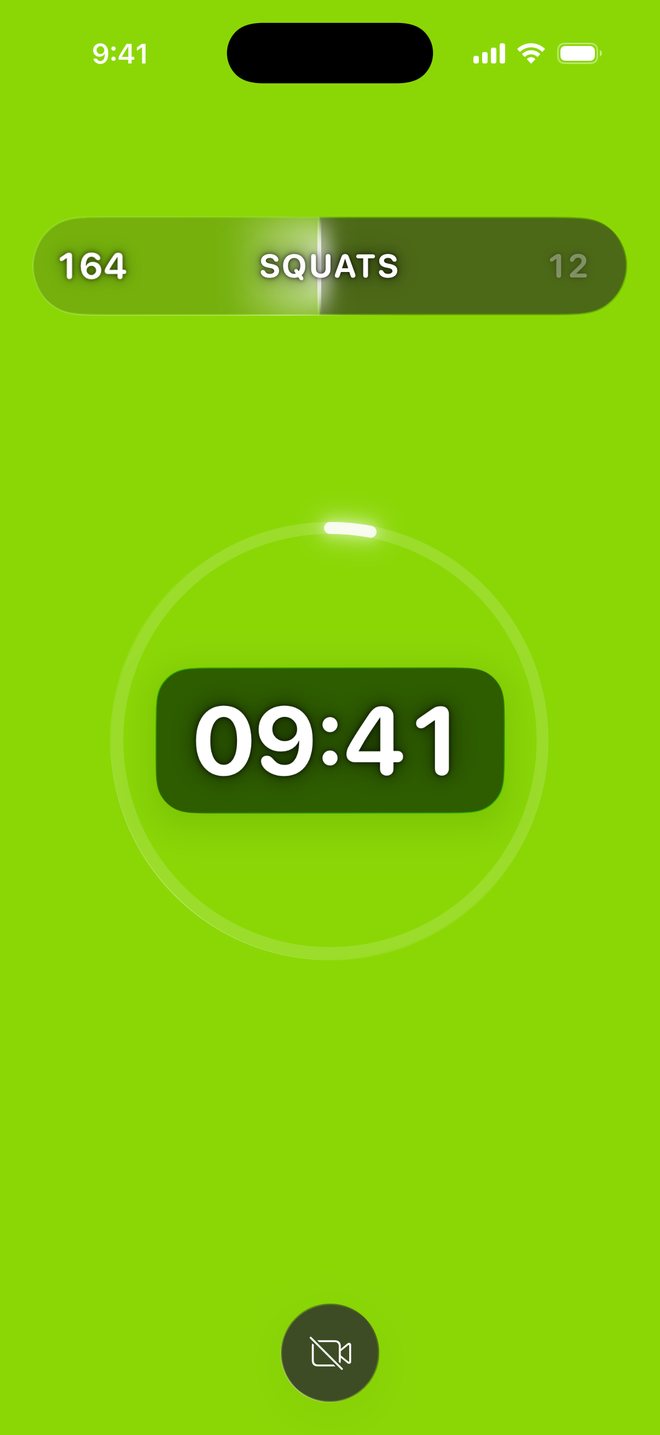
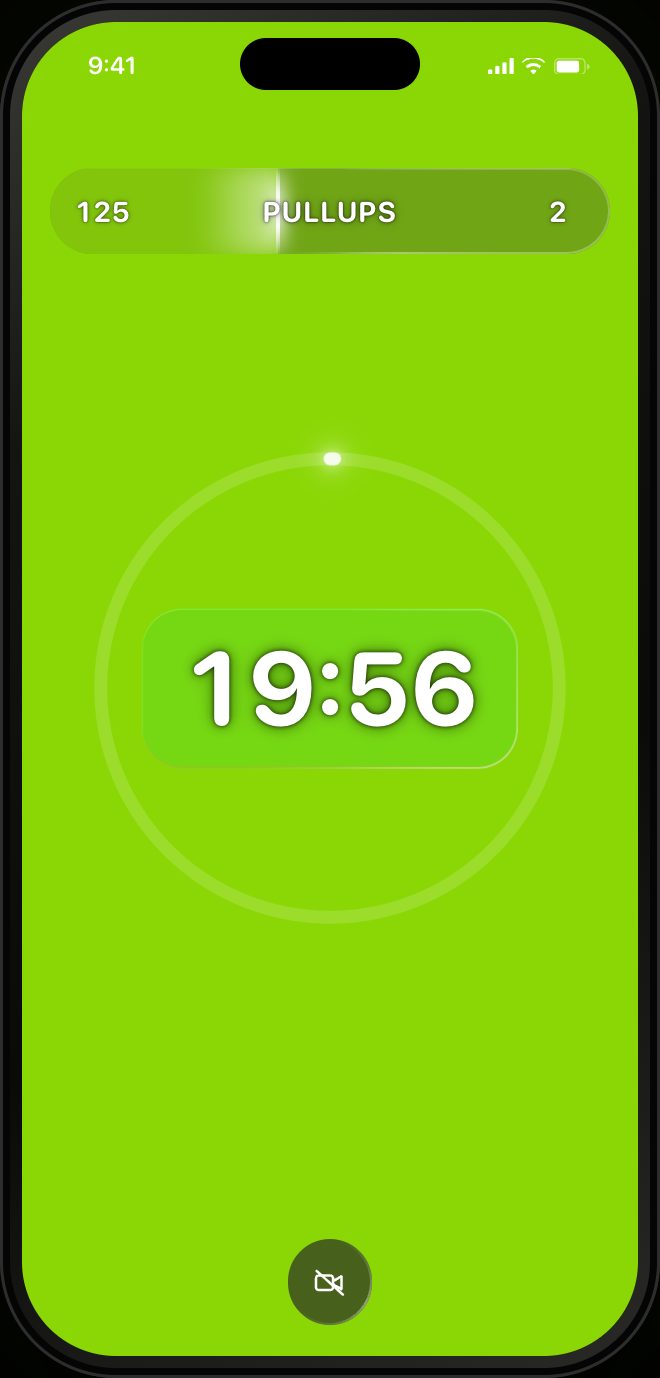
RankTime has a rest timer in every workout. In REPS mode the camera also ends each set for you: the last rep of a set starts the rest.
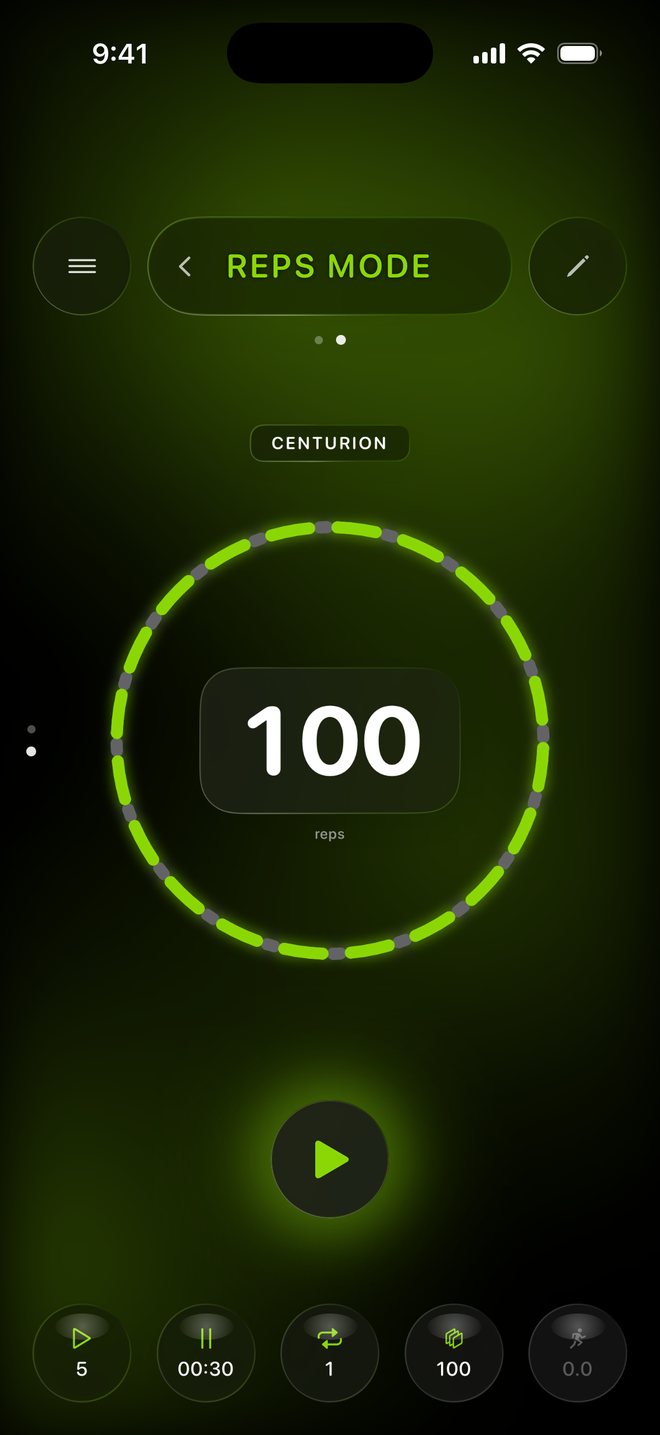
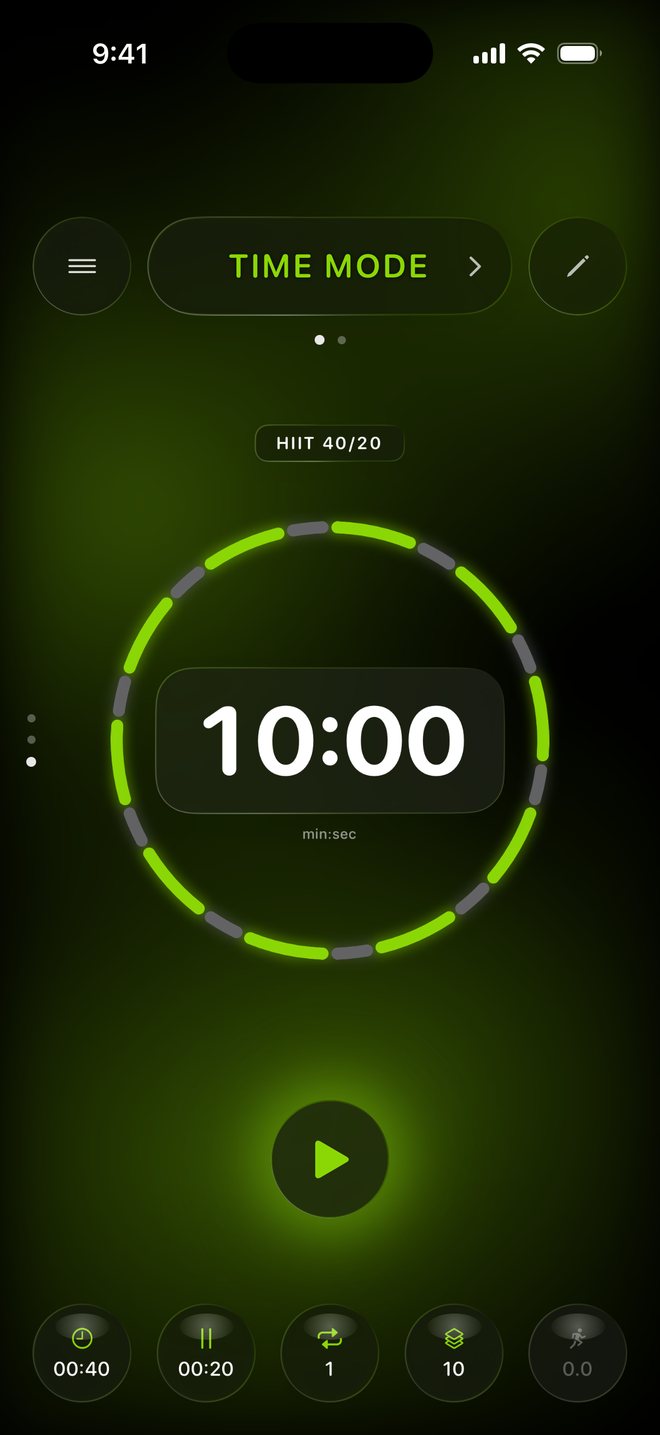
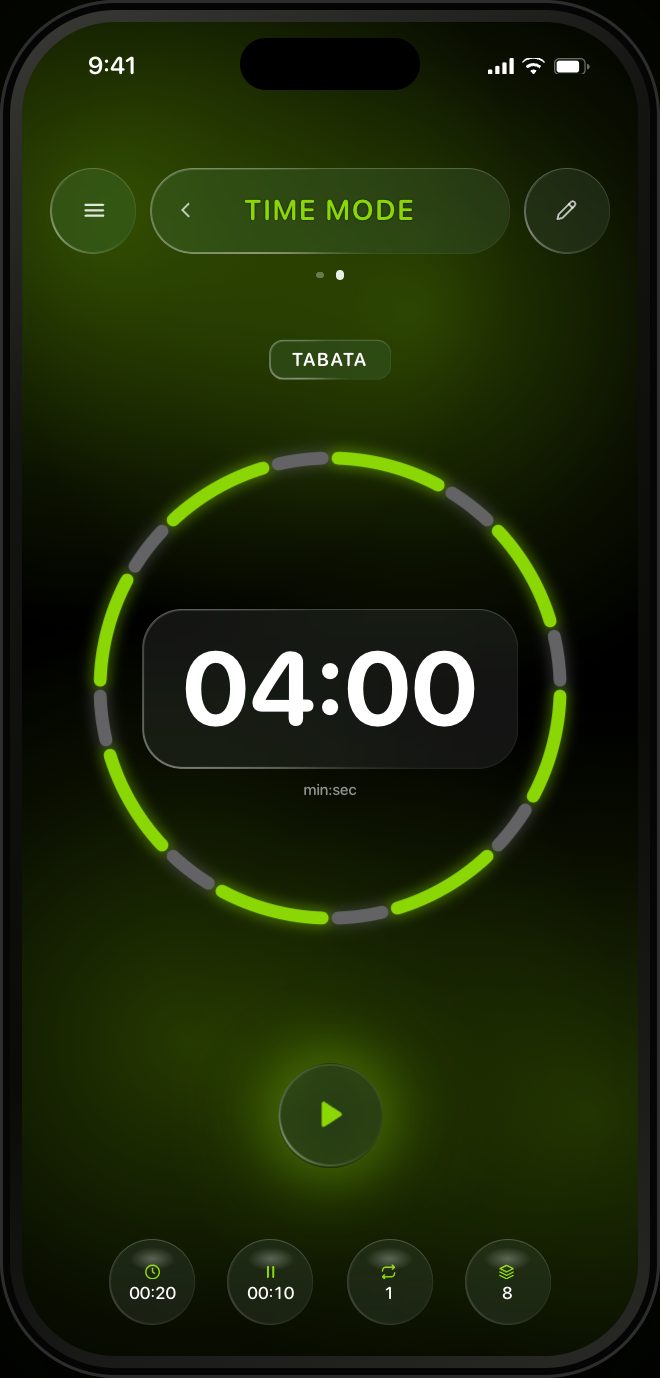
- Pick a workout. Swipe sideways to REPS or TIME, then up or down to a saved workout, like CENTURION: 100 push-ups in sets of 5, with 30 seconds of rest.
- Set the rest. Tap the rest circle, second from the left, and drag the number up or down: anything from 5 seconds to 10 minutes, in 5 second steps.
- Set the reps per set on the first circle. In TIME mode, the first circle is the time per set.
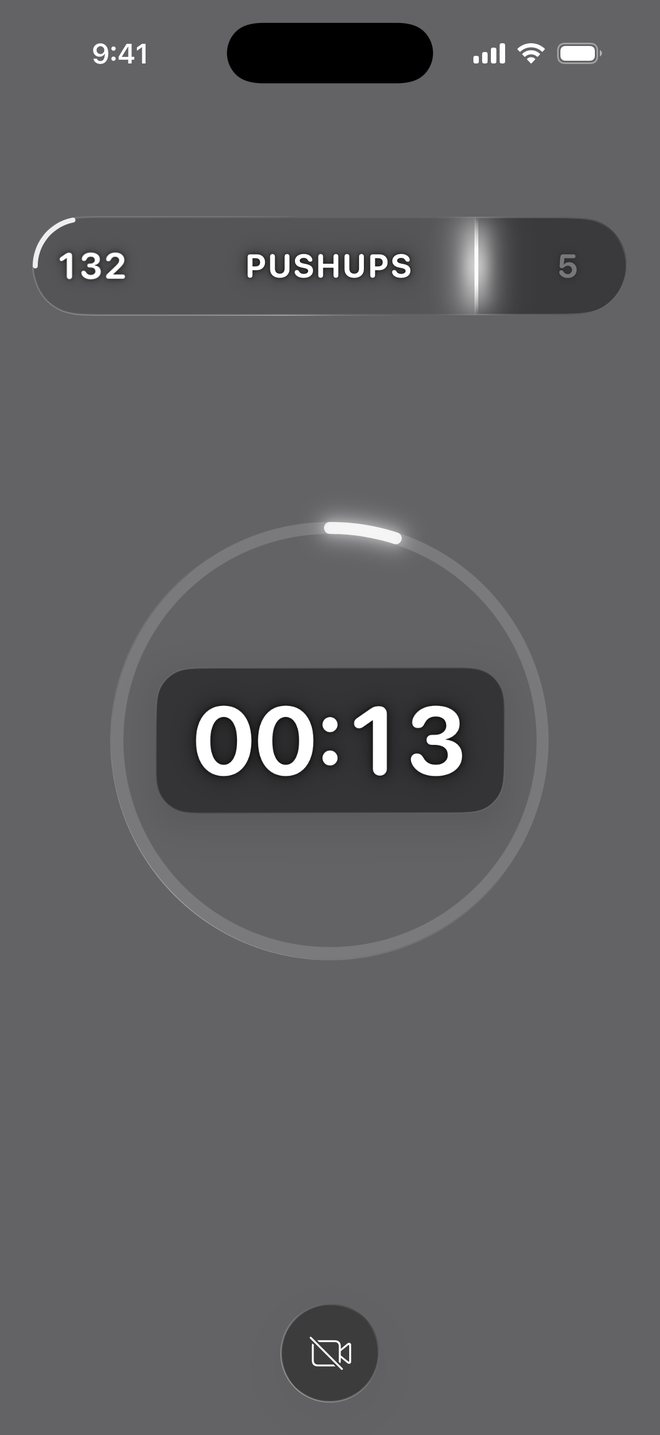
- Press play. In REPS mode the camera counts every rep, and the last rep of a set starts the rest by itself. The screen turns grey, and with the voice guide on you hear "Rest", then the next set called out when the time is up.
- Ready early, or need longer? Tap anywhere to pause. While paused, swipe left to skip ahead to the next set, or right to go back.
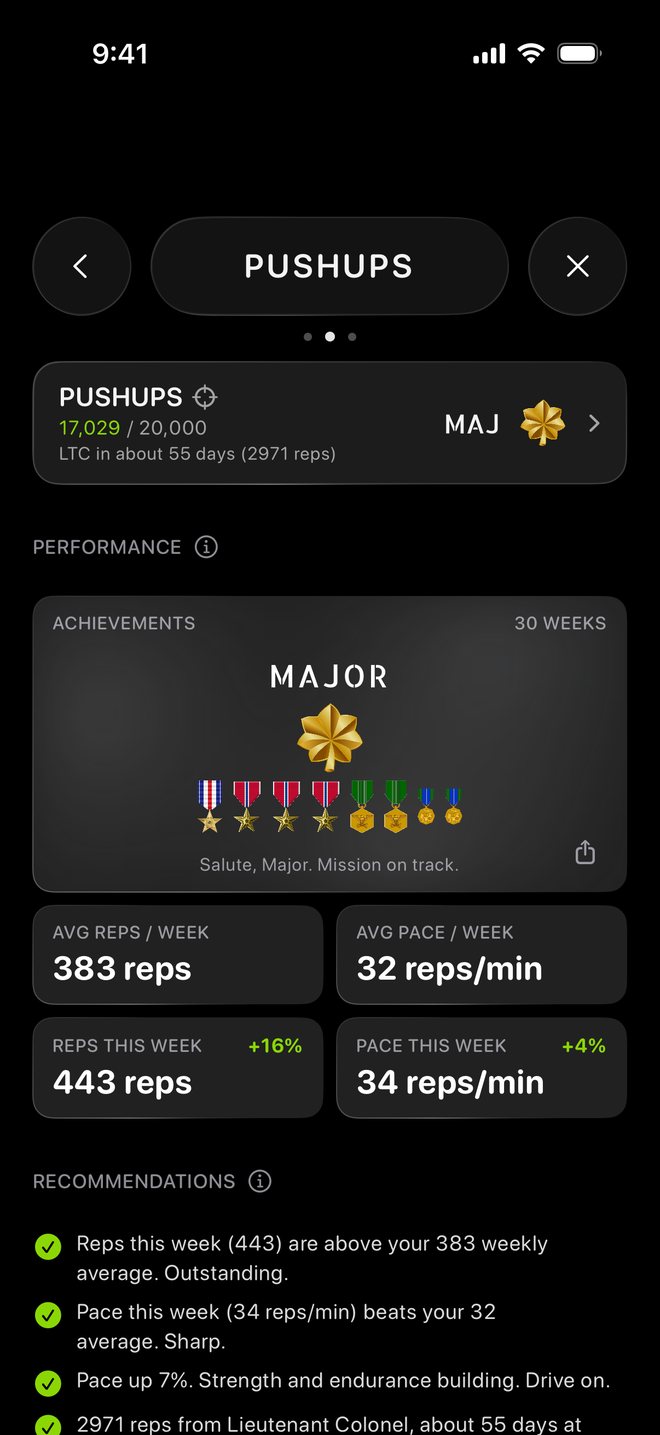
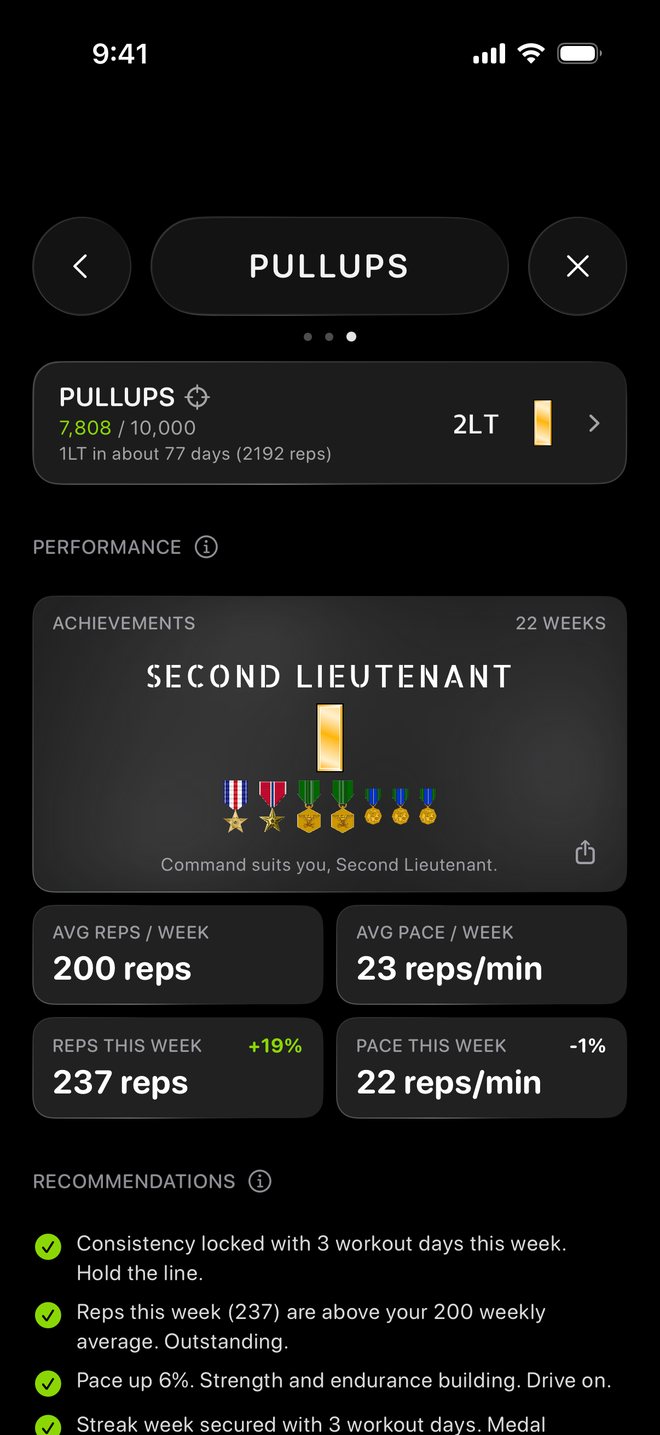
Want two exercises to share the rest? Tap the exercises circle, tick a second exercise and choose Mixed: one set of each exercise per round, so each rests while the other works. Continuous finishes every set of one exercise before the next. Every rep you do, in any set, adds to your rank for that exercise, from Private at rep one to General of the Armies.
Sources
- Rahimi R. Effect of different rest intervals on the exercise volume completed during squat bouts. Journal of Sports Science and Medicine, 2005.
- Grgic J, Schoenfeld BJ, Skrepnik M, Davies TB, Mikulic P. Effects of rest interval duration in resistance training on measures of muscular strength: a systematic review. Sports Medicine, 2018.
- Singer A, Wolf M, Generoso L, and colleagues. Give it a rest: a systematic review with Bayesian meta-analysis on the effect of inter-set rest interval duration on muscle hypertrophy. Frontiers in Sports and Active Living, 2024.
- Schoenfeld BJ, Pope ZK, Benik FM, and colleagues. Longer interset rest periods enhance muscle strength and hypertrophy in resistance-trained men. Journal of Strength and Conditioning Research, 2016.
- American College of Sports Medicine. Progression models in resistance training for healthy adults. Medicine and Science in Sports and Exercise, 2009.
Print it: the rest chart, a rest test and a set log
Four printable pages: the rest chart and bodyweight rest times on one page, then a rest test and a set log to fill in.
Download the free PDF
Time your rests with RankTime
A rest timer in every workout, the camera ending each set for you, and a military rank that grows with every rep.

More guides