How Many Pull-Ups Should You Be Able to Do?
Updated November 14, 2026 · 7 minute read · Free PDF
Ask ten people how many pull-ups is good and you will get ten answers. There is no official standard for adults, but there are clear benchmarks: the levels coaches use, the numbers the military asks for, and your own best set. Here is what each number means, how to test yours fairly, and how to make it go up.
The short answer
For men, 10 strict pull-ups is a strong, realistic goal, 5 is a good start, and 20 or more is elite. For women, the first strict pull-up is a real milestone, 3 to 5 is fit, and 10 or more is very strong. If you cannot do one yet, you are in good company: plenty of adults who never train their back cannot, and most get there with a few weeks of the right practice.
Pull-up standards by level
These levels are for strict pull-ups in one set: from a dead hang, palms facing away, chin over the bar, no swinging. They are a rough guide drawn from military tables and common coaching benchmarks, not an official norm, and body weight moves them a lot, because a heavier person lifts more with every rep.
| Not yet | 0. Normal if you have never trained pulling. Start with hangs, rows and slow negatives from our pull-up progression. |
|---|---|
| Beginner | Men 1 to 4, women 1 to 2. The hardest step is behind you. Short, frequent sets add reps quickly from here. |
| Fit | Men 5 to 9, women 3 to 5. Enough to train pull-ups properly: real sets, ladders and EMOMs. |
| Strong | Men 10 to 14, women 6 to 9. A common long term goal. Ten is also the minimum the Navy asks of SEAL candidates. |
| Very strong | Men 15 to 19, women 10 to 14. Few people get here without months of training pull-ups on purpose. |
| Elite | Men 20 or more, women 15 or more. Full marks on the Marine Corps fitness test are 23 for men and 12 for women at their peak ages. |
The number that matters most is your own from a few weeks ago. Beat that, and your training is working.
How many pull-ups can the average person do?
There is no large official survey of adults, so any average you read online is an estimate. Many of them come from people who already log their gym training, which pushes them up. What coaches agree on: a lot of adults who do not train cannot do a single strict pull-up, especially at a higher body weight, and that is a starting point, not a verdict. Pull-ups respond quickly to practice, so the gap between average and good is usually a few months of regular training, not talent.
Does age change the number?
Less than you might think. Strength fades slowly, and the military tables show it. These are the pull-ups that earn full marks, 100 points, on the US Marine Corps fitness test:
| Age 17 to 20 | 20 for men, 7 for women |
|---|---|
| Age 21 to 25 | 23 for men, 11 for women |
| Age 26 to 30 | 23 for men, 12 for women |
| Age 31 to 35 | 23 for men, 11 for women |
| Age 36 to 40 | 21 for men, 10 for women |
| Age 41 to 45 | 20 for men, 8 for women |
| Age 46 to 50 | 19 for men, 6 for women |
| Age 51 and over | 18 for men, 4 for women |
A fit 50 year old man is expected to do almost as many as a 25 year old. If your number has dropped over the years, training more often usually brings much of it back.
Military pull-up standards
Pull-ups are less common in military tests than push-ups. Here is where they count:
| US Marine Corps | Pull-ups are one of three events in the yearly fitness test, with a plank and a 3 mile run. The minimum is 3 to 5 for men and 1 to 4 for women, depending on age, and full marks are in the table above. Marines may do push-ups instead, but push-ups score at most 70 of the 100 points, so most choose pull-ups. |
|---|---|
| Navy SEALs | The screening test asks for at least 10 pull-ups, with no time limit. Competitive candidates do 15 to 20 or more. |
| US Army | No pull-ups. The Army Fitness Test is a deadlift, hand-release push-ups, a sprint-drag-carry, a plank and a 2 mile run. |
| Navy and Air Force | No pull-ups in the standard fitness tests. |
Standards change every few years, so check the current rules for the exact test you will take.
How to test your max pull-ups
- Test fresh. At the start of a session, after a light warm up: a 20 second hang and a couple of easy or band assisted reps.
- Start from a dead hang. Palms facing away, hands just wider than your shoulders, arms fully straight, feet off the floor.
- Chin over the bar on every rep, then lower all the way back to straight arms. A rep that stops halfway is not a rep.
- No swinging or kipping. A kick of the legs lets your hips do the work. Keep your legs still and slightly in front of you.
- Stop when the form stops. You may hang and breathe at the bottom between reps. The set ends when you let go, or when a rep stalls below the bar.
- Write it down with the date and your grip. Test again in a week or two, not every day.
Counting is the weak point of most tests. Halfway through a hard set it is easy to lose count, or to count a rep that did not quite reach the bar. A partner helps, or a camera.
Free PDF. These rules and a test log to fill in are on page 3, and the pull-up standards with the Marine Corps numbers by age on page 2, ready to print and keep by your bar. Download it
How many pull-ups should you do a day?
To get better, about two to three times your max a day is plenty, split into easy sets of around half your max. If your best set is 6, that is 12 to 18 pull-ups a day in sets of 3, with a rest day or two a week. Never go to failure on these: the idea is lots of clean reps while you are fresh.
| Max 1 to 3 | Singles: 3 to 6 single reps with a full rest between them, plus a few slow negatives. |
|---|---|
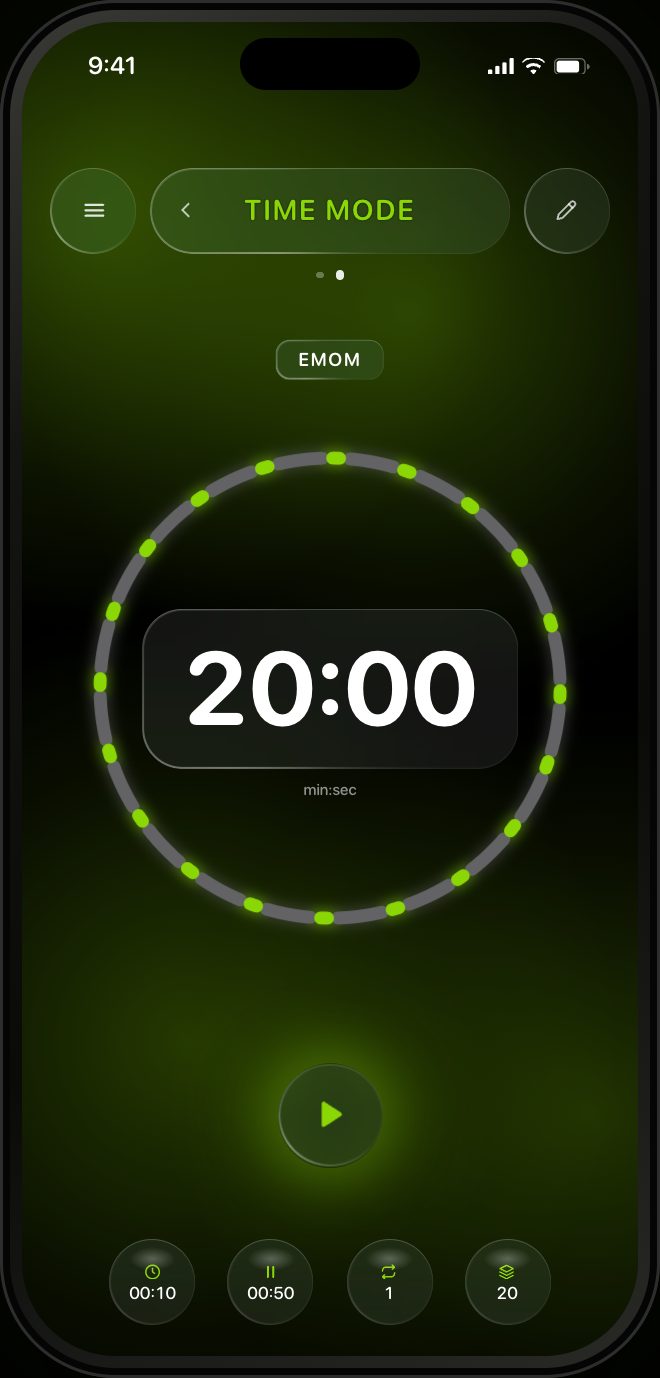
| Max 4 to 8 | Sets of 2 to 4. An EMOM works well: one set at the start of every minute for 10 minutes. |
| Max 9 to 15 | Sets of 4 to 7, or a ladder: 1, 2, 3, 4 reps, then start again at 1. |
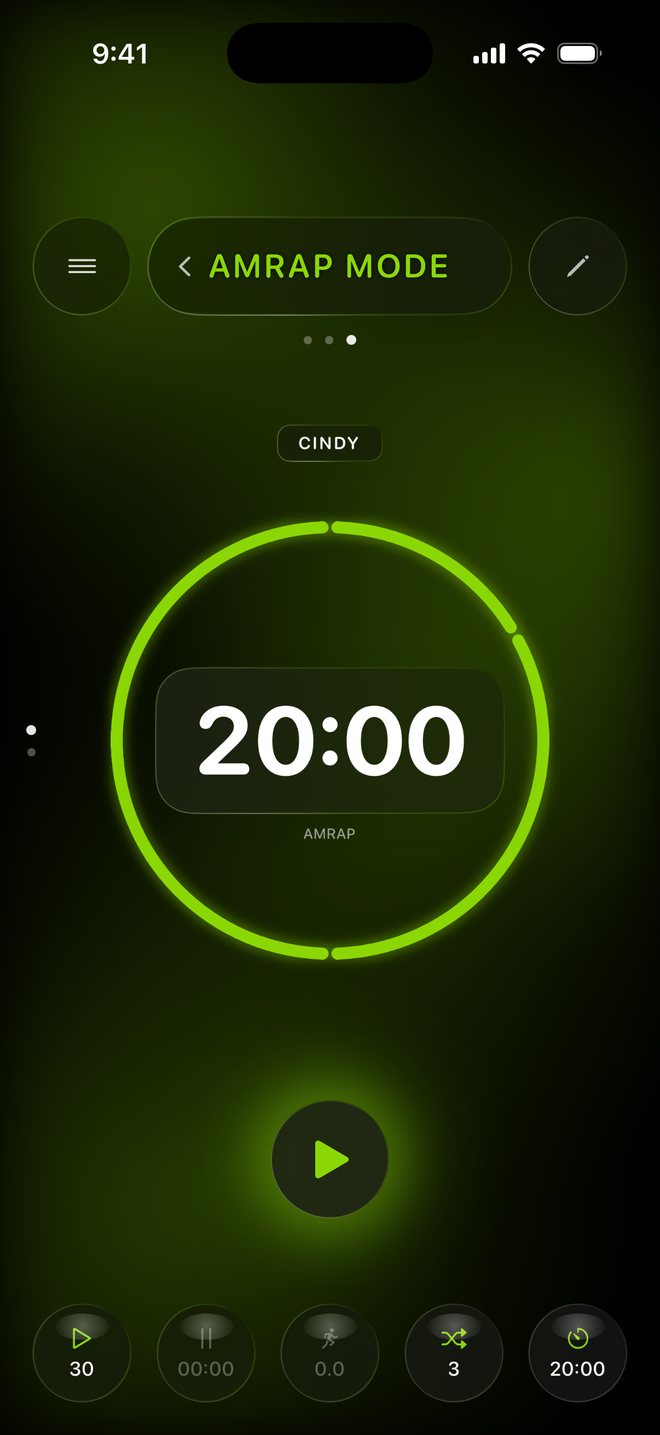
| Max 15 or more | Add weight with a backpack or a vest, or use pull-ups in longer workouts like Cindy and Murph. |
If the inside of your elbow starts to ache, cut back for a week and switch to chin-ups. Tendons adapt more slowly than muscles. Pull-ups pair well with push-ups, too: see the push-up test for that side.
Free PDF. Page 4 turns this into a 6 week plan: work out your numbers for the day, see how to split them for your max, and tick off every day. Download it
How to test your pull-ups with RankTime
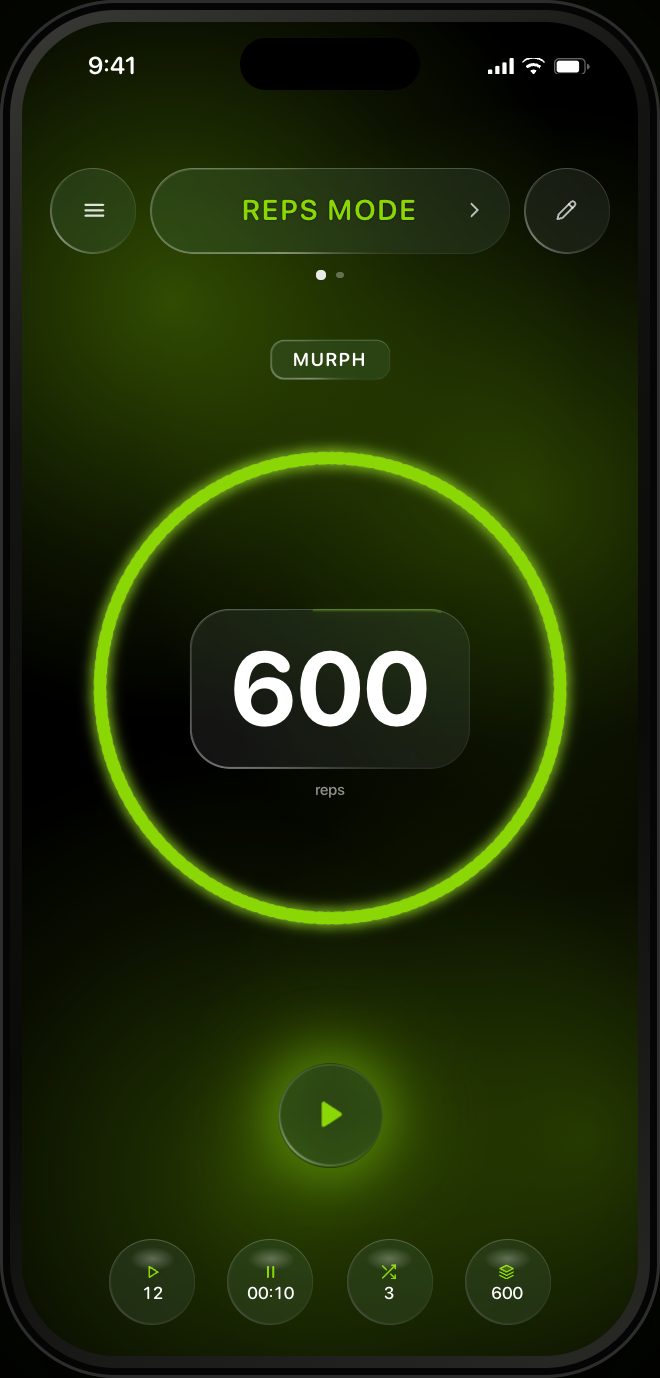
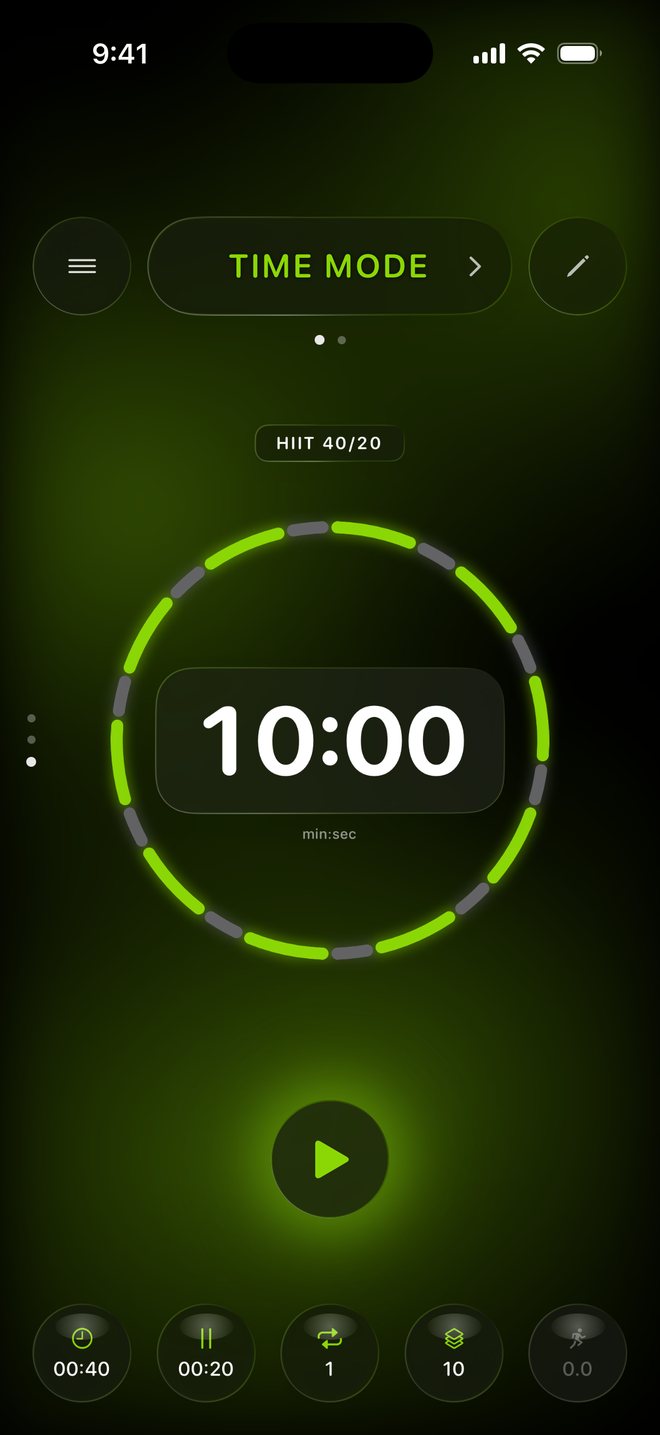
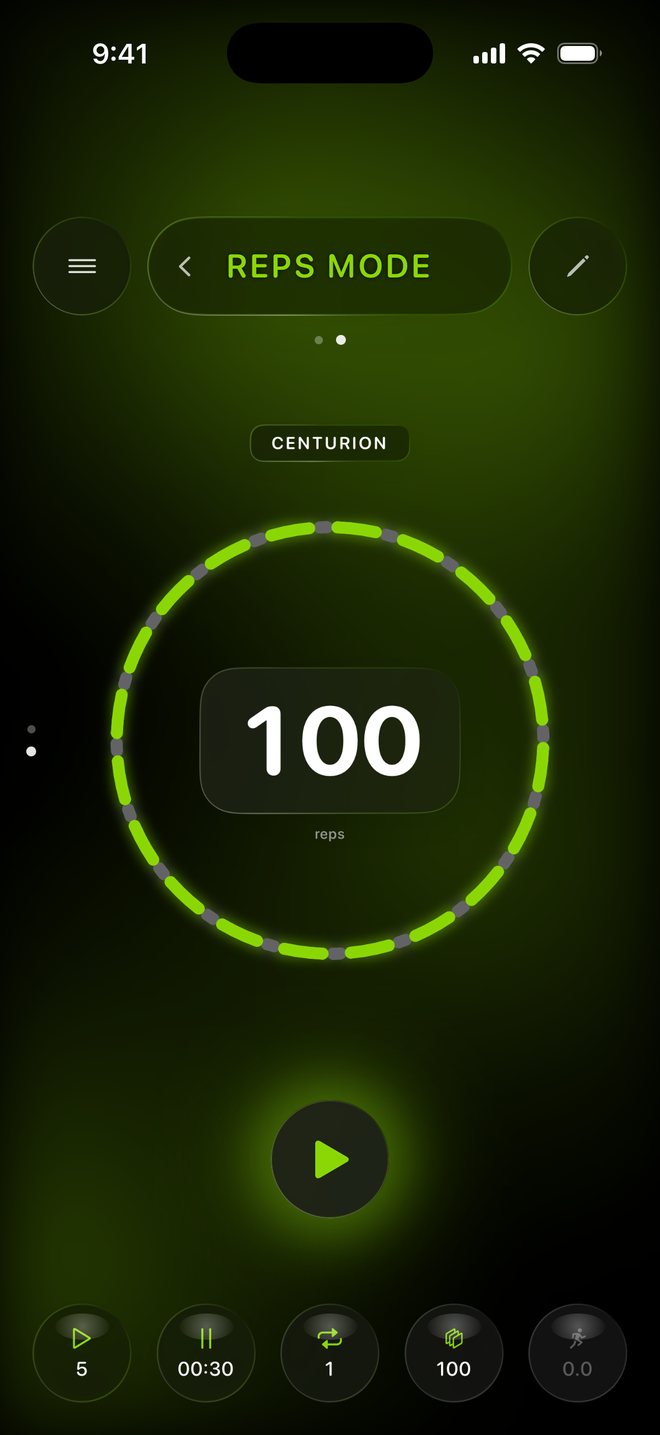
RankTime turns this into a proper test, with the camera doing the counting. The PUSHUP TEST, a saved workout in REPS mode, is already a one set max test. Change its exercise and it becomes a pull-up test.
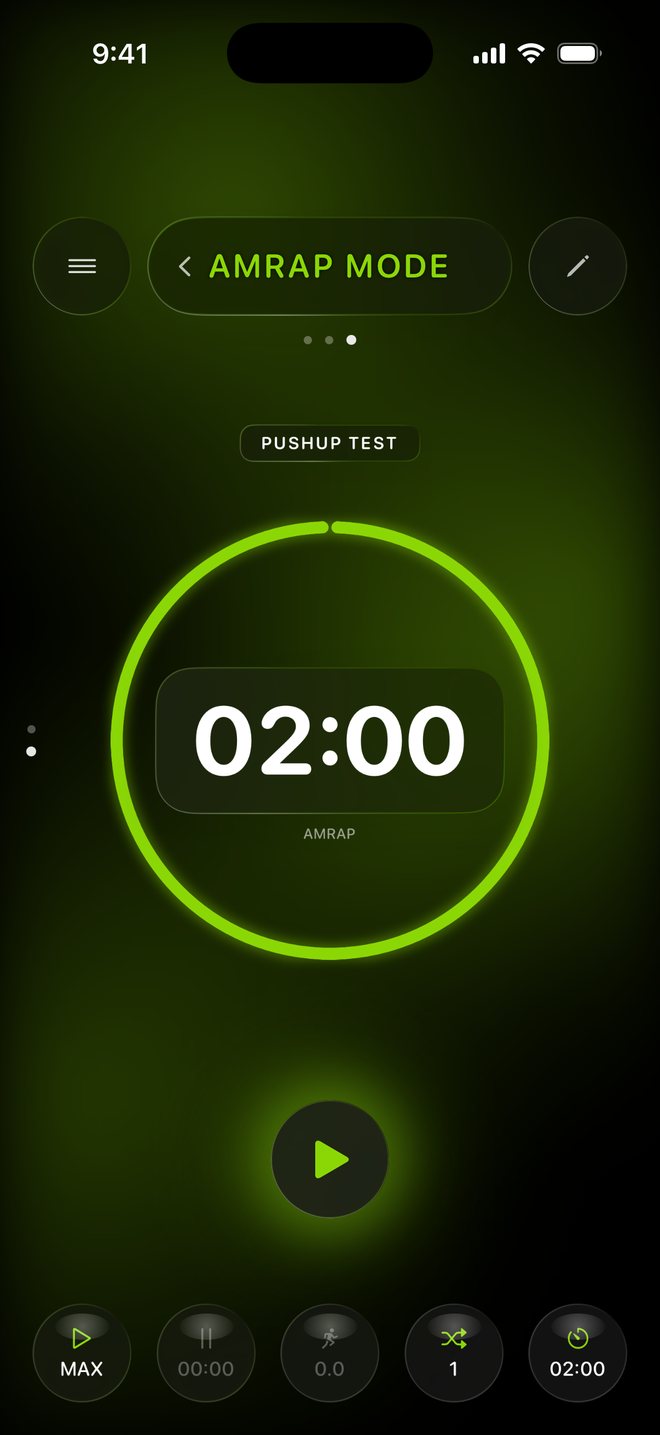
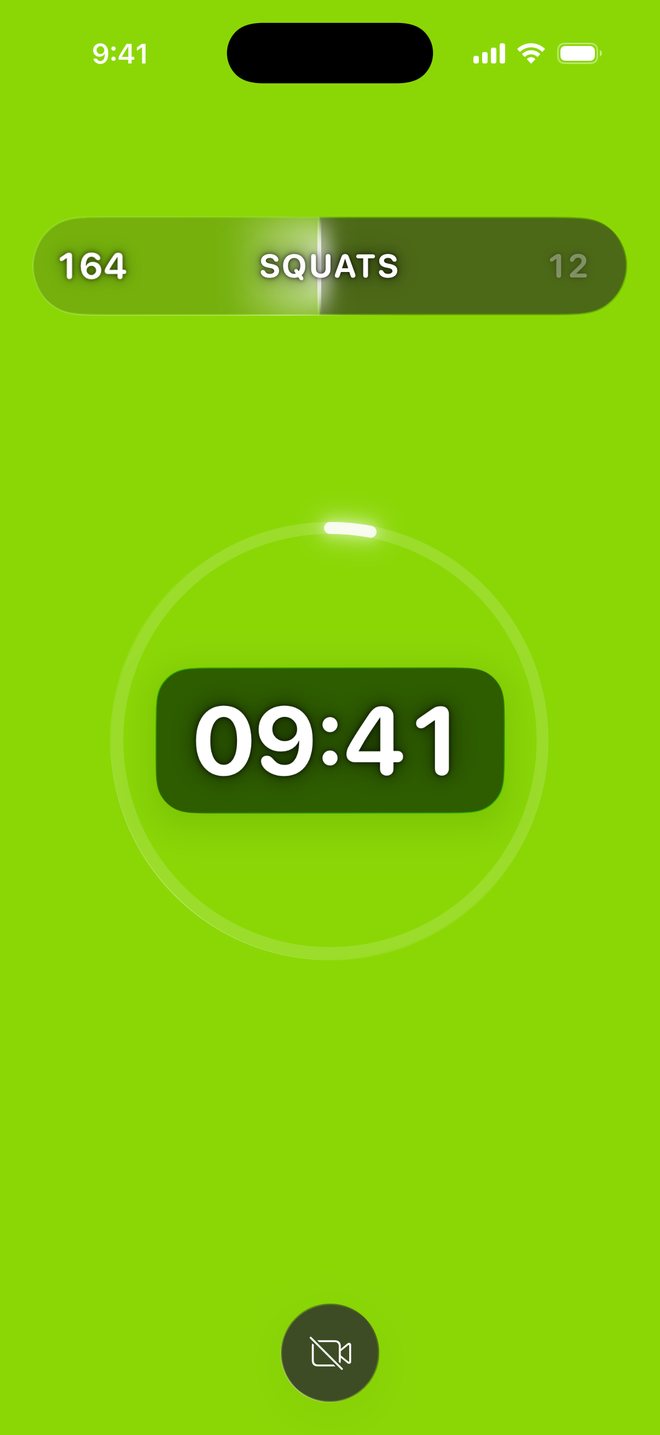
- Open the test. Swipe sideways to REPS mode, then up or down to the PUSHUP TEST.
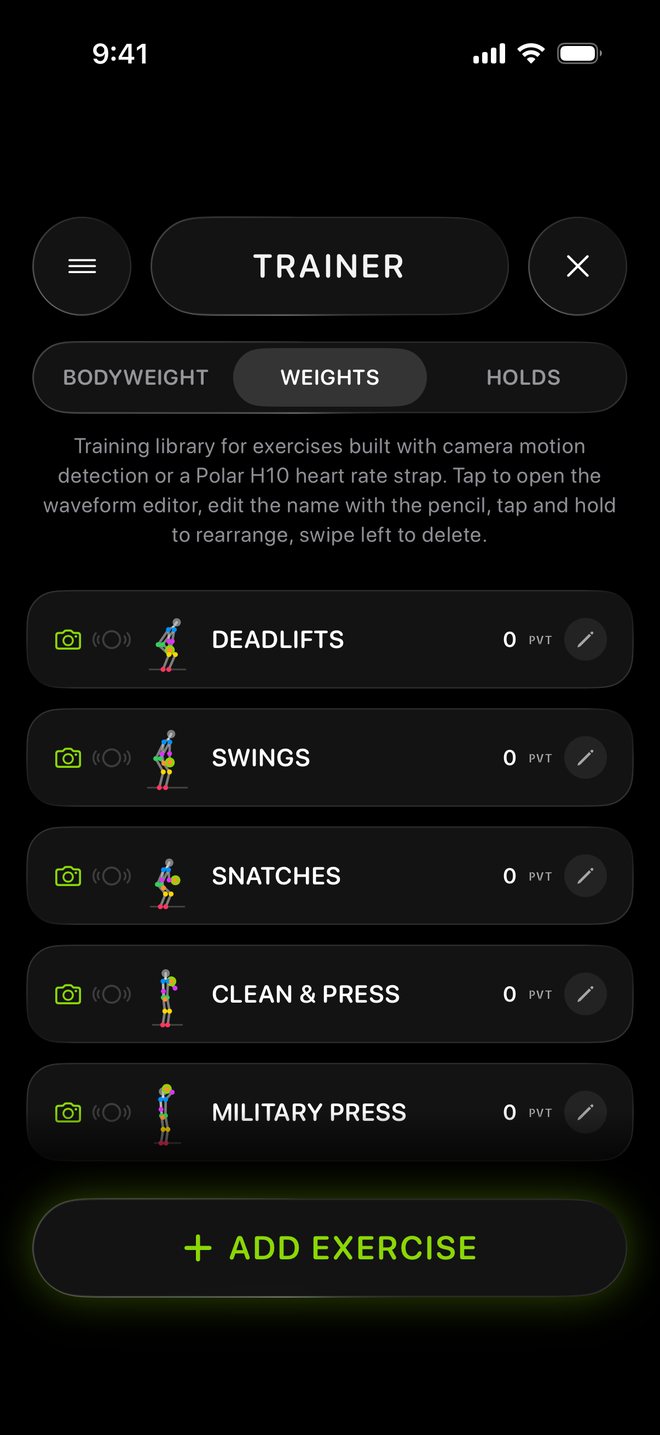
- Swap the exercise. Tap the exercises circle, tick PULLUPS, then untick PUSHUPS. The test keeps its one non-stop MAX set.
- Save it as your own pull-up test, so it is one tap away next time. The 2:00 clock is plenty: almost nobody stays on the bar that long.
- Prop the phone up about 2 meters (6 feet) away, so the bar and your whole body are in the frame. The camera counts on the phone itself. Nothing is uploaded.
- Press play and pull. Every full rep is counted for you. When you drop off the bar, stop the workout: your reps are saved to your history and your pull-up rank.
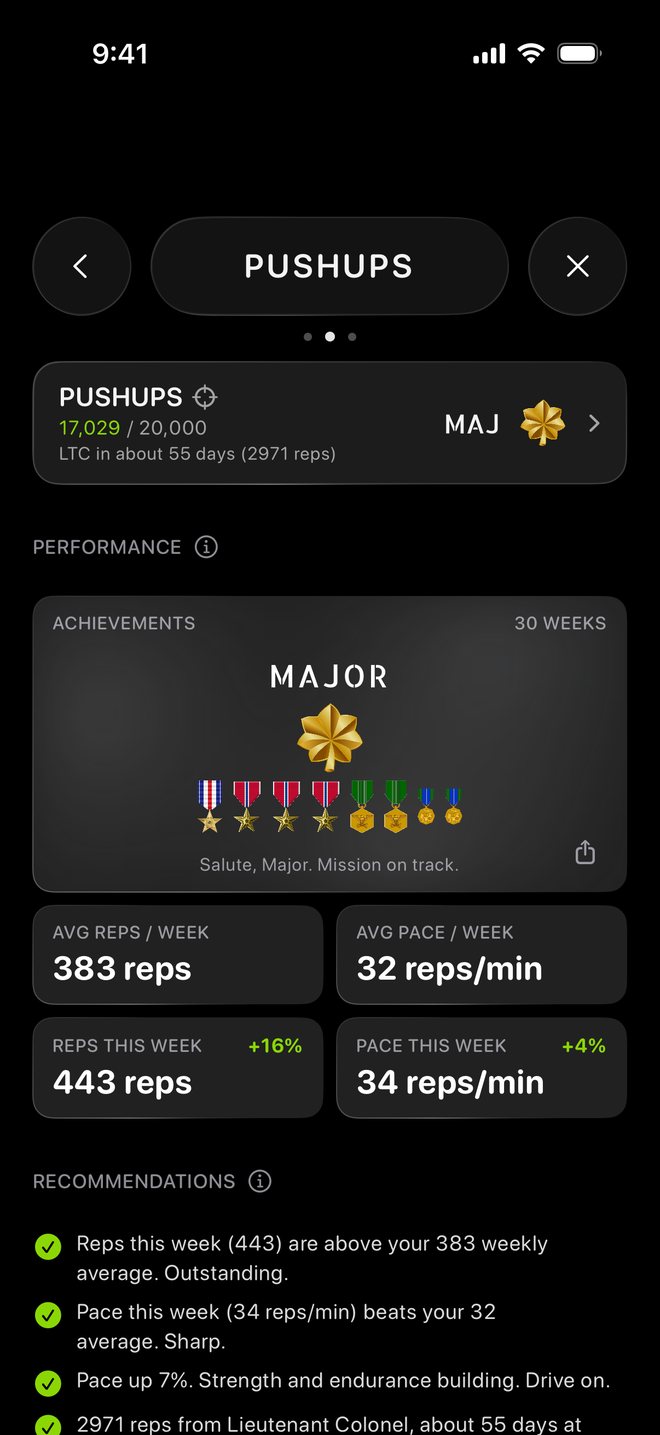
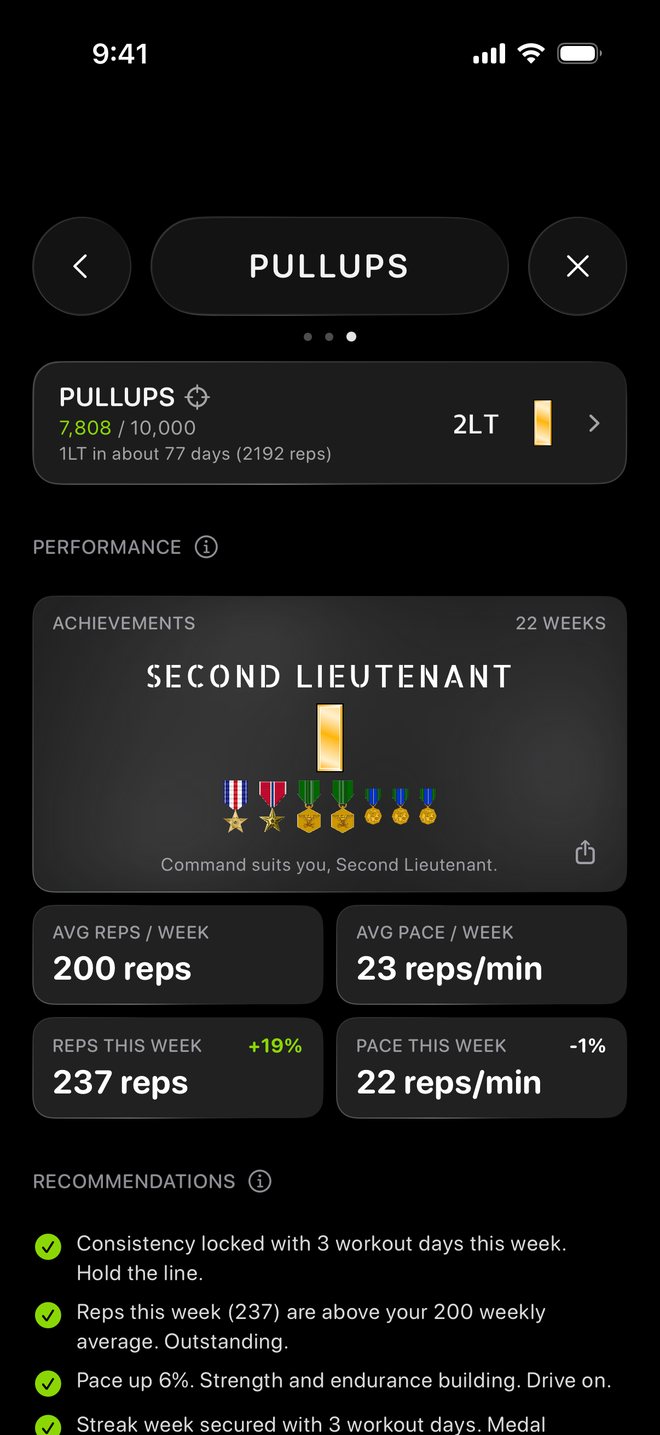
Your max set shows how strong you are today. Your rank shows the work behind it: every pull-up you do, in any workout, adds to a ladder that runs from Private at rep one to General of the Armies at 150,000 reps.
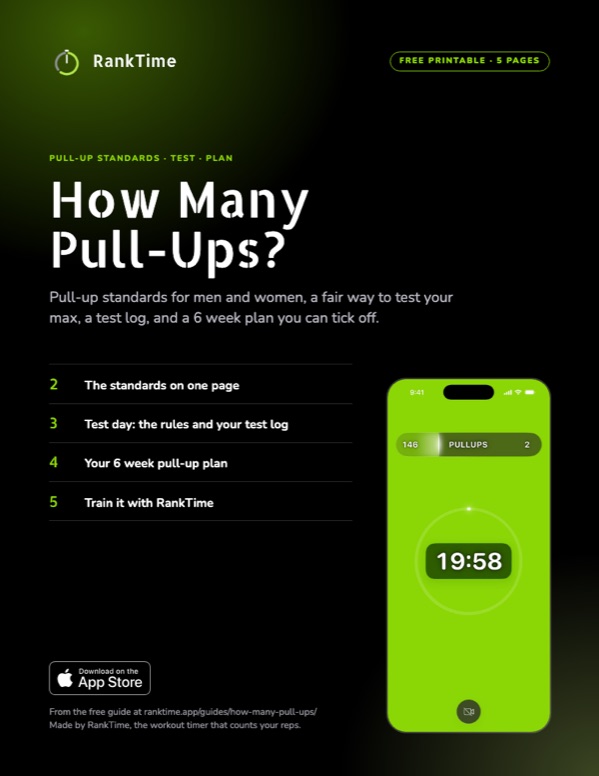
Print it: standards, test log and a 6 week plan
Five printable pages: the pull-up standards and military numbers on one page, the test rules with a log to fill in, and a 6 week plan to tick off.
Download the free PDF
Test your pull-ups with RankTime
A one set max test built in, every rep counted by the camera, and a military rank that grows with every pull-up.

More guides