AMRAP Workout: As Many Reps as Possible
Updated November 3, 2026 · 6 minute read
AMRAP is the simplest way to train hard and still know exactly how you did: set a clock, repeat a few exercises until it runs out, and count what you finished. This guide explains how AMRAP works, how long to make one, how to pace it, and gives you sample workouts.
What does AMRAP mean?
AMRAP stands for as many reps as possible, or as many rounds as possible. You pick a time limit and a short list of exercises, each with a set number of reps. Then you work through the list, start again at the top, and keep going until the time is up.
| Time limit | Fixed, usually 5 to 20 minutes |
|---|---|
| Rest | Whenever you need it, but the clock keeps running |
| Score | Rounds plus extra reps, for example 12 rounds + 7 reps |
There is also a one exercise version: as many reps as you can of a single movement in a set time, like 2 minutes of push-ups. That is how many fitness tests work.
AMRAP vs EMOM vs Tabata
- AMRAP: the time is fixed and the work is open. You decide when to rest, and every rest costs you reps.
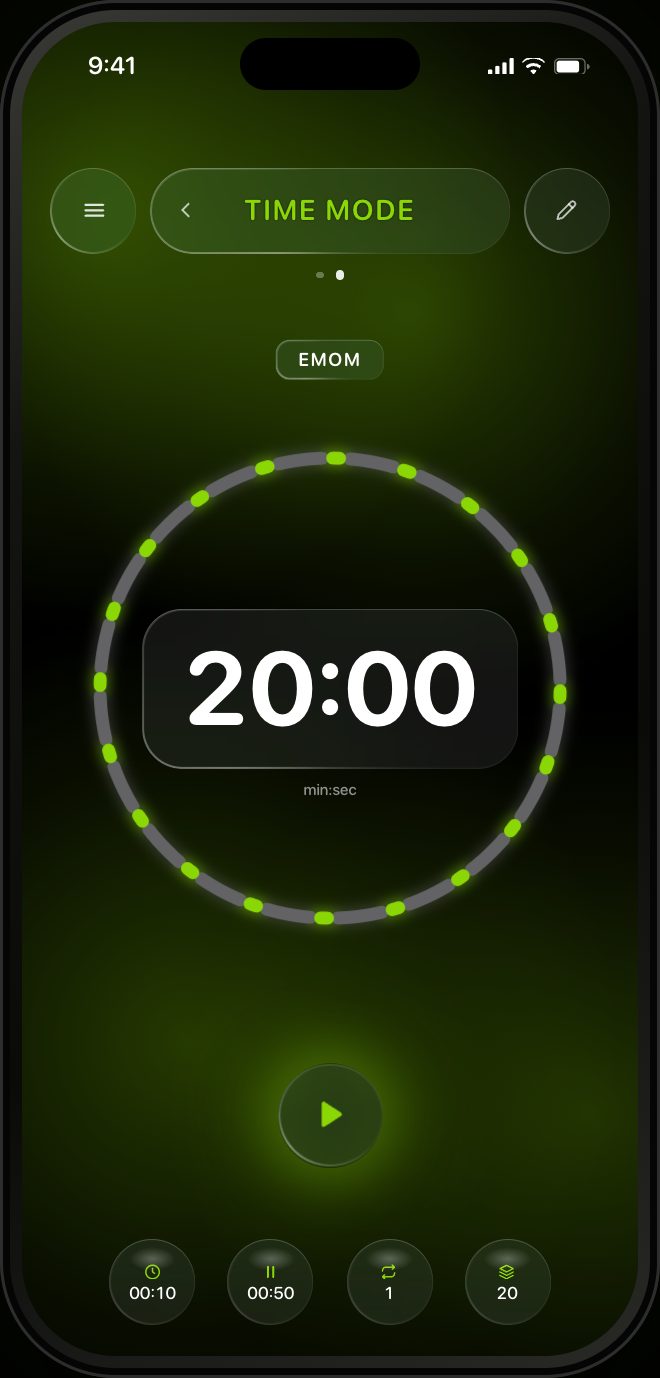
- EMOM: the work is fixed and starts at the top of every minute. Whatever is left of the minute is your rest. See the EMOM guide.
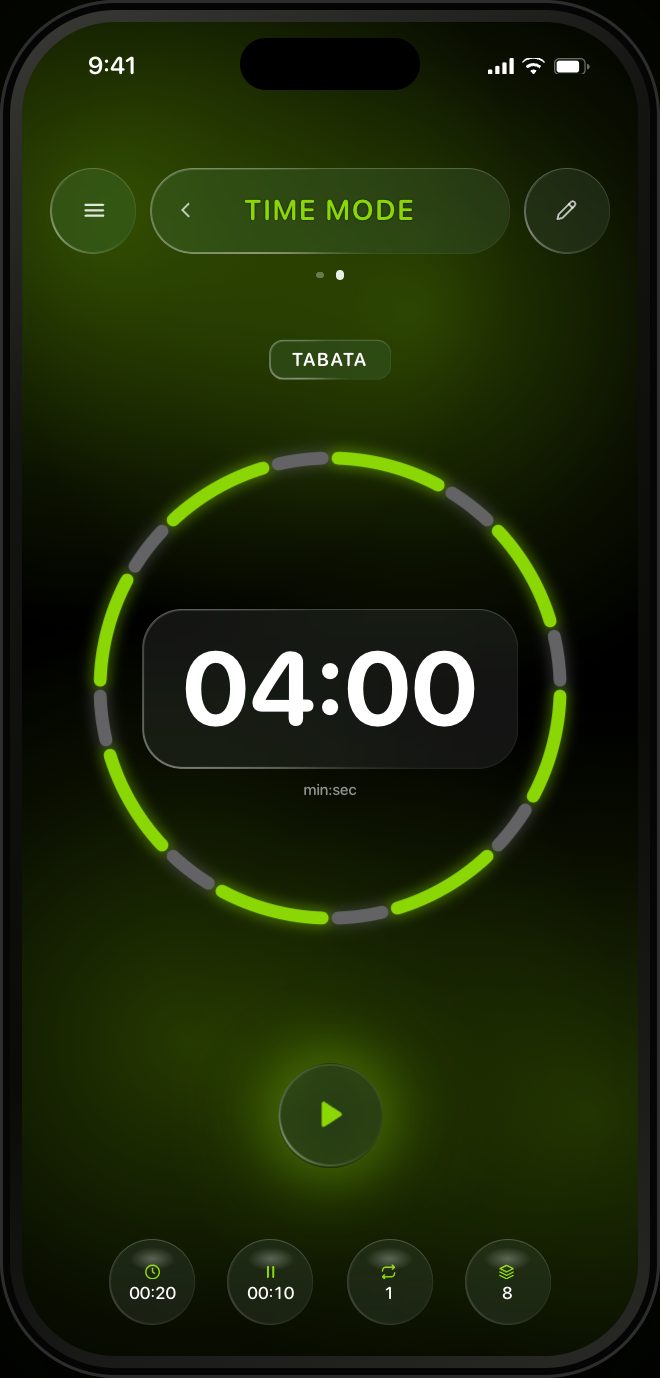
- Tabata: both are fixed: 20 seconds of work, 10 seconds of rest, 8 rounds. See the Tabata guide.
AMRAP is the best of the three for measuring progress. Repeat the same one a few weeks later, and a higher score is plain proof you got fitter.
How long should an AMRAP be?
- 5 to 8 minutes: a sprint. Pick fast, simple moves and push the pace from the start.
- 10 to 20 minutes: the classic length. Hard, but steady enough to keep good form. Cindy is 20 minutes.
- Over 20 minutes: endurance work. Go at a pace you could hold for twice as long.
Sample AMRAP workouts
- Cindy, 20 minutes: 5 pull-ups, 10 push-ups, 15 air squats. The best known AMRAP there is.
- Push-up test, 2 minutes: as many push-ups as you can in one non-stop set. Rest in plank or on your knees if you must, the clock keeps going.
- Burpees and jacks, 10 minutes: 10 burpees, 20 jumping jacks. Short, simple, hard.
- Legs and core, 12 minutes: 20 lunges, 15 squats, 10 sit-ups.
- Kettlebell, 15 minutes: 15 kettlebell swings, 10 push-ups, 15 squats.
How to pace an AMRAP
- Start slower than you want to. The first round always feels easy. A pace you can hold for the whole clock beats a fast start and long breaks later.
- Break sets early. Split a set before it gets hard, for example 10 push-ups as 6 and 4. Short breaks you choose cost less than long ones your arms choose for you.
- Keep moving between exercises. Transitions add up. Go straight to the next movement.
- Count only full reps. A score only means something if every rep is a real one.
- Write it down. Rounds plus reps, the date, and anything you scaled. Repeat it in 4 to 8 weeks.
How to do an AMRAP with RankTime
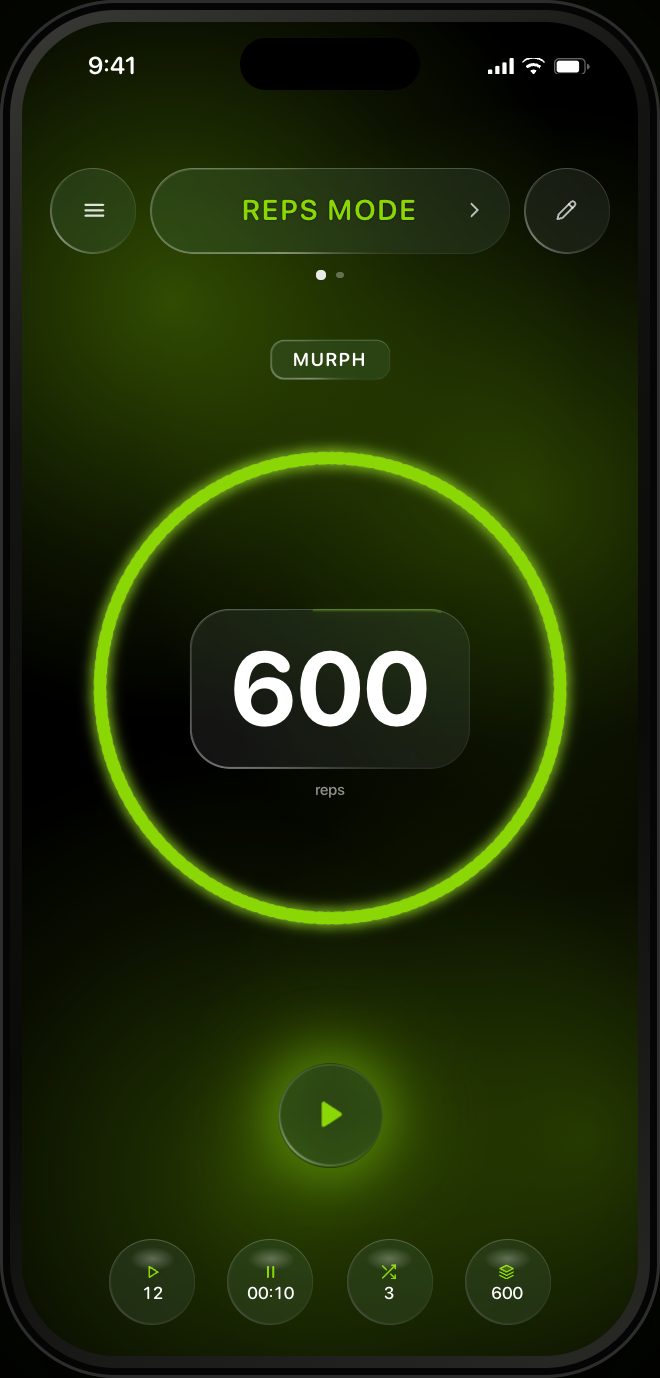
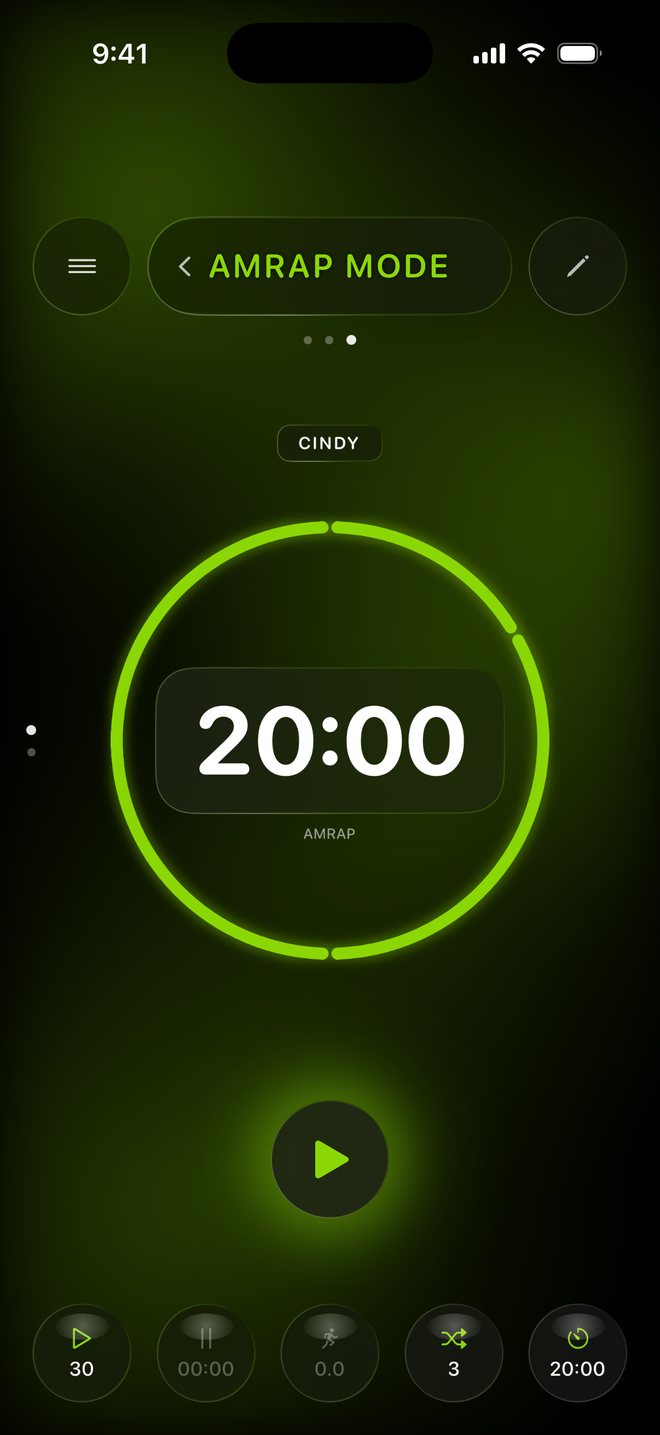
AMRAP is its own mode in RankTime, the third page sideways after TIME and REPS. Two come built in: CINDY, and the PUSHUP TEST, 2 minutes of non-stop push-ups.
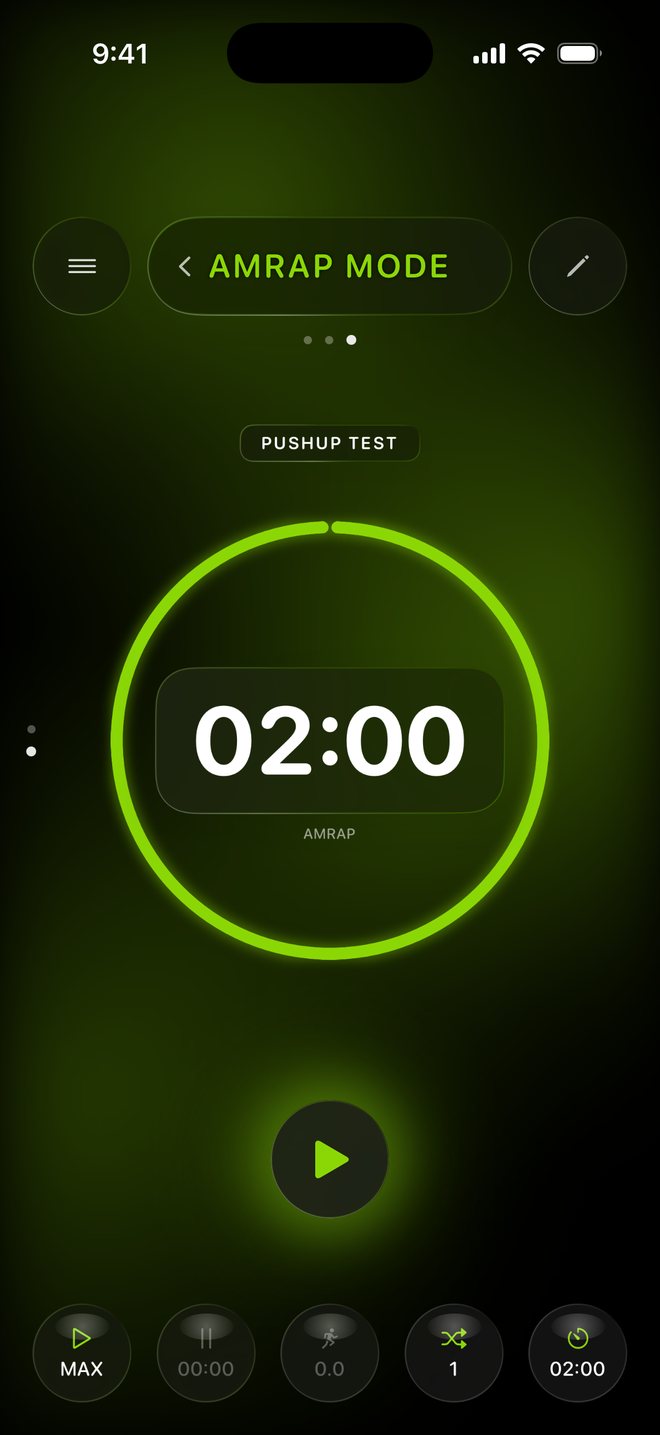
- Swipe sideways to AMRAP and pick CINDY or the PUSHUP TEST, or build your own.
- Set the time limit on the last circle of the bottom row, from 1 to 60 minutes, a minute a step.
- Set the reps per set on the first circle, for each exercise. 0 means one non-stop set, MAX, like the push-up test.
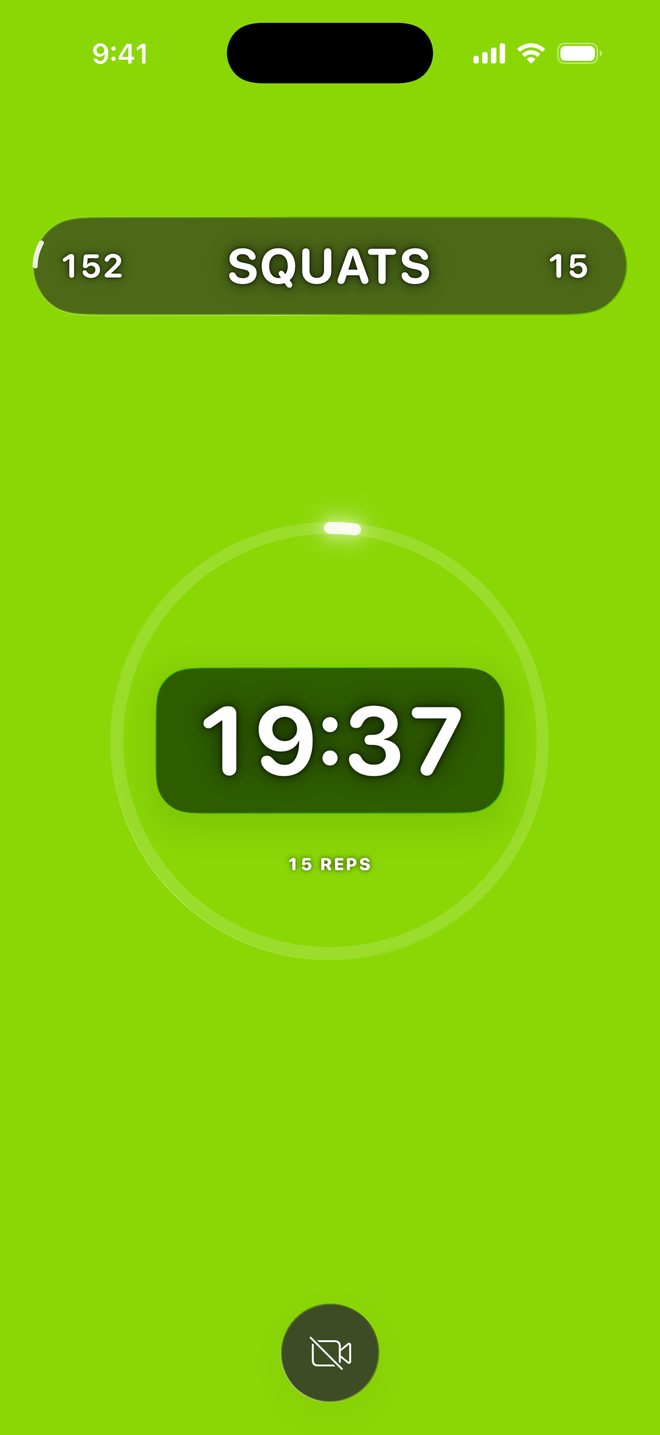
- Pick up to 3 exercises. Nine come ready to count with the camera: push-ups, pull-ups, squats, burpees, kettlebell swings, snatches, sit-ups, lunges and jumping jacks.
- Press play. After a short get ready the clock counts down, the app calls out each set and the camera counts every rep. Rest whenever you like: the clock keeps running unless you pause it.
When the time runs out the workout ends, mid-set included. Your total reps go to your history and your rank, and the workout to Apple Health. Want a run as well? Add one before or after on the RUN tab.

Do an AMRAP with RankTime
AMRAP mode with Cindy and the push-up test built in, every rep counted by the camera, heart rate, and a military rank that grows with every rep.

More guides