Kettlebell Deadlift: How to Do It, Muscles Worked and Variations
Updated November 20, 2026 · 14 minute read · Free PDF
The kettlebell deadlift lifts a kettlebell from the floor between your feet until you stand tall. You push your hips back with a flat back, grab the bell with both hands, and drive your hips forward to stand up. It works your glutes, hamstrings, thighs and back, and your grip, and StrongFirst's coaches teach it before the swing. Start with a bell you can lift at least 8 times with good form, but no more than 12, for 3 sets, 2 or 3 days a week. In a 12 week trial, inactive adults aged 59 to 79 raised their estimated kettlebell deadlift max by 16 kg. Here is how to do it step by step, the mistakes to avoid, the muscles it works, six variations, how heavy to go, a soldiers' test and workouts.
The kettlebell deadlift at a glance
| What it is | Lifting a kettlebell from the floor between your feet to standing, by hinging at the hips |
|---|---|
| Main muscles | Glutes, hamstrings and thighs lift it. Your back muscles hold your back flat, and your grip holds the bell |
| Equipment | One kettlebell, or two for the double version |
| Which bell | One you can lift at least 8 times with good form, but no more than 12 |
| Sets and reps | 3 sets of 8 to 12, 1 to 2 minutes of rest, 2 or 3 days a week |
| Learn next | The kettlebell swing, the fast version of the same hinge |
How to do a kettlebell deadlift
- Set up. Stand with your feet about hip width apart, the bell on the floor between them, not in front of your toes.
- Hinge. Push your hips back, as if to touch a wall behind you, and bend your knees only as much as you need to reach the handle. Your back stays flat from your head to your hips.
- Grip. Take the handle with both hands, arms straight. Pull your shoulders down, away from your ears, so your arms stay close to your body.
- Brace. Take a breath and tighten your stomach, as if someone were about to poke it.
- Stand up. Push the floor away through your whole foot. Your hips drive forward and your knees straighten together, and the bell comes straight up between your legs.
- Finish tall. Stand straight with your knees straight and your glutes squeezed hard. Do not lean back.
- Lower it. Push your hips back first, then bend your knees, and set the bell down softly between your feet. Check your back is flat again before the next rep.
Learn the hinge with the wall drill
If your deadlift looks like a squat, your legs stay stiff or your back rounds, StrongFirst's coaches go back to a wall drill, which they say fixes those three problems 90% of the time (Cenidoza, 2020):
- Stand with your back to a wall, about 30 cm (12 inches) away from it.
- Push your hips back until your glutes touch the wall, then stand up tall and squeeze them.
- Do 5 good reps, then move a few centimeters further from the wall and do 5 more.
- Keep going until you can no longer reach it. Tap the wall, never lean on it.
Knees that slide forward, stiff legs and a round back all stop you short of the wall once you stand far enough away. That is why it works. Then go back to the bell.
Kettlebell deadlift form: common mistakes
- Squatting it. Hips go back, not down, and the knees bend only enough to reach the bell. NASM lists it among the common mistakes: bending the knees too much turns the lift into a squat.
- Stiff legs. With locked knees you can only reach the bell by rounding your back. Bend them a little.
- A rounded back. Keep it flat from start to finish. If you cannot reach the handle with a flat back yet, stand the bell on a step or a block until you can.
- The bell too far forward. It belongs between your feet. In front of your toes it pulls your back round.
- Yanking it off the floor. Get tight first, then push the floor away. A jerk with a heavy bell pulls your back out of position.
- Leaning back at the top. Finish by standing tall and squeezing your glutes, not by throwing your shoulders back.
Kettlebell deadlift muscles worked
The deadlift straightens your hips and your knees against the weight, so it works the big muscles at the back of your body and the front of your thighs. NASM names the glutes, the hamstrings and the back muscles along your spine (the erector spinae) as the main movers, with the inner thighs, the trapezius and the lats helping. Most muscle studies of the deadlift use a barbell, but the movement is the same. A 2020 review of them found the back muscles along your spine and the front of the thighs the most active, ahead of the glutes and the hamstrings (Martín-Fuentes and colleagues, 2020). In a study of 13 college football players, the glutes and thighs worked hardest near the floor, where the knees bend most, and the hamstrings near the top (Escamilla and colleagues, 2002).
| Glutes | Drive your hips forward to stand up, hardest near the floor |
|---|---|
| Hamstrings | Straighten your hips too, and control the way down. Hardest near the top |
| Thighs | Straighten your knees as the bell leaves the floor |
| Back muscles | Hold your back flat from start to finish |
| Lats and upper back | Keep your shoulders down and the bell close |
| Forearms and grip | Hold the handle. A heavy bell is a grip workout too |
Kettlebell deadlift variations
Once the two hand deadlift is solid, these change which muscles work most, or make a light bell hard again.
Kettlebell Romanian deadlift (RDL)
Start standing, with the bell in both hands. Push your hips back with a slight bend in your knees that stays the same, and lower the bell along your legs to about mid shin, or as far as your back stays flat. Then drive your hips forward to stand up. The bell never touches the floor between reps. In the 2020 review, the Romanian deadlift worked the hamstrings more than the back muscles, the other way round from the deadlift from the floor (Martín-Fuentes and colleagues, 2020). In a study of 10 bodybuilders, it worked the inner hamstring harder than the stiff leg deadlift, done with straight knees, which worked the glutes more (Coratella and colleagues, 2022).
Sumo kettlebell deadlift
Feet wider than your shoulders, toes turned out, the bell between your feet. Your back stays more upright. In the football players' study, the sumo stance worked two of the front thigh muscles harder than the usual narrow stance, which worked a calf muscle more (Escamilla and colleagues, 2002).
Single leg kettlebell deadlift
Hold the bell in one hand, or both, and stand on one leg. Hinge so your free leg goes straight back as your chest comes down, hips level, then stand up. In a study of 15 trained men, the single leg deadlift worked the glute at the side of the hip (gluteus medius) at 77.6% of its maximum, against 59.3% in a two leg deadlift, and the outer hamstring at 82.1%, against 74.2% (Diamant and colleagues, 2021). It trains your balance too. Start light: balance gives out before strength does.
Kettlebell suitcase deadlift
One bell at your side, in one hand, like picking up a suitcase. Stand up without leaning toward the bell or away from it: the muscles on the other side of your trunk hold you straight. Do both sides.
Double kettlebell deadlift
A bell beside each foot, one in each hand. Two bells double the load once one gets light, and it is the version in the soldiers' test below.
Deficit and raised deadlifts
Standing on a low step makes the lift longer: in the bodybuilders' study, a Romanian deadlift from a step worked the glutes, the inner hamstring and the back muscles harder than from the floor (Coratella and colleagues, 2022). The other way round, a bell raised on a step or a block shortens the lift while you cannot yet reach the floor with a flat back.
Kettlebell deadlift benefits: what the research shows
Stronger at 59 to 79. 32 inactive adults aged 59 to 79 trained with kettlebells in three 45 minute classes a week for 12 weeks, plus home exercises twice a week (Meigh and colleagues, 2022). The program was built on the swing, the clean, the press, the goblet squat and the get up, with deadlifts in it too, and bells from 4 to 80 kg. Their estimated one rep max in the kettlebell deadlift, about 70 kg at the start, rose by 16.2 kg, or 23%. Their grip grew by 7.1 kg in the right hand and 6.3 kg in the left, they stood up from a chair 3.3 more times in 30 seconds, walked 42 meters further in 6 minutes, and gained 0.65 kg of muscle in their arms and legs.
More muscle and a stronger back in older women. 33 women aged 65 to 75 with sarcopenia, the loss of muscle mass and strength with age, were split into two groups (Chen and colleagues, 2018). One trained with kettlebells for 8 weeks, two 60 minute sessions a week: 5 exercises a session from a list with the deadlift, the swing, the goblet squat, rows, presses and the get up, 3 sets of 8 to 12 with 2 to 3 minutes of rest (Meigh and colleagues, 2019). Compared with the women who did not train, they gained muscle in their arms and legs, grip and back strength, and the muscle and back strength were still there 4 weeks after they stopped. The women who did not train lost muscle and grip over the same weeks.
Cardio, with swings. 10 beginners did three 10 minute rounds of 10 two hand swings then 10 sumo deadlifts, with 3 minutes of rest between rounds, using 8 kg bells for the women and 16 kg for the men (Thomas and colleagues, 2014; bells from Meigh and colleagues, 2019). A brisk treadmill walk up a 4% slope, set to match their oxygen use, burned the same calories and gave the same blood pressure, while their heart rate and sense of effort were higher with the kettlebell. The authors conclude the routine works the body like a moderate walking workout made to improve aerobic fitness.
Lifting like real work. 9 experts rated 30 strength tests used in the Nordic and NATO countries for five soldiers' tasks: lifting, carrying on the body, carrying in the hands, climbing and digging (Larsson and colleagues, 2015). The kettlebell deadlift was one of three tests rated relevant to four of the five, and the authors note it moves like lifting boxes, cans and stretchers.
What it does not show. No trial has tested the kettlebell deadlift on its own: the programs above mixed it with swings and other lifts. And the muscle measurements come from barbell deadlifts. Expect the kettlebell deadlift to build the same muscles, not to do everything on this list alone.
Which kettlebell weight for deadlifts
It is your heaviest kettlebell lift. Most people can deadlift a much heavier bell than they can swing or press: the inactive 59 to 79 year olds above started at an estimated one rep max of about 70 kg.
Pick a bell you can lift at least 8 times with good form, but no more than 12. That is the American College of Sports Medicine's range for beginners, 8 to 12 reps a set, 2 or 3 days a week (ACSM, 2009).
Add reps, then weight. ACSM advises raising the load by 2 to 10% once you can do one or two reps more than your target. Kettlebells go up in 4 kg steps, a 25% jump from 16 to 20 kg, so add reps first: when every set reaches 12 clean reps, take the next bell and start again at 8.
When your heaviest bell gets easy, pick up a second one, switch to single leg deadlifts, stand on a step, or lower the bell slowly, over 3 seconds.
The kettlebell deadlift test
Swedish researchers built a strength test battery for soldiers with four tests: a loaded step test, chin ups, a back extension hold, and a kettlebell deadlift (Larsson and colleagues, 2015). The deadlift test:
- Two 40 kg kettlebells, 80 kg in all, one in each hand.
- As many lifts as you can in 1 minute. Each one starts with bent knees and ends with your legs fully straight, back straight and eyes forward. Only correct lifts count.
- Warm up first with two lifts holding two 24 kg bells, then two holding two 32 kg bells.
- A 2 cm board under your heels is allowed if tight calves stop you reaching the bells.
20 Swedish ranger soldiers did 21 lifts on average, and 22 when they repeated the test a week later. The test was very consistent: a change of 5 or more lifts is a real change rather than day to day noise.
With your own bell, the same minute makes a simple benchmark: count your clean reps in 1 minute, and test again every 6 weeks.
Free PDF. Page 2 has the technique, the mistakes and the wall drill on one page. Page 3 has the bell rules, all six variations and the soldiers' test. Download it
Kettlebell deadlift workouts
| Strength sets | 3 sets of 8 to 12 with 1:30 of rest. When every set reaches 12 clean reps, take the next bell and start again at 8. |
|---|---|
| Swings and deadlifts | 10 two hand swings, then 10 sumo deadlifts, over and over for 10 minutes. 3 rounds with 3 minutes of rest: the cardio workout from the study above. |
| Heavy sets | 3 to 5 sets of 3 to 6 reps with two bells and 3 to 5 minutes of rest. ACSM advises heavy sets of 1 to 6 reps with 3 to 5 minutes of rest once you have trained steadily for about 6 months. |
| The one minute test | As many clean deadlifts as you can in 1 minute. Two 40 kg bells for the soldiers' test, or your own bell as a benchmark. |
A 6 week plan.
- Day 1: test. Warm up, then the one minute test with your bell.
- Monday, Wednesday and Friday: 3 sets of 8 to 12 with 1:30 of rest. Add one rep to each set when every rep was clean. At 3 sets of 12, take the next bell and go back to 8.
- End of week 6: test again with the same bell.
Add sets and new variations slowly. For more on rest times, see how long to rest between sets.
Free PDF. Page 4 turns this plan into a 6 week planner to tick off, with both test days, and page 5 is a log for every session. Download it
Common questions
Is the kettlebell deadlift a good exercise?
Yes. It trains the hip hinge you use whenever you pick something up, it works the biggest muscles in your body, and it is easy to learn, because the bell sits between your feet, close to your center of gravity. In the trials above, programs with deadlifts built strength, grip and muscle in adults up to 79.
Kettlebell deadlift or swing: which first?
The deadlift. It is the same hinge done slowly, so you can learn it under a heavy bell before you speed it up. StrongFirst's coaches teach the deadlift first and the swing after it (Cenidoza, 2020). Then see the kettlebell swing guide.
Can you build muscle with kettlebell deadlifts?
Yes, as long as the bell is heavy enough for 6 to 12 hard reps a set. That is the range ACSM advises for muscle, with 1 to 2 minutes of rest and several sets. When one bell gets light, use two, or do single leg deadlifts.
Are kettlebell deadlifts bad for your back?
Done with a flat back, they train the muscles that hold it: back strength rose in the older women's trial above. Build up slowly. In the trial with 59 to 79 year olds, one woman with 50 years of back pain had a flare up after a session with a large number of deadlifts. If your back hurts, see a doctor or physiotherapist before you lift.
Kettlebell or barbell deadlift?
The same lift with a different load. The kettlebell is easier to learn and fits in a home, and its weight sits between your feet. A barbell takes far heavier weights in small steps, so it wins for maximum strength. StrongFirst's coaches teach the kettlebell deadlift first and move to the bar once it looks good.
How to do kettlebell deadlifts with RankTime
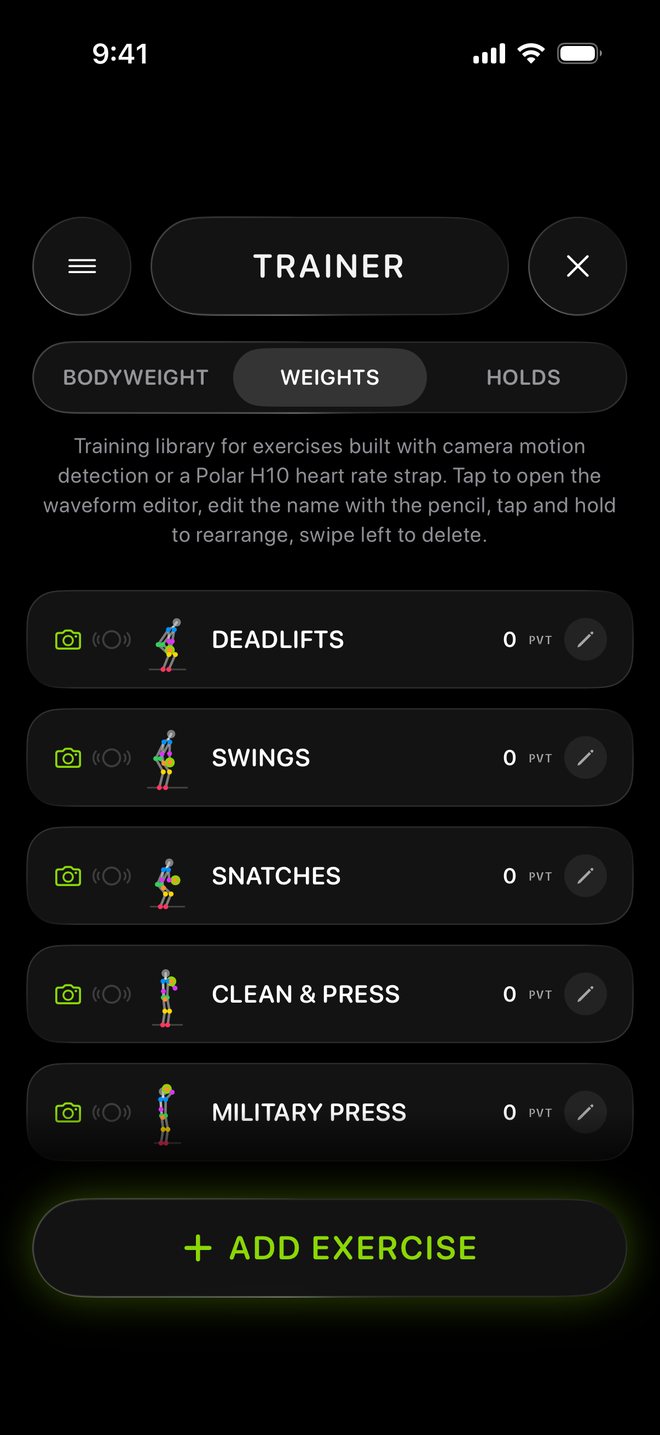
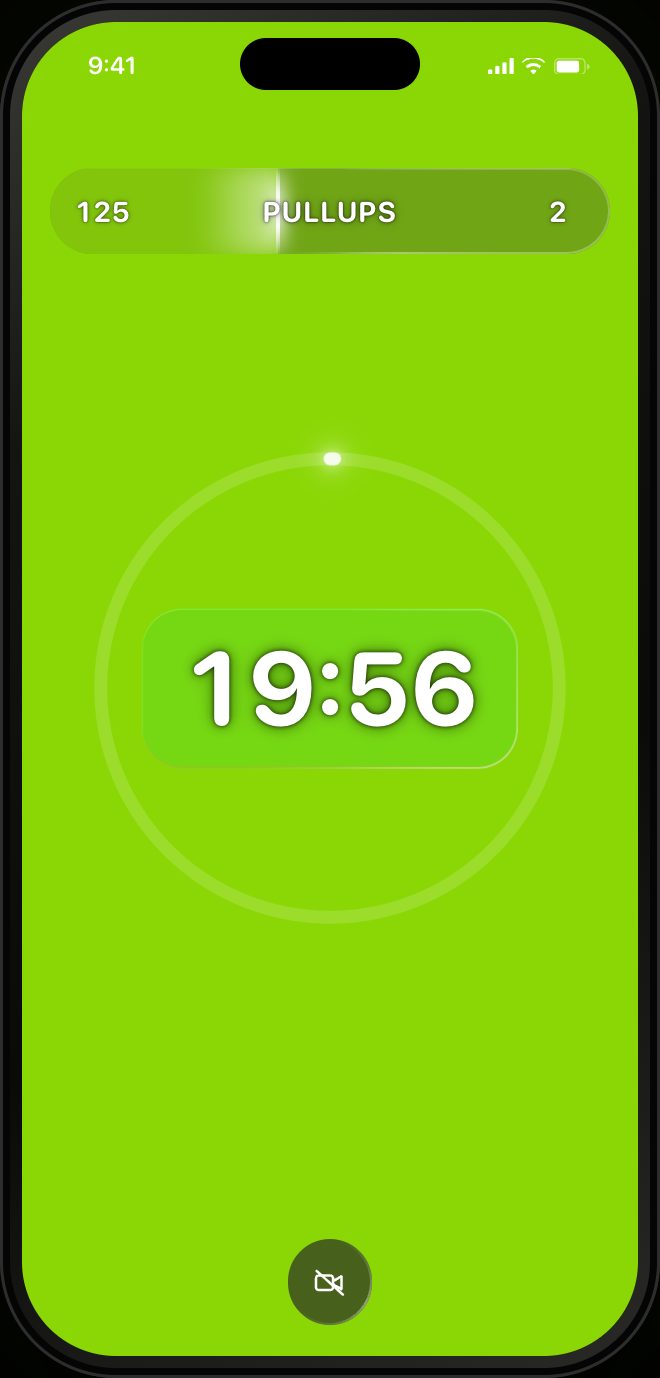
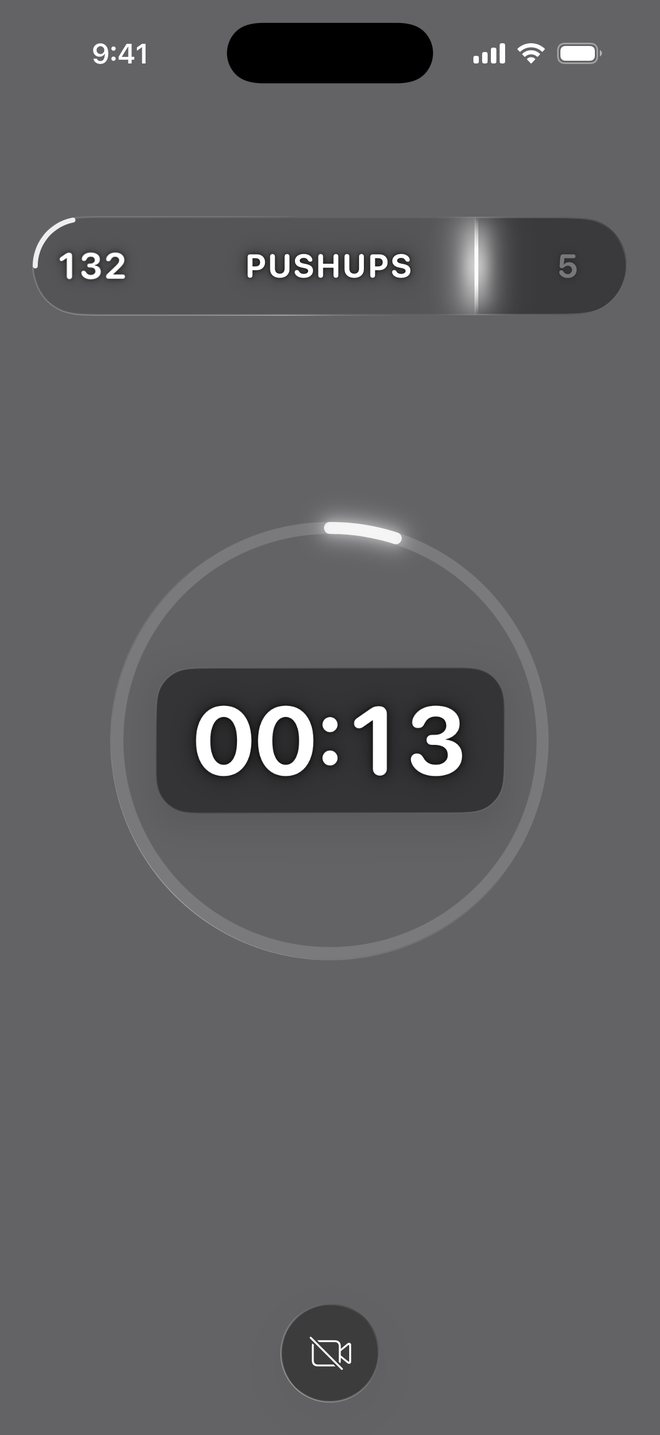
Deadlifts are one of the six kettlebell exercises RankTime counts with the camera, on the WEIGHTS tab with swings, snatches, clean and press, military press and thrusters. It counts the deadlift with both hands on one bell, from the floor to standing. A deadlift session is sets of reps with rest between them, so start from CENTURION, the REPS page that ends when you reach your reps.
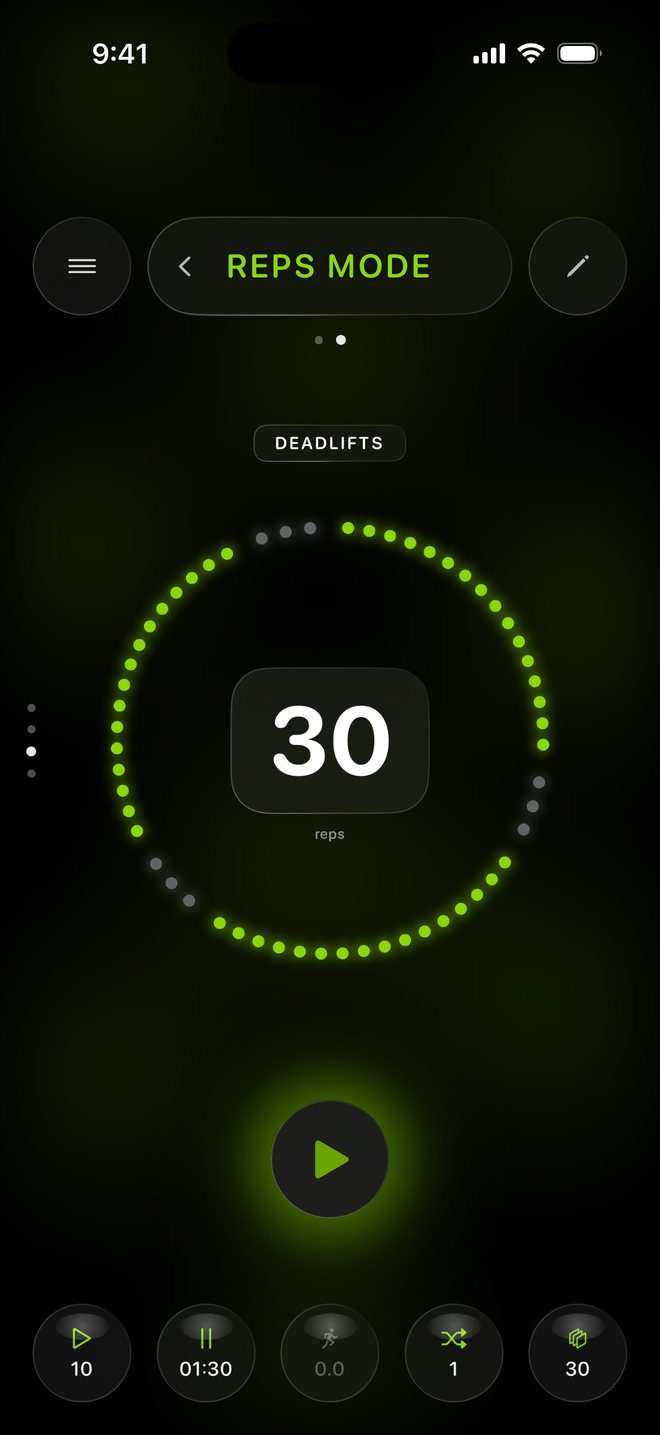
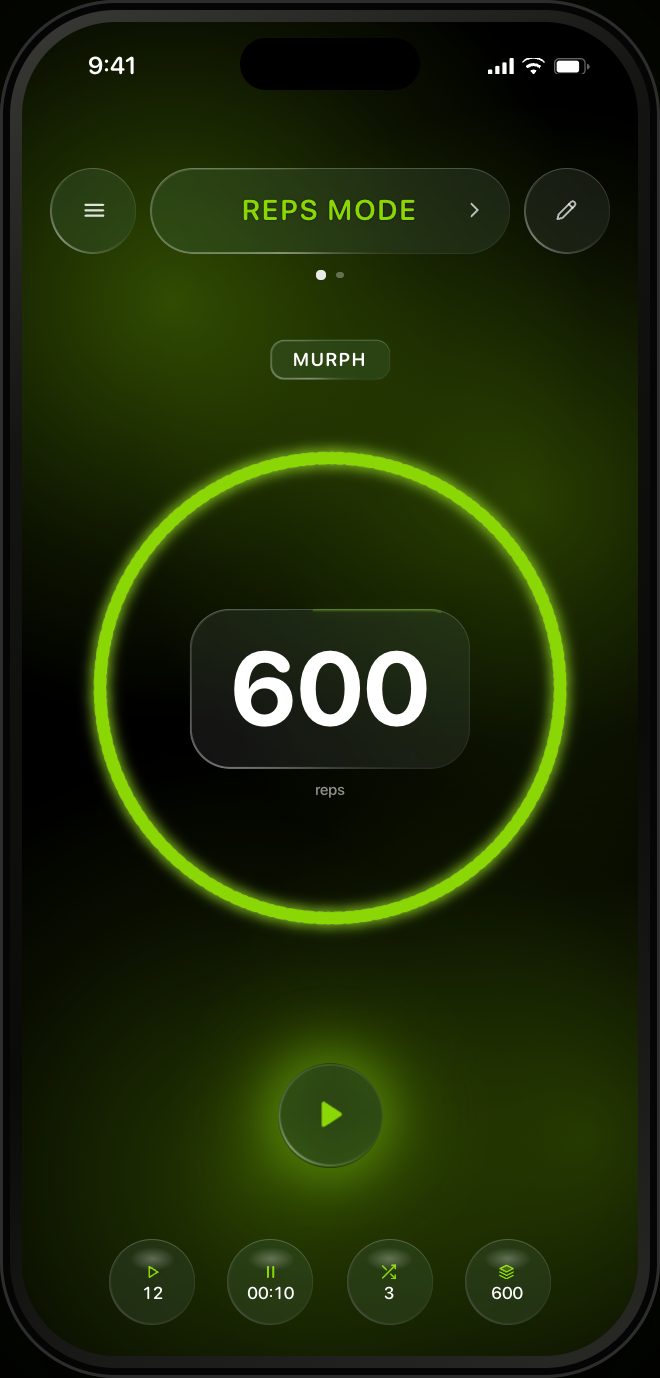
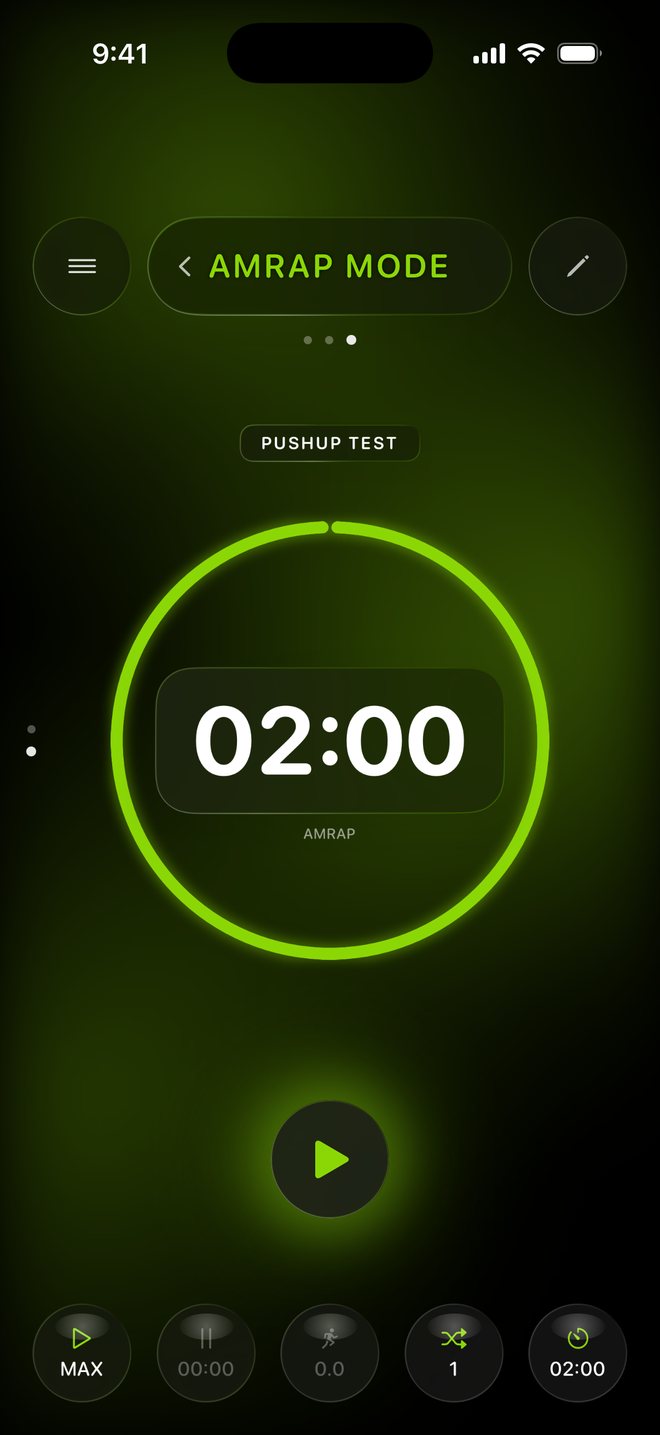
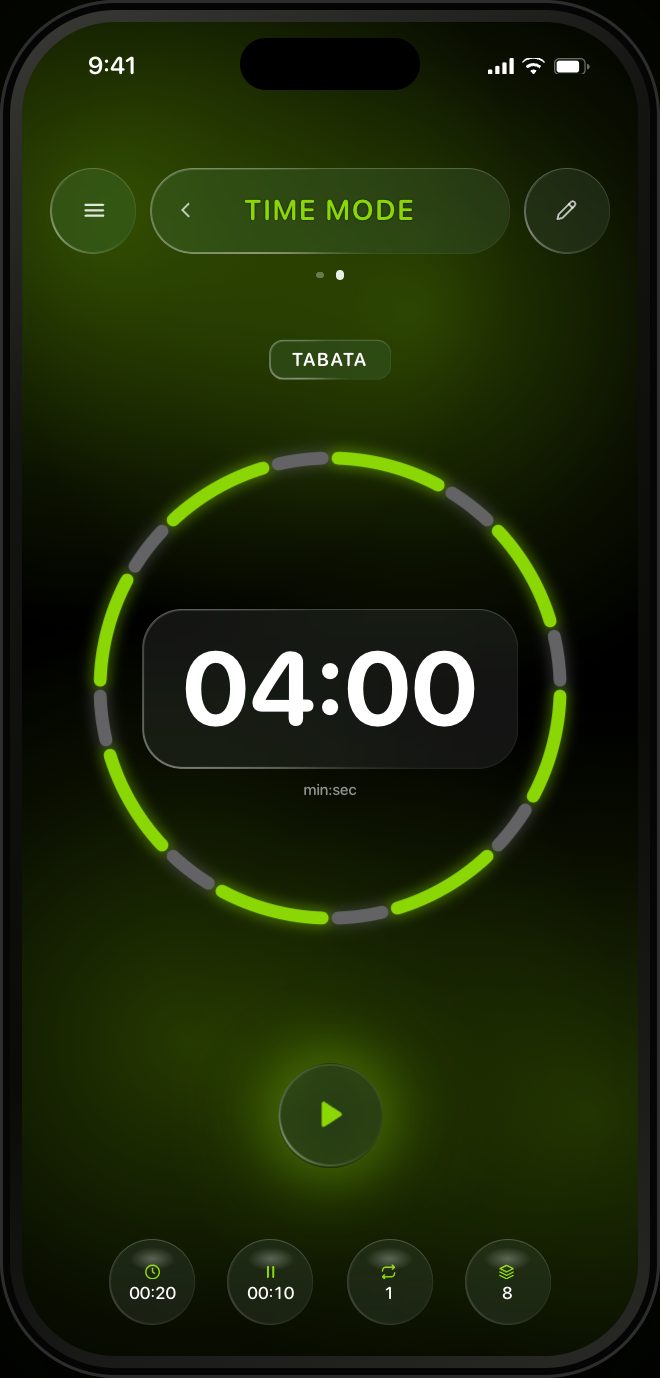
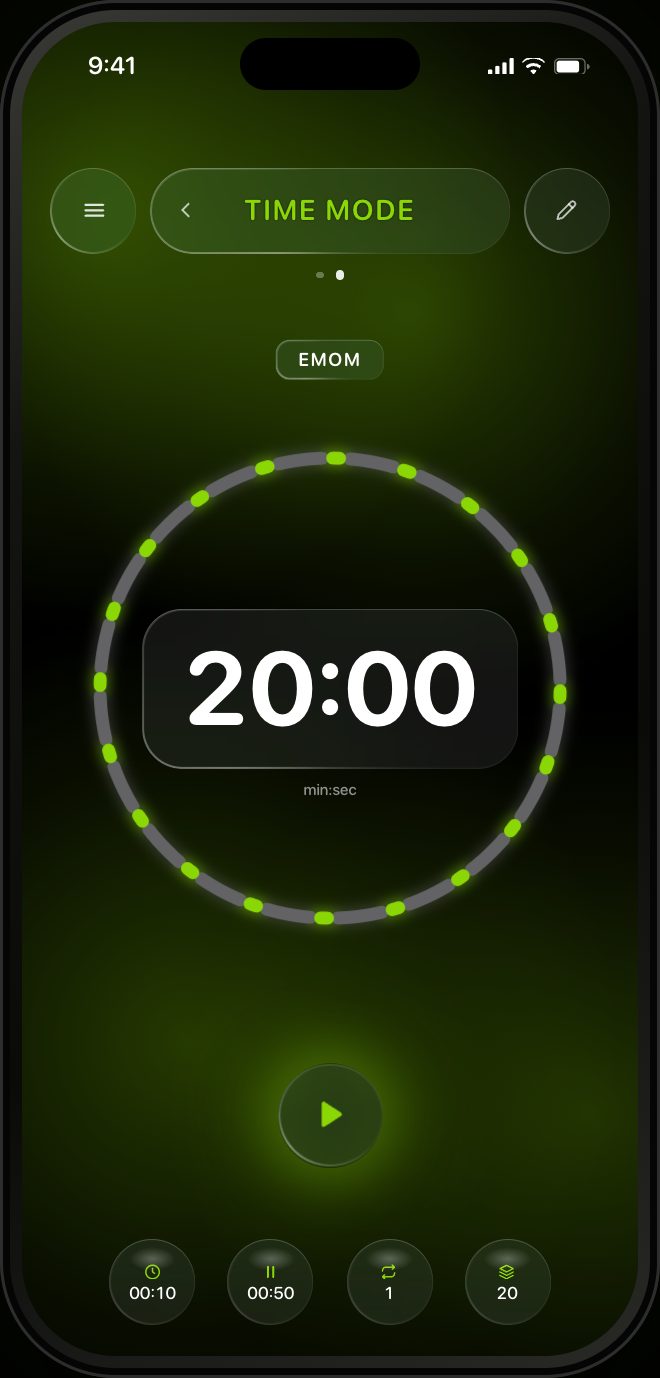
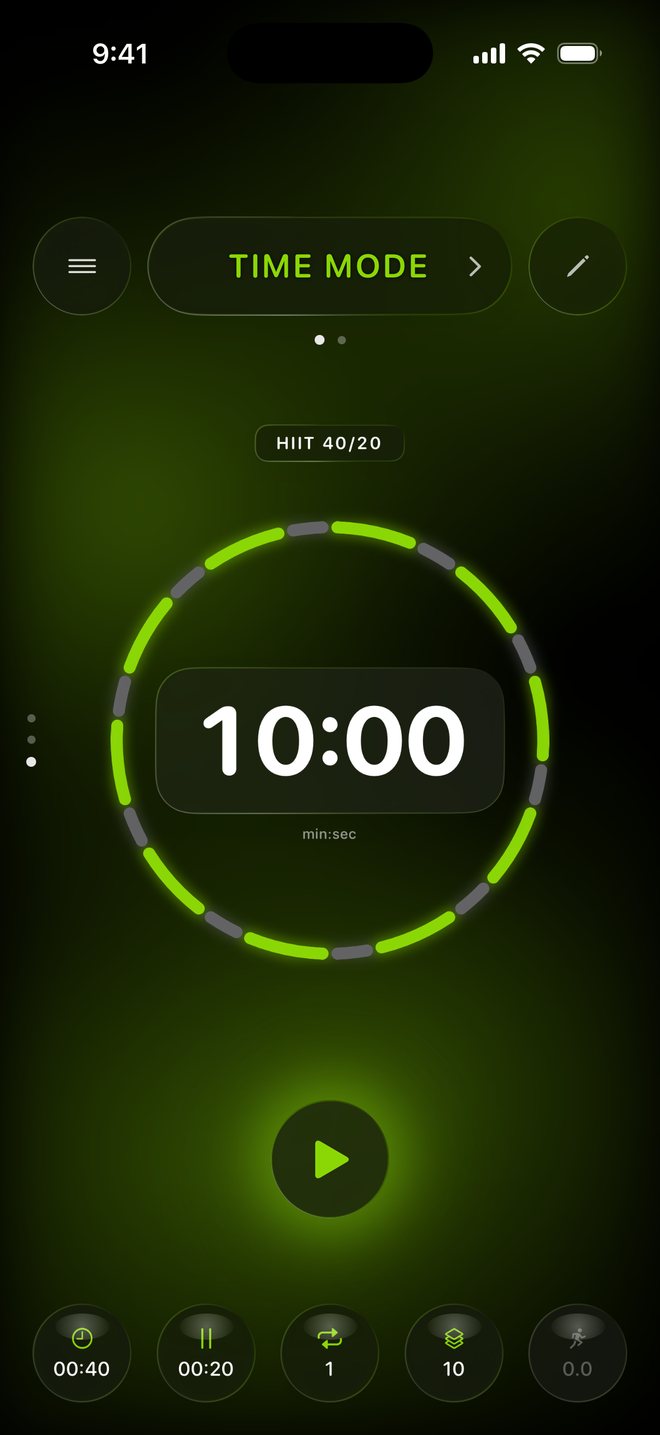
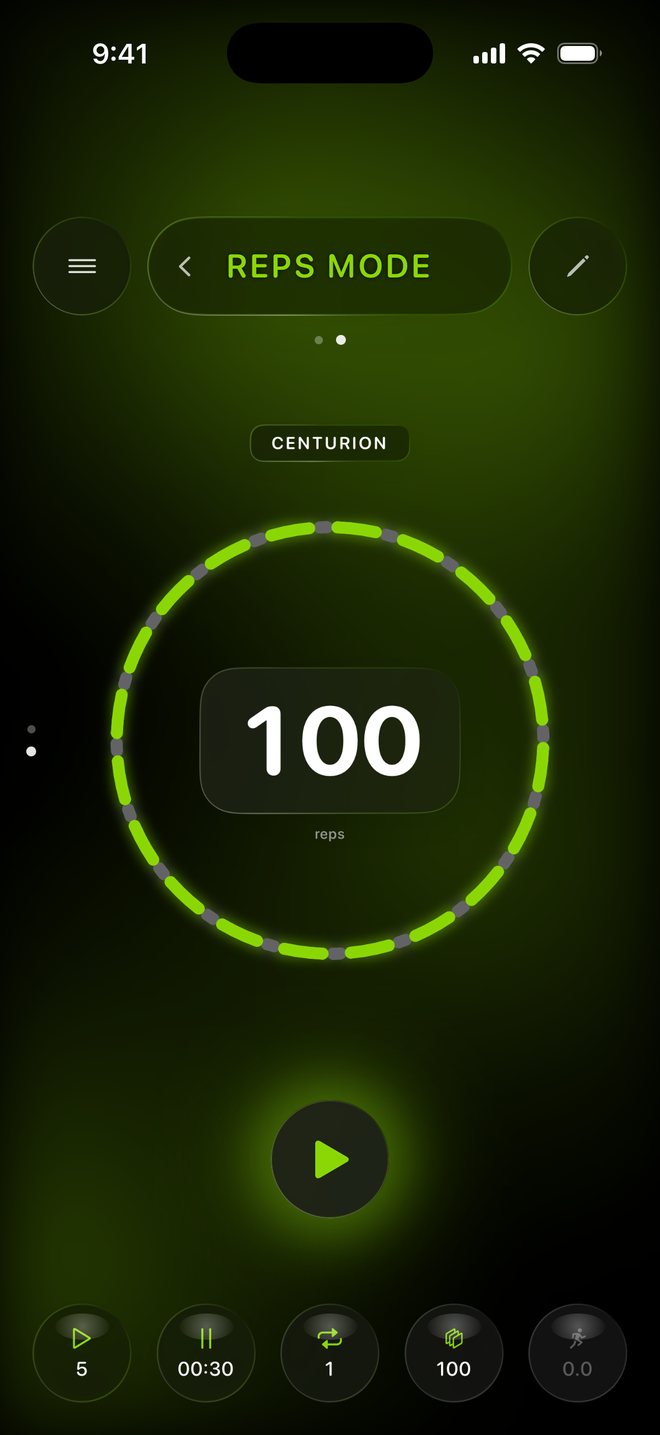
- Open CENTURION. Swipe sideways to REPS, then up or down to CENTURION, its last page: 100 reps in sets of 5, with 0:30 of rest.
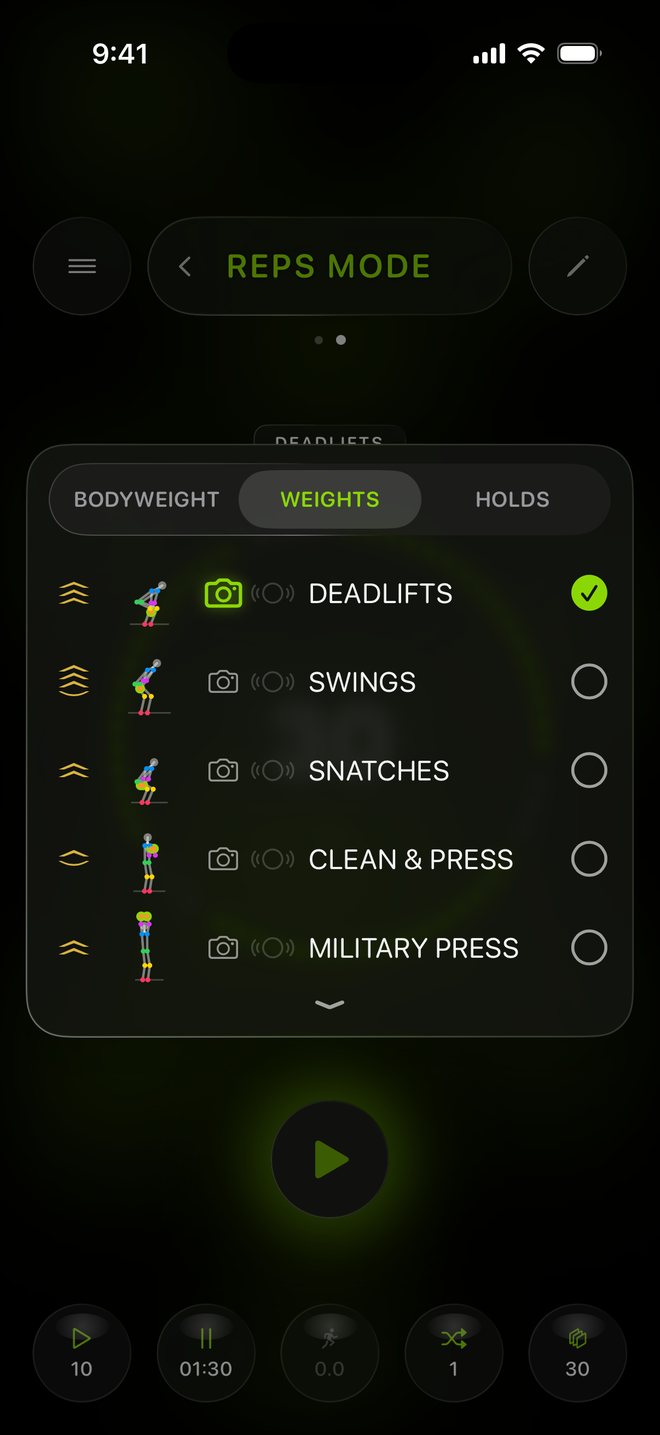
- Pick DEADLIFTS. Tap the exercises circle, fourth from the left, then the exercise under the ring to open the list. On WEIGHTS, tick DEADLIFTS, then untick PUSHUPS.
- Set your sets. The first circle is the reps per set: 10. The second is the rest: 1:30. The last is the target: 30 reps, which makes 3 sets of 10.
- Keep it. Once you change the page, the pencil at the top right turns into a tick, with a + under it. Tap the + and name it DEADLIFTS: it is saved as a new workout on REPS, a swipe up or down away.
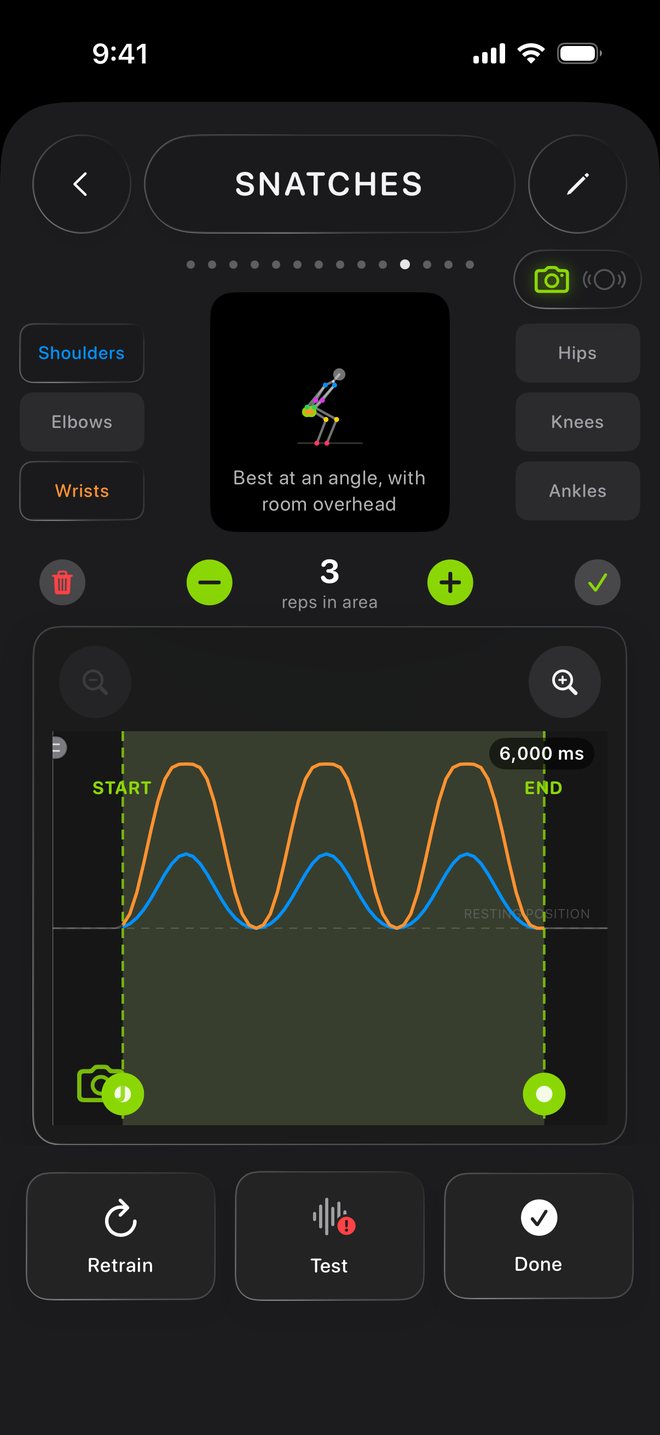
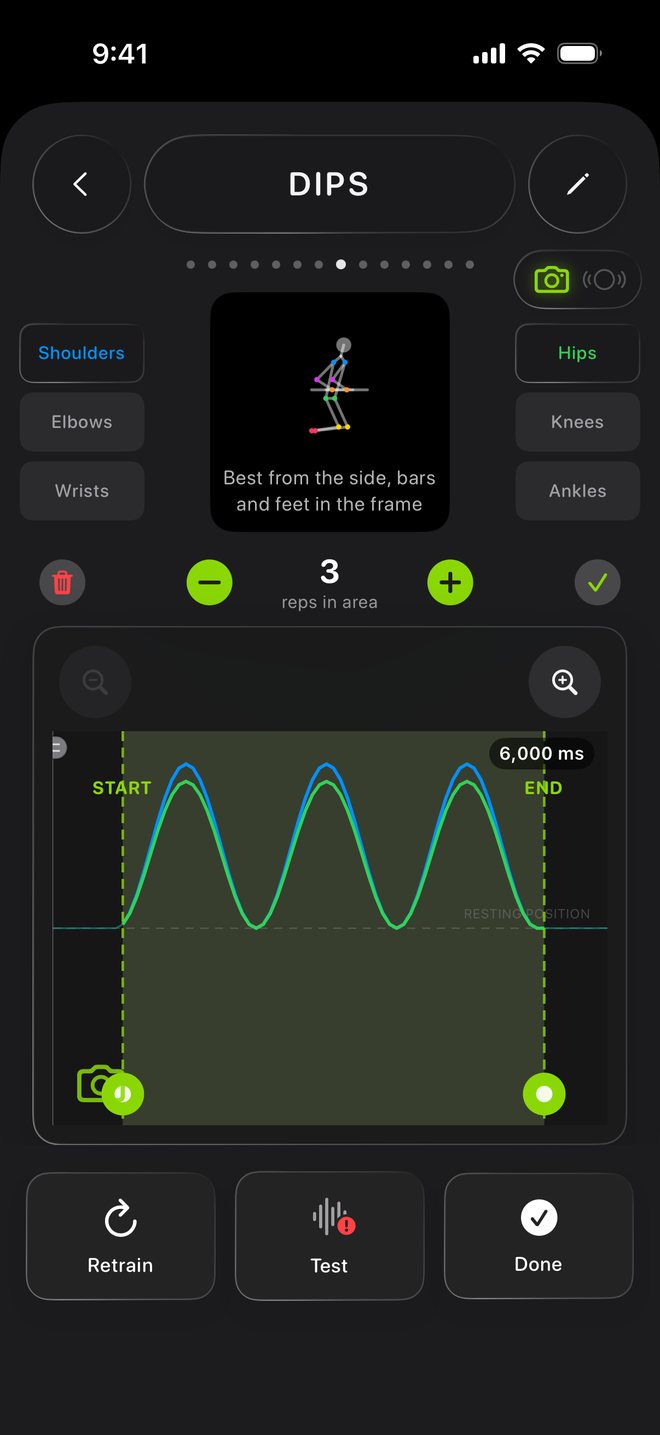
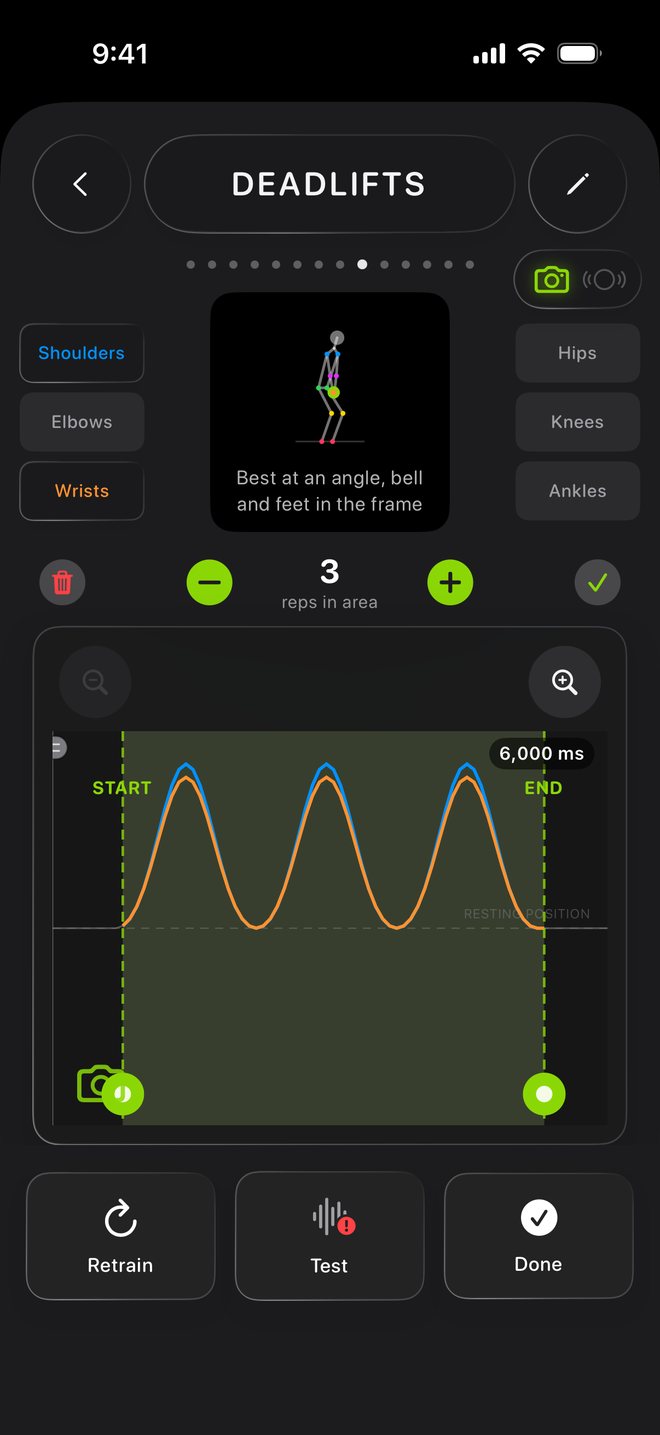
- Set up the phone. Stand it at an angle to you, about 2 meters (6 feet) away, with the bell and your feet in the frame. To check the spot first, open Trainer, WEIGHTS, DEADLIFTS and tap Test.
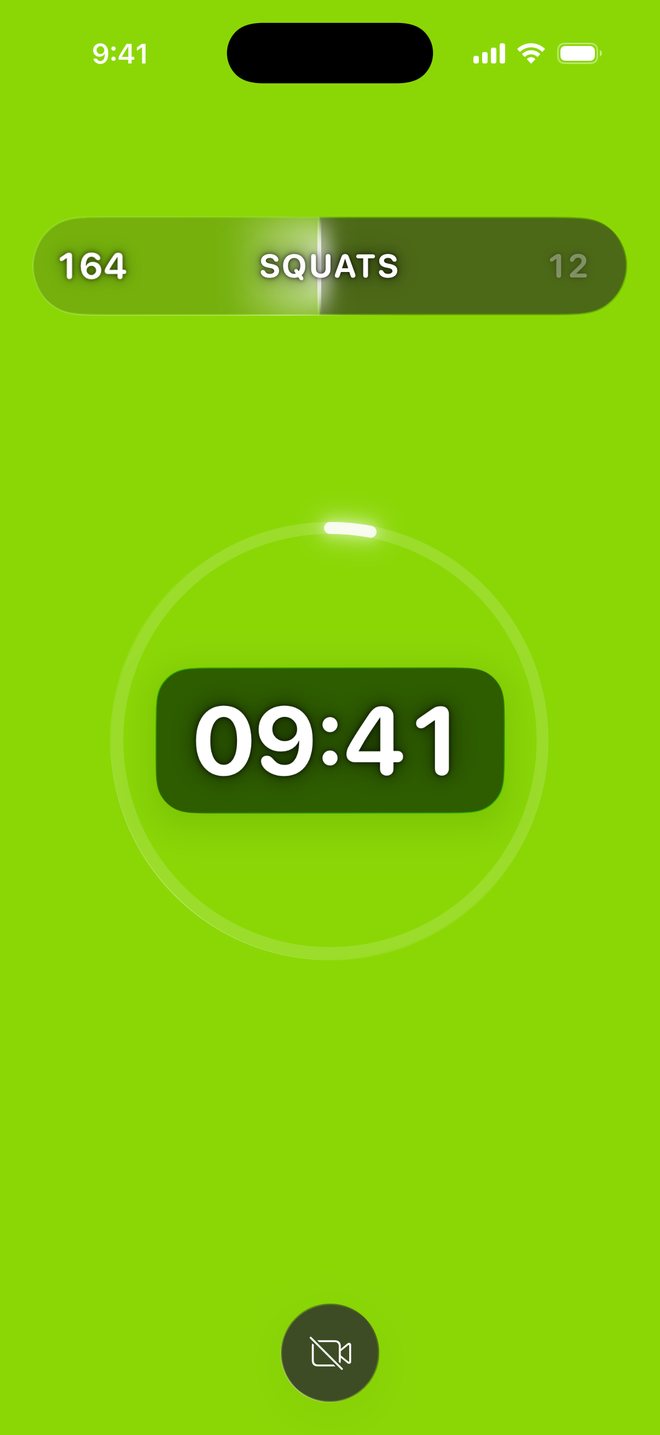
- Press play and lift. The camera counts every deadlift. The last rep of a set starts your rest, and the voice calls the next set. At 30 reps the workout ends and is saved.
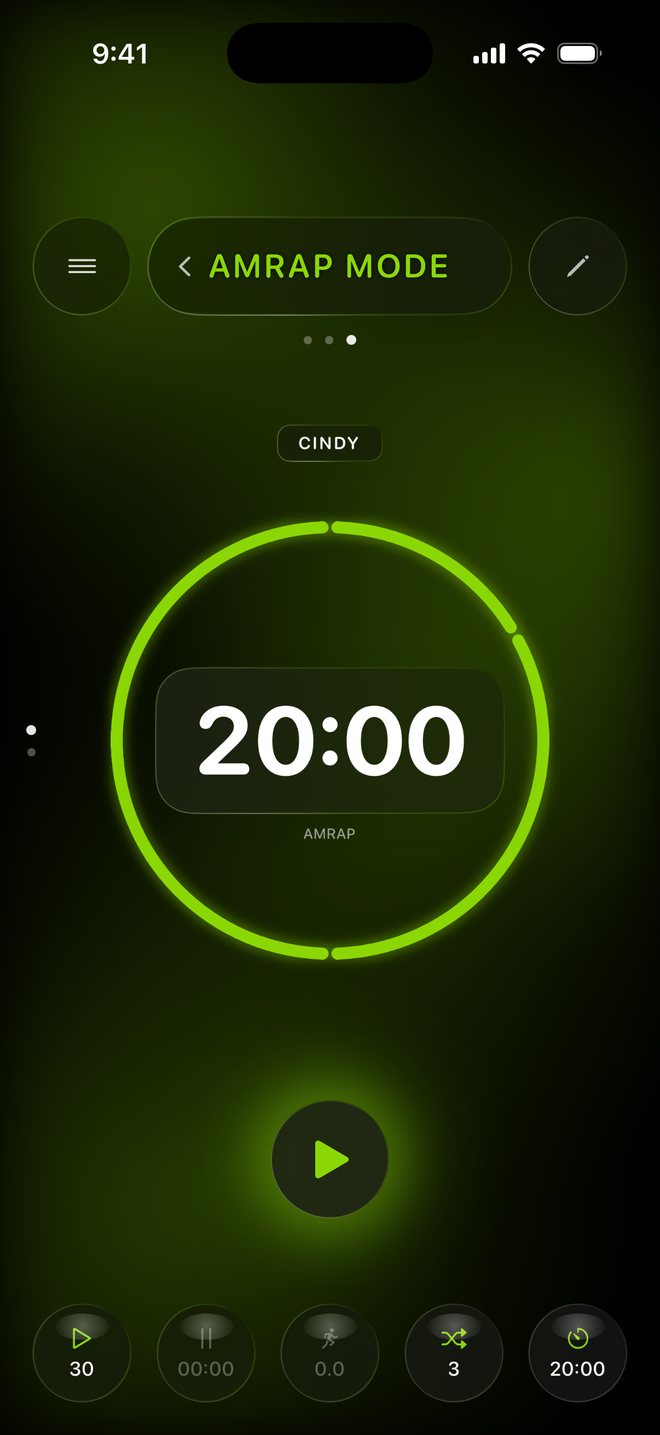
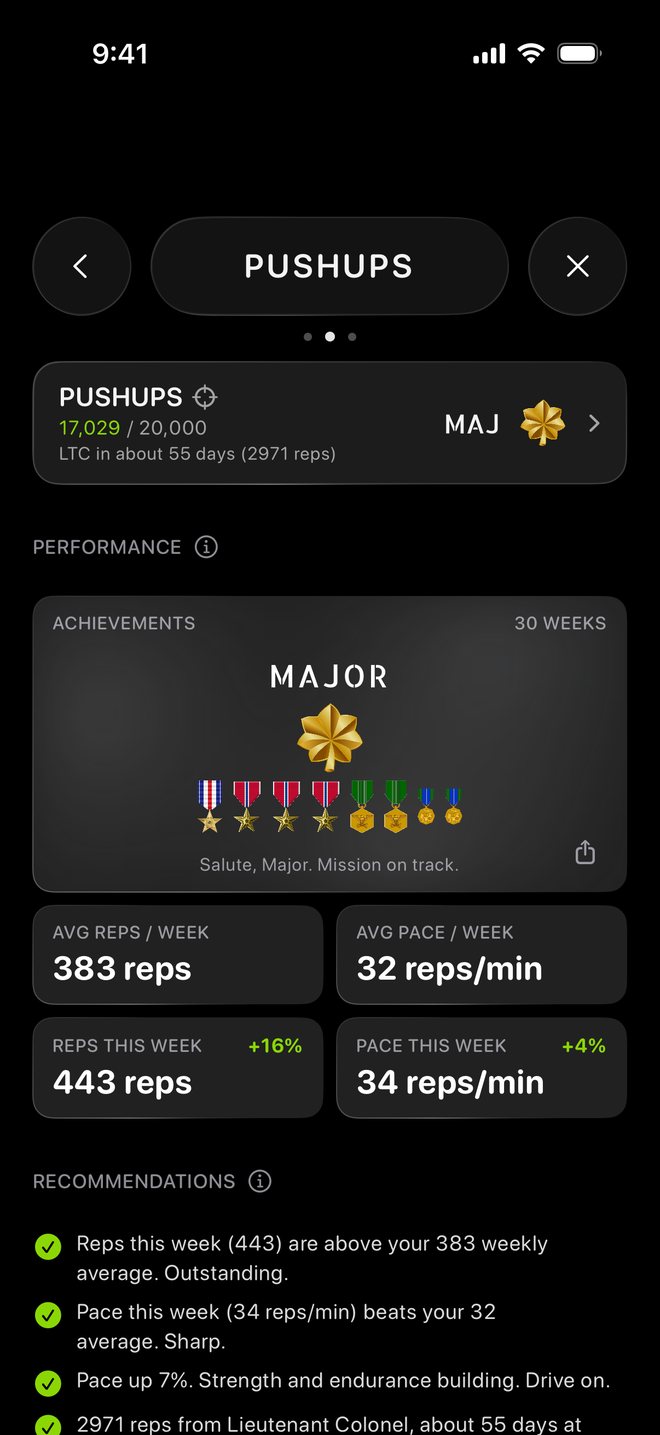
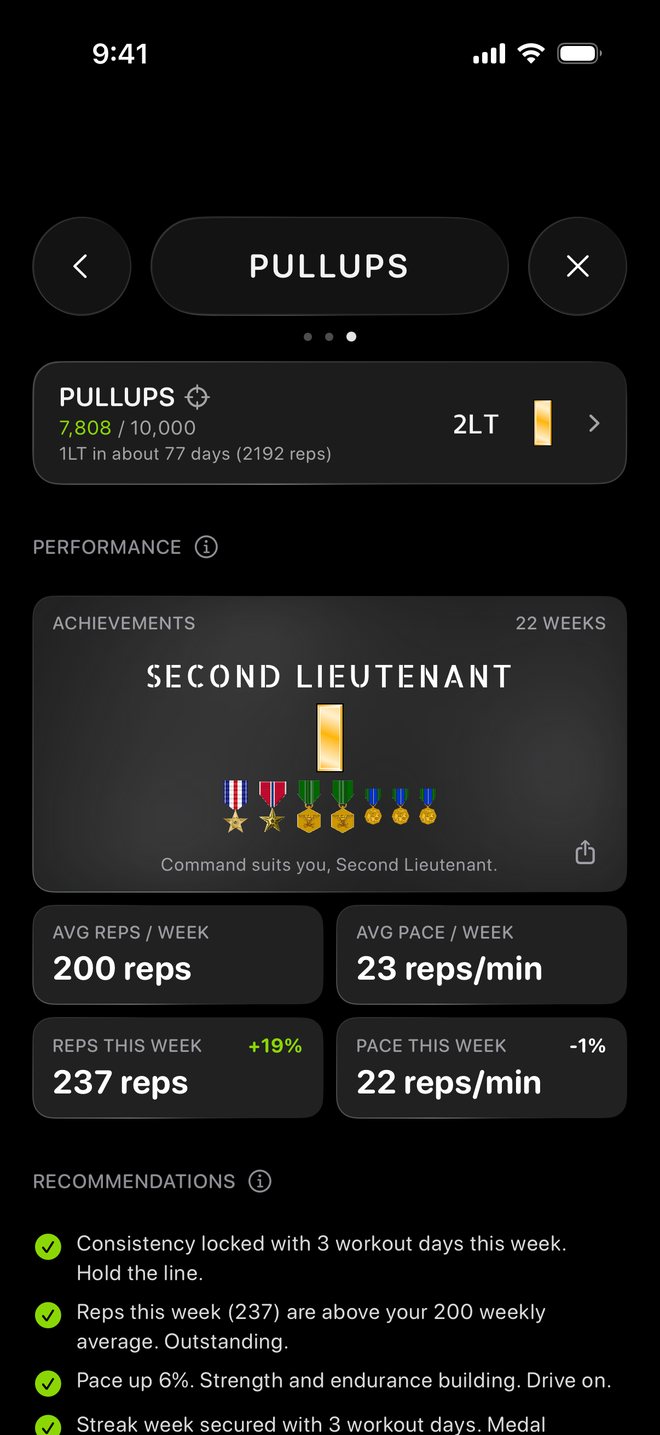
For the one minute test, start from the PUSHUP TEST instead, pick DEADLIFTS the same way and set its clock, the last circle, to 1:00. Your deadlifts build your DEADLIFTS rank, from Private to General of the Armies.
Sources
- Larsson H, Tegern M, Monnier A, and colleagues. Content validity index and intra- and inter-rater reliability of a new muscle strength/endurance test battery for Swedish soldiers. PLoS One, 2015.
- Meigh NJ, Keogh JWL, Schram B, Hing W, Rathbone EN. Effects of supervised high-intensity hardstyle kettlebell training on grip strength and health-related physical fitness in insufficiently active older adults: the BELL pragmatic controlled trial. BMC Geriatrics, 2022.
- Chen HT, Wu HJ, Chen YJ, Ho SY, Chung YC. Effects of 8-week kettlebell training on body composition, muscle strength, pulmonary function, and chronic low-grade inflammation in elderly women with sarcopenia. Experimental Gerontology, 2018.
- Thomas JF, Larson KL, Hollander DB, Kraemer RR. Comparison of two-hand kettlebell exercise and graded treadmill walking: effectiveness as a stimulus for cardiorespiratory fitness. Journal of Strength and Conditioning Research, 2014.
- Meigh NJ, Keogh JWL, Schram B, Hing WA. Kettlebell training in clinical practice: a scoping review. BMC Sports Science, Medicine and Rehabilitation, 2019.
- American College of Sports Medicine. Progression models in resistance training for healthy adults. Medicine and Science in Sports and Exercise, 2009.
- Martín-Fuentes I, Oliva-Lozano JM, Muyor JM. Electromyographic activity in deadlift exercise and its variants. A systematic review. PLoS One, 2020.
- Escamilla RF, Francisco AC, Kayes AV, Speer KP, Moorman CT. An electromyographic analysis of sumo and conventional style deadlifts. Medicine and Science in Sports and Exercise, 2002.
- Diamant W, Geisler S, Havers T, Knicker A. Comparison of EMG activity between single-leg deadlift and conventional bilateral deadlift in trained amateur athletes. International Journal of Exercise Science, 2021.
- Coratella G, Tornatore G, Longo S, Esposito F, Cè E. An electromyographic analysis of Romanian, step-Romanian, and stiff-leg deadlift: implication for resistance training. International Journal of Environmental Research and Public Health, 2022.
- Cenidoza D. Enter the barbell deadlift. StrongFirst, 2020. The kettlebell deadlift first, and the wall hinge drill.
- National Academy of Sports Medicine. Kettlebell deadlift. NASM exercise library.
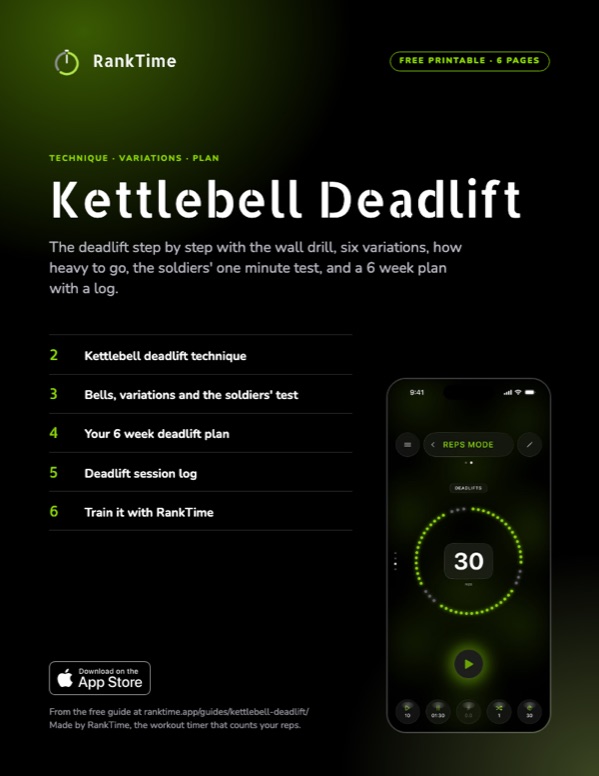
Print it: technique, variations and a 6 week plan
Six printable pages: the technique and the wall drill on one page, the bell rules, six variations and the soldiers' test, a 6 week planner and a log for every session.
Download the free PDF
Deadlift with RankTime
Deadlifts counted by the camera, sets and rest that run themselves, a one minute test clock, and a military rank that grows with every rep.

More guides