Kettlebell Snatch: How to Do It, Muscles Worked and the Snatch Test
Updated November 19, 2026 · 13 minute read · Free PDF
The kettlebell snatch takes a kettlebell from between your legs to straight overhead in one movement, with one arm. Your hips do the work, as in a swing, and your arm guides the bell up and locks it out. It works your glutes, hamstrings, back, shoulders and grip, and it is hard on your lungs: in one study, 4 weeks of snatch intervals raised aerobic fitness by about 6%. The classic test is 100 snatches in 5 minutes, with a 24 kg bell for most men and 12 to 16 kg for most women. Here is how to do it step by step, the muscles it works, what the research shows, every snatch test standard, and workouts that get you there.
The kettlebell snatch at a glance
| What it is | One arm, from a swing between your legs to a locked arm overhead, in one movement |
|---|---|
| Main muscles | Glutes and hamstrings drive it. Your back, shoulders, the obliques on the other side and your grip hold it together |
| Equipment | One kettlebell |
| Space | About 2 meters (6 feet) clear around you, and a ceiling well above the bell at arm's length |
| The test | 100 snatches in 5 minutes, switching hands as often as you like |
| Learn first | The kettlebell swing, with two hands and then with one |
How to do a kettlebell snatch
- Set up. Feet a little wider than your hips, the bell on the floor about a foot in front of you. Push your hips back, keep your back flat and grab the handle with one hand.
- Hike it. Tip the bell back and pass it between your legs, high up near the groin, as in a swing.
- Snap your hips. Drive them forward and stand up tall. As in the swing, this is what moves the bell.
- Keep it close. As the bell rises, let your elbow bend a little and keep the bell near your body, so it travels up, not out in a wide arc.
- Punch through. As the bell passes your face, push your hand up through the handle. The bell turns around your hand and settles on the back of your forearm, instead of flipping over and hitting it.
- Lock out. Arm straight, biceps by your ear, knees straight. Stop for a moment, bell and body still.
- Let it fall. Let the bell drop in front of you, close to your body but without touching your chest or shoulder. Stay tall until your arm meets your body, then push your hips back and let the bell swing between your legs into the next rep.
To switch hands, do one swing and take the handle with your other hand at chest height, or pass it in the backswing once you are confident. To finish, swing the bell back one last time and set it down in front of you. Never drop it from overhead.
How to learn the kettlebell snatch
The snatch is a swing that keeps going, so learn it in steps, each one solid before the next:
- Two hand swing, until the hip snap is crisp and your arms just hang on. The kettlebell swing guide has the form and the mistakes.
- One arm swing. The same swing to chest height with one hand. Do both sides.
- High pull. A one arm swing that, near chest height, pulls the elbow back so the bell comes toward you. That is the path a snatch takes.
- Snatch. The high pull, then punch through to the lockout. Start with 3 to 5 a side.
You need a straight arm overhead that feels easy before you snatch. Neither instructor test below counts a rep without a locked elbow. If your shoulder will not let your arm go straight up, work on that first, and stop if snatching hurts your shoulder.
Common kettlebell snatch mistakes
- The bell bangs your forearm. It flipped over the top. Keep it closer and punch your hand through earlier, while the bell is still rising.
- Pressing it out. If the arm finishes the lift with a press, the hips did not send the bell high enough. Snap harder. In the SFG and RKC tests, a pressed rep does not count.
- No stop at the top. The elbow must lock and everything must be still for a moment. A bent elbow does not count either.
- Hitting your chest on the way down. Let the bell fall in front of you, not toward you. Touching your chest or shoulder does not count in the tests, and in the RKC test neither does passing through the rack position at your shoulder.
- Squatting it. Like the swing, the snatch is a hip hinge: hips back, not down.
- The free hand on your thigh. Keep it free or on your hip. In the tests, a hand on the knee or thigh does not count.
- Torn hands. High reps tear calluses. Chalk helps your grip. If the skin tears, stop for the day and let it heal.
Kettlebell snatch muscles worked
The snatch is a whole body lift. A 2017 study measured eight muscles while 14 trained lifters did the one arm swing, the snatch and the clean, each with a bell they could lift 8 to 10 times (Lyons and colleagues, 2017): the biceps, the front and the back of the shoulder, the lower back, the front of the thigh, the hamstrings, the obliques on the other side and the glutes. All three lifts used all eight, but not equally. The lower back worked harder in the swing than in the snatch, and the obliques on the other side worked harder in the snatch and the clean than in the swing.
| Glutes and hamstrings | The hip snap that sends the bell up, as in the swing |
|---|---|
| Lower back | Keeps your back flat in the hinge, less than in a swing |
| Shoulders | Guide the bell overhead and hold the locked arm |
| Obliques | Those on the other side stop your trunk from twisting under a bell in one hand |
| Thighs | Straighten your knees as you stand up tall |
| Forearms and grip | Hold the handle through every swing, catch and drop |
Snatch or swing? Researchers measured 22 men doing both with a 24 kg (53 lb) bell on a force plate (Lake and colleagues, 2014). The snatch moved lifter and bell a little higher, 22 cm against 18 cm, while the two hand swing pushed more forward. Otherwise the work done was much the same, and the authors suggest coaches can use the two in place of each other for power, as earlier research found that swing training builds maximum and explosive strength.
Kettlebell snatch benefits: what the research shows
Better aerobic fitness in 4 weeks. 17 women who played college soccer trained 3 days a week for 4 weeks, on top of their usual strength and conditioning (Falatic and colleagues, 2015). 9 of them did 20 minutes of snatches, 15 seconds on and 15 seconds off. Their VO2max, the standard measure of aerobic fitness, rose by 2.3 ml/kg/min, about 6%. The 8 who did 20 minute circuits with free weights and body weight exercises did not improve.
A very high heart rate. 10 experienced kettlebell users aged 29 to 46 did the same 15:15 snatch workout for 20 minutes in a study for the American Council on Exercise (Porcari and Schnettler, 2010). Their heart rate averaged 86 to 99% of the maximum they reached in a kettlebell test, and they burned 272 calories, 13.6 a minute. The 20 calories a minute you may see quoted adds an estimate from blood lactate on top of that.
Cardio in one long set. 10 men did a test of non-stop snatches with a 16 kg (35 lb) bell, set up like a kettlebell sport event (Chan and colleagues, 2020). They reached 83% of their maximum oxygen uptake, measured on a rowing machine, and 98% of their maximum heart rate. The authors conclude that this trains aerobic fitness for anyone with a VO2max of 51 or less, by the American College of Sports Medicine's guidelines.
What it does not show. These are small studies of young or trained people over a few weeks. We found no study of the snatch for weight loss or with beginners, so treat it as a conditioning lift, not a shortcut.
Which kettlebell weight for the snatch
Start light. Learn the snatch with a bell you can swing well with one hand and hold overhead on a straight arm without strain. That is often lighter than the bell you swing with two hands. Move up once 10 snatches a side feel smooth.
The test bells are the usual goal. StrongFirst's instructor test, the SFG I, sets the bell by sex, age and bodyweight:
| Women up to 59 kg (130 lb) | 12 kg, 100 snatches in 5 minutes |
|---|---|
| Women over 59 kg (130 lb) | 16 kg, 100 in 5 minutes |
| Women 50 to 64 | 12 kg, 100 in 5 minutes |
| Women 65 and over | 12 kg, 50 in 3 minutes |
| Men up to 68 kg (150 lb) | 20 kg, 100 in 5 minutes |
| Men 68 to 100 kg (150 to 221 lb) | 24 kg, 100 in 5 minutes |
| Men over 100 kg (221 lb) | 28 kg, 100 in 5 minutes |
| Men 50 to 64 | 20 kg, 100 in 5 minutes |
| Men 65 and over | 20 kg, 50 in 3 minutes |
The RKC, the other big kettlebell course, also asks 100 in 5 minutes, in smaller steps. Men: 18 kg up to 61 kg (135 lb) bodyweight, 20 kg up to 68 kg (150 lb), 22 kg up to 75 kg (165 lb) and 24 kg above that. Women: 10 kg up to 45 kg (100 lb), 12 kg up to 54 kg (120 lb), 14 kg up to 61 kg (135 lb) and 16 kg above that. From 50 to 64 the bells are lighter, 16 to 22 kg for men and 8 to 16 kg for women depending on bodyweight, and from 65 the test is 50 snatches in 3 minutes with those same bells.
The kettlebell snatch test
The SFG and RKC tests share the same rules:
- 100 snatches in 5 minutes, both arms added together.
- Switch hands as often as you like, and set the bell down to rest whenever you need to. The clock keeps running.
- Every rep swings back between your legs and goes overhead in one movement, to a lockout with the elbow and knees straight and the bell and body still, before it is counted.
- No count for a bent elbow, a press out, no stop at the top, a hand on your thigh, or touching your chest or shoulder on the way down. Three no counts end the test.
- Dropping the bell instead of setting it down, or touching it with your free hand except to switch, ends it too.
- Chalk is allowed. Belts, wrist wraps and other support are not.
Pacing it. 100 in 5 minutes is 20 a minute, or 10 every 30 seconds: for example 10 with one hand, then 10 with the other, every minute. That is fast. In a study of a 6 minute snatch set with a 24 kg bell, 12 kettlebell trained men averaged 13.9 snatches a minute, and the force they put into the bell dropped as the set went on (Ross and colleagues, 2017). Build up to the test pace a minute at a time.
| Secret Service Snatch Test | As many as you can in 10 minutes, with a 24 kg bell for men and 16 kg for women. 200 is the benchmark. |
|---|---|
| Kettlebell sport | One set of up to 10 minutes (5 for beginners) with a single hand change. Adult men lift 24, 28 or 32 kg, women 16, 20 or 24 kg (IUKL). |
| Seniors, 65 and over | 50 in 3 minutes in both the SFG and RKC tests. |
Free PDF. Both bell tables and every snatch test above are on page 2, ready to print. Page 3 has the technique, the no count rules and a log for 12 tests. Download it
Kettlebell snatch workouts
| First snatches | Every minute: 5 snatches with one hand, then 5 with the other, and rest for the rest of the minute. 5 to 10 minutes. More on this format in the EMOM guide. |
|---|---|
| 15:15 intervals | 20 minutes of 15 seconds of snatches and 15 seconds of rest, switching hands each time: the workout from the studies above. 5 snatches in 15 seconds is the test's pace. |
| Test pace | Every minute: 10 with one hand, then 10 with the other. 5 minutes makes 100. Start with 2 or 3 minutes. |
| Secret Service pace | The same 10 and 10 every minute for 10 minutes: 200. |
A 4 week plan, as in the study.
- Day 1: test. 5 minutes with your bell, count every good snatch.
- Monday, Wednesday and Friday: 15:15 for 20 minutes. Pick a number of snatches for each 15 seconds that you can keep crisp all the way through. 5 is the test pace. If 5 is too many, start with 3 or 4 and add one when it feels easy. If 20 minutes is too long at first, start with 10 and add 2 minutes a session.
- End of week 4: test again.
Rest between the snatch days: your hands and grip need it. For more on rest, see how long to rest between sets.
Free PDF. Page 4 turns this plan into a 4 week planner to tick off, with your numbers and both test days. Download it
Common questions
How many kettlebell snatches in 5 minutes is good?
100, with the test bell, is the standard for kettlebell instructors, and it is meant to be hard. For a first test, every clean rep counts: that is your starting number, and you test again after 4 weeks of training. Trained men in a study averaged 13.9 a minute with a 24 kg bell in a long set, about 70 in 5 minutes at that pace.
Is the kettlebell snatch better than the swing?
Not better, different. The power is much the same, the snatch lifts higher, and it works the obliques more and the lower back less. Learn the swing first: it is the first half of every snatch.
How many calories does a kettlebell snatch workout burn?
Experienced kettlebell users burned 272 calories in 20 minutes of 15 seconds of snatches and 15 seconds of rest, 13.6 a minute. A heavier person, a heavier bell or a faster pace burns more.
Why does the kettlebell hit my forearm?
It is flipping over the top of your hand. Keep the bell closer to your body as it rises, and punch your hand through the handle earlier, so the bell turns around your hand instead of falling over it.
Can beginners do kettlebell snatches?
Yes, once the swing is solid, with a light bell and a few reps a side. Your arm must lock out overhead with ease. If it does not, or your shoulder hurts, stick to swings for now.
How to do a snatch test with RankTime
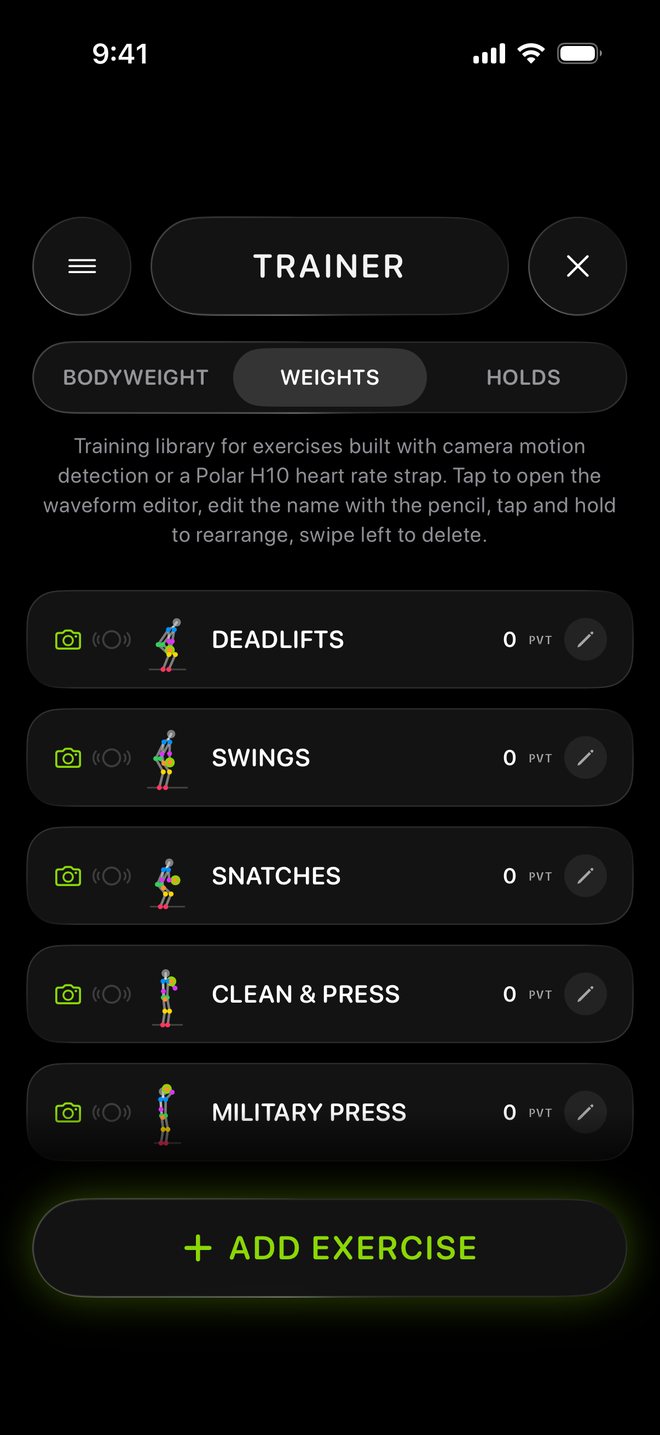
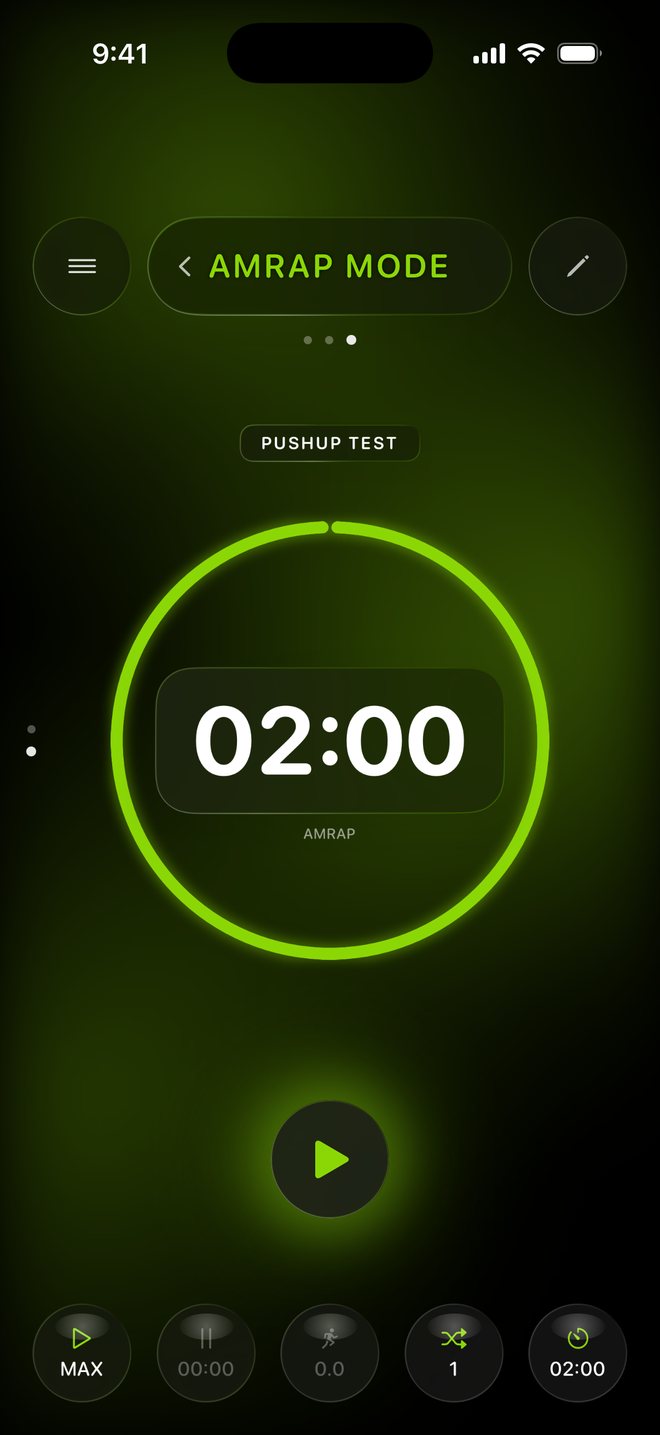
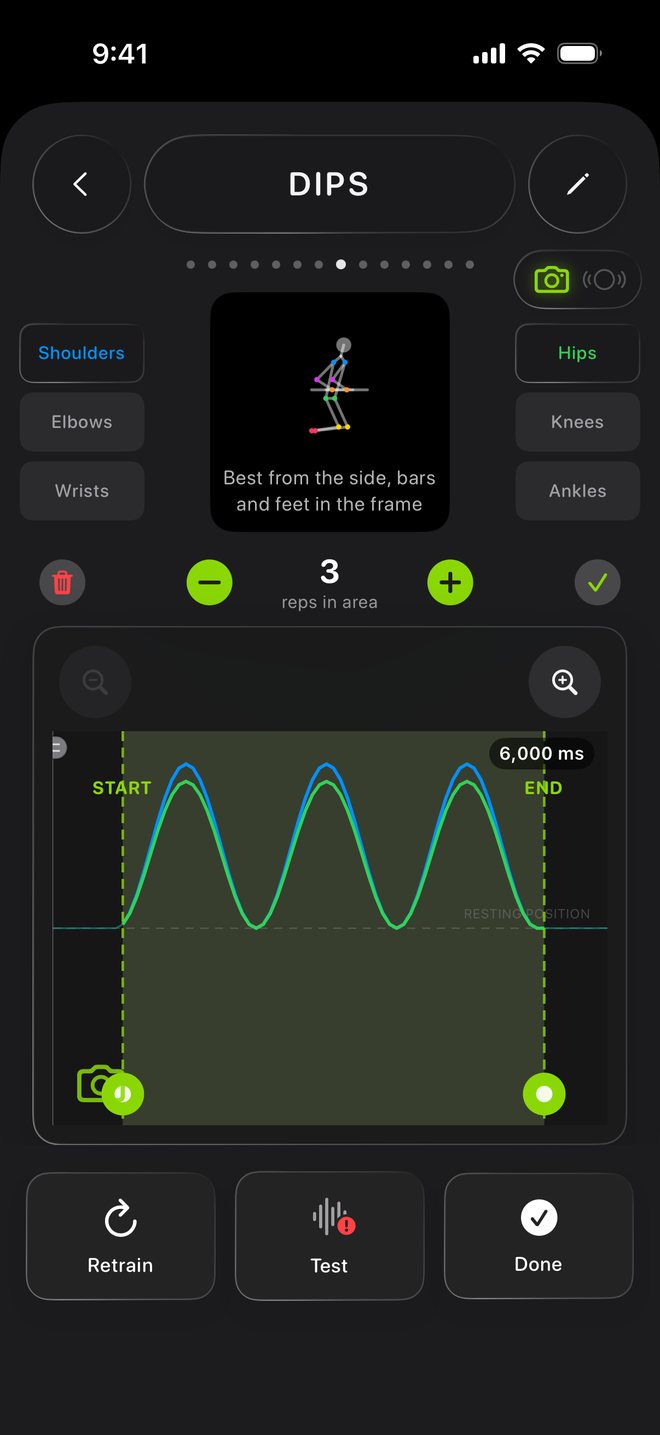
Snatches are one of the six kettlebell exercises RankTime counts with the camera, on the WEIGHTS tab with deadlifts, swings, clean and press, military press and thrusters. It counts every snatch with either hand and, filmed at an angle, marks each rep L or R. The snatch test is one non-stop set against the clock, just like the PUSHUP TEST, so start from that.
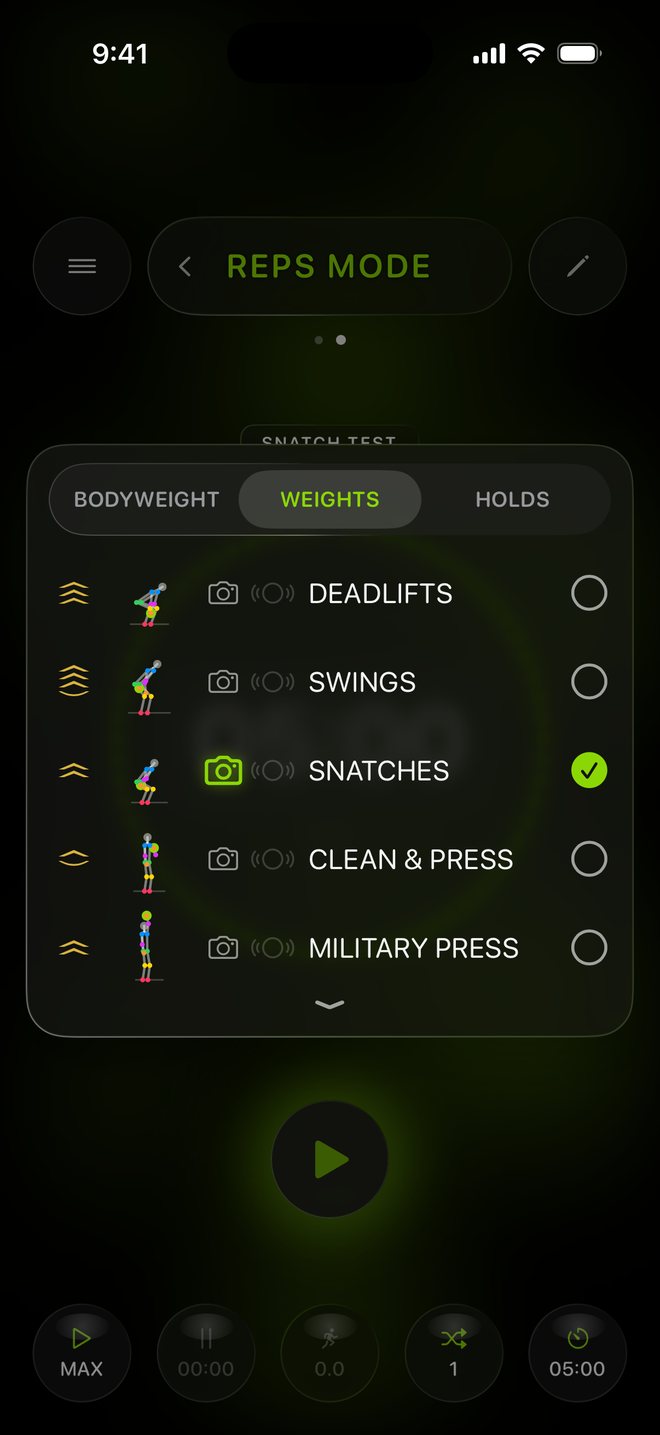
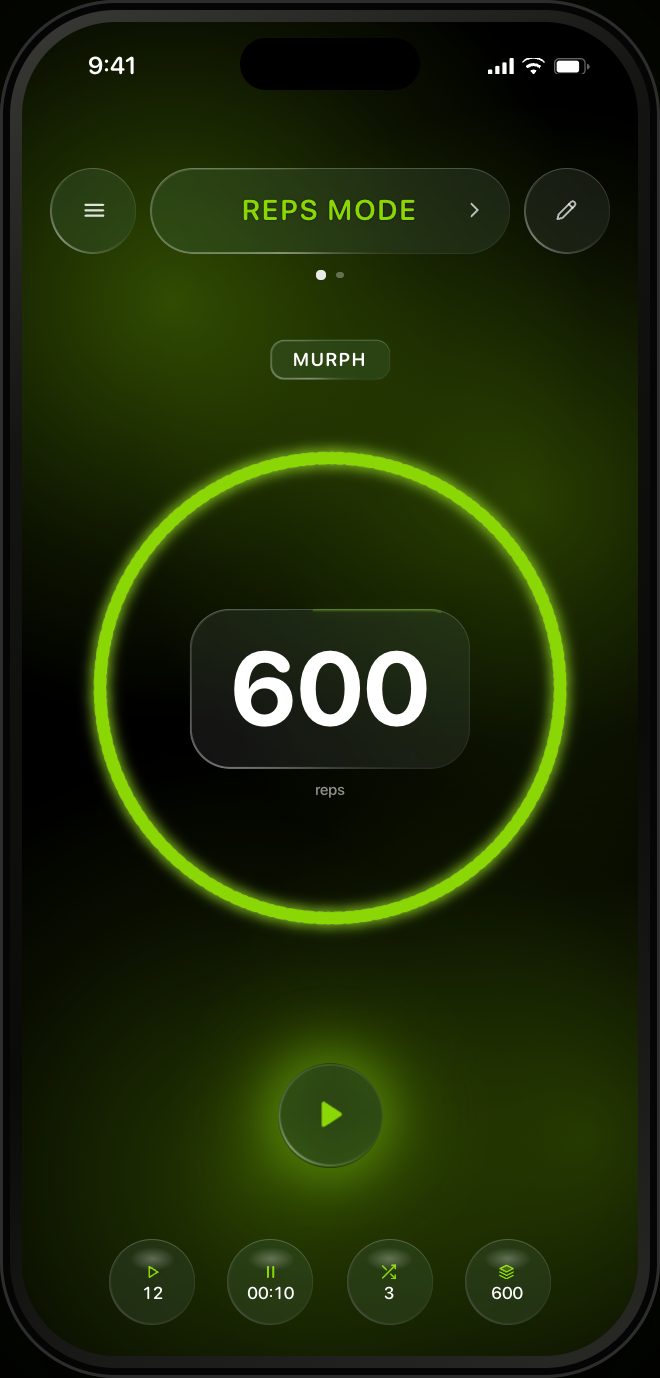
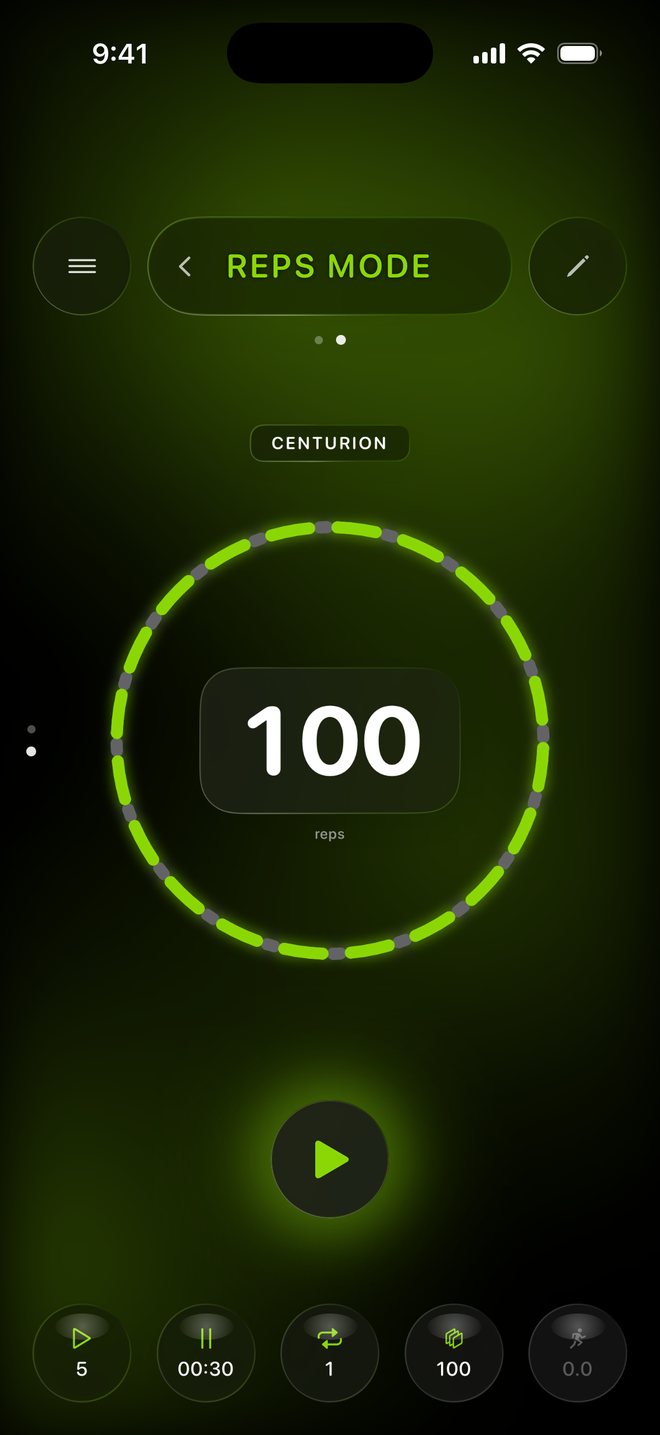
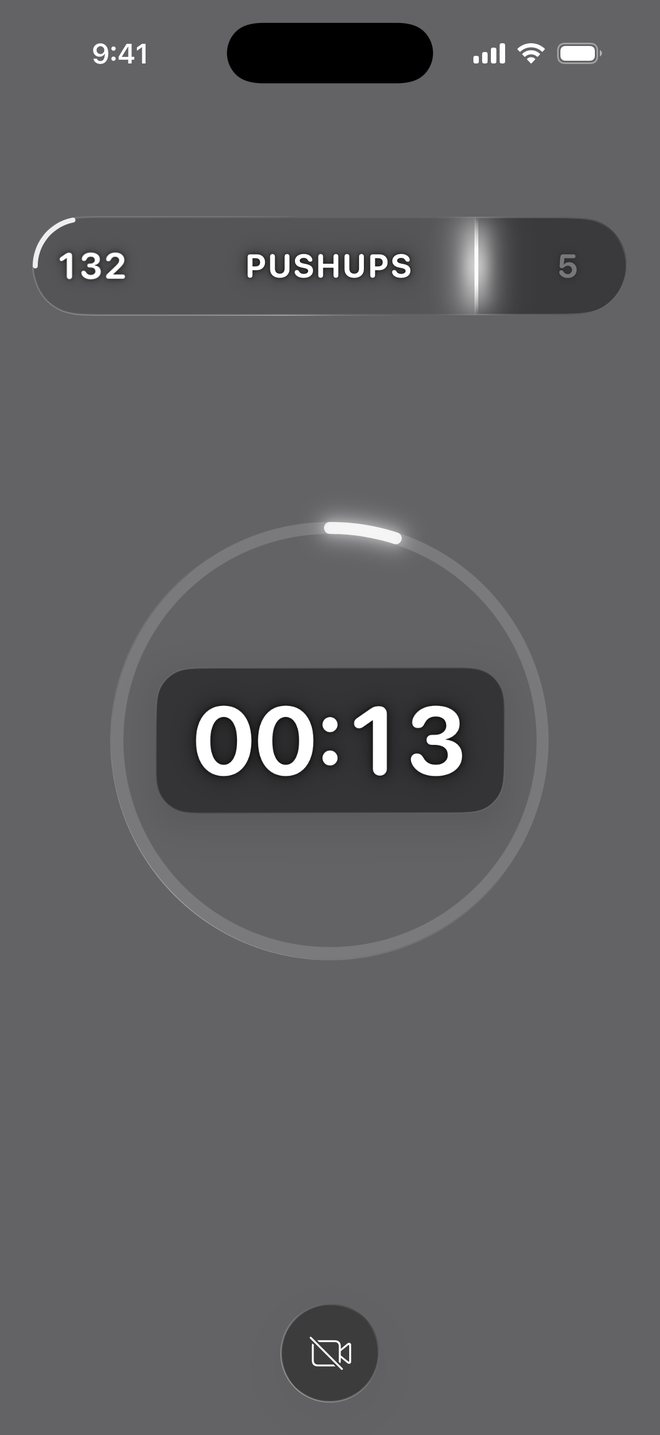
- Open the PUSHUP TEST. Swipe sideways to REPS, then up or down to PUSHUP TEST: one set of as many reps as you can before the clock runs out.
- Pick SNATCHES. Tap the exercises circle, fourth from the left, then the exercise under the ring to open the list. On WEIGHTS, tick SNATCHES, then untick PUSHUPS. The set stays MAX.
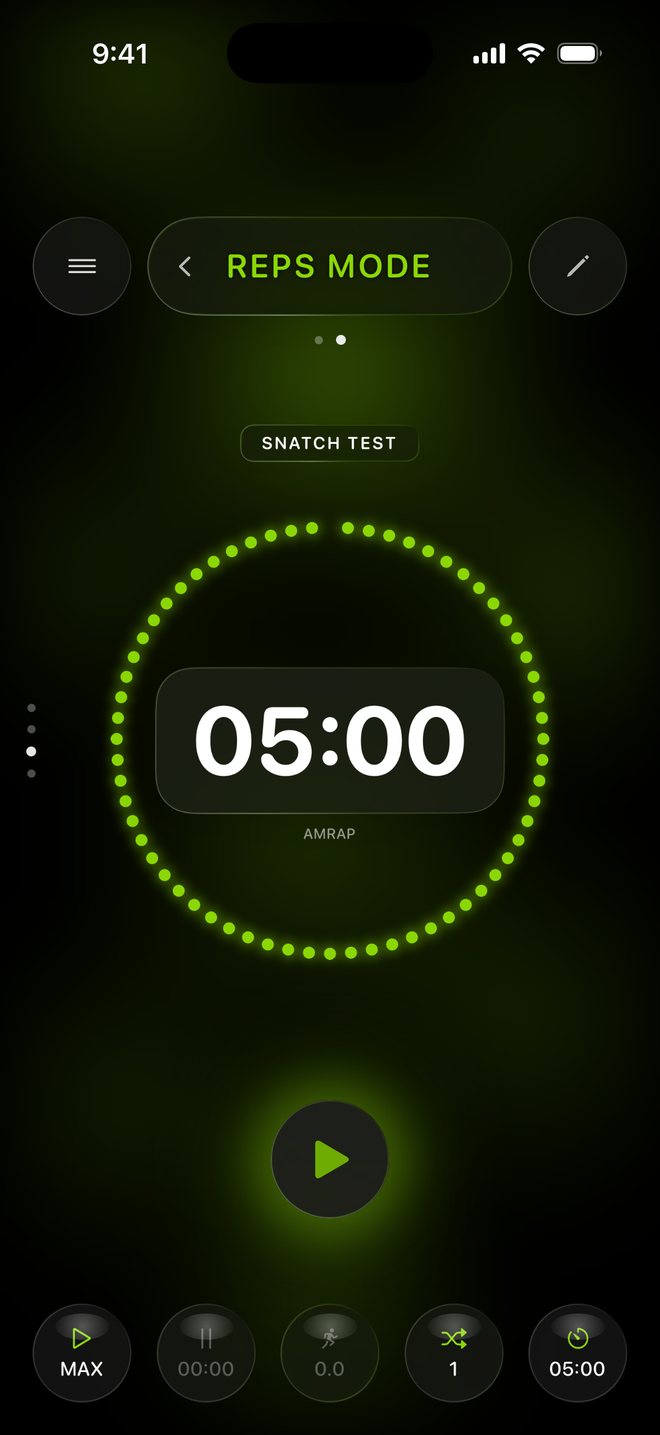
- Set the clock. The last circle is the time: 5:00 for the test, 10:00 for the Secret Service test, 3:00 for the seniors' test. It goes from 1 to 60 minutes.
- Keep it. Once you change the page, the pencil at the top right turns into a tick, with a + under it. Tap the + and name it SNATCH TEST: it is saved as a new workout next to the PUSHUP TEST, a swipe up or down away.
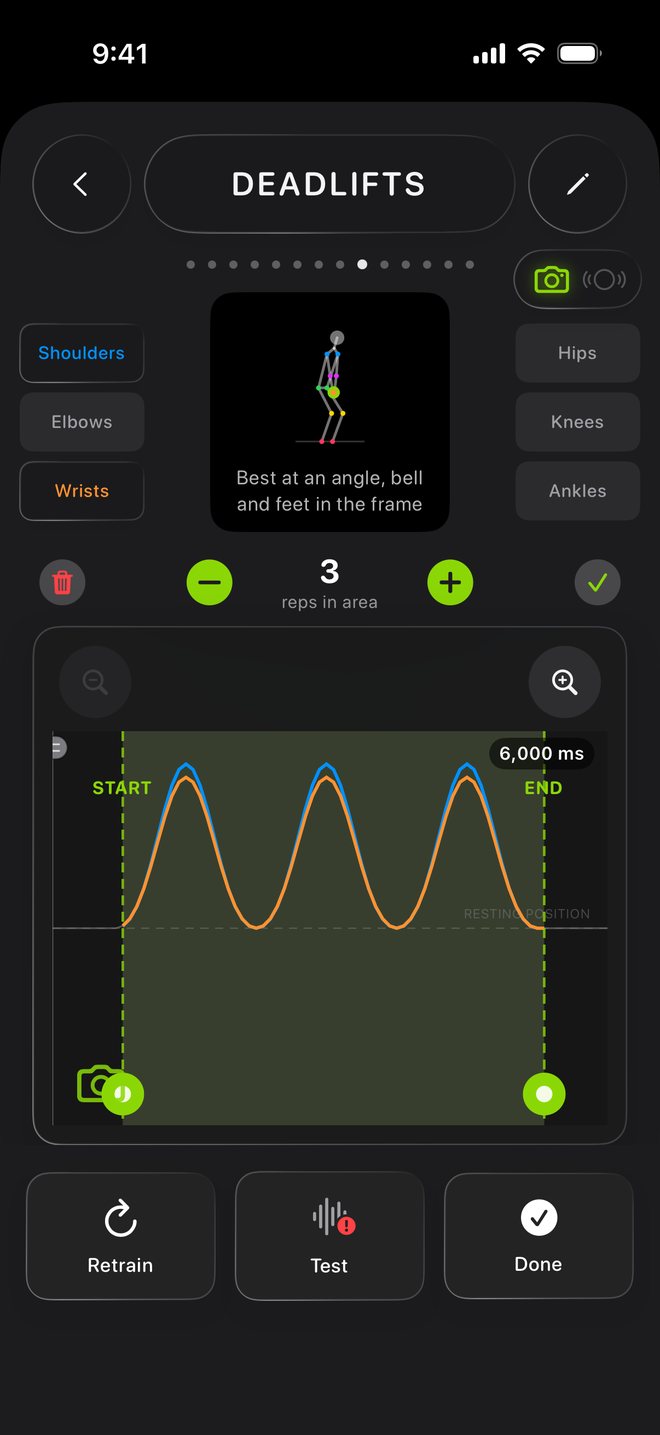
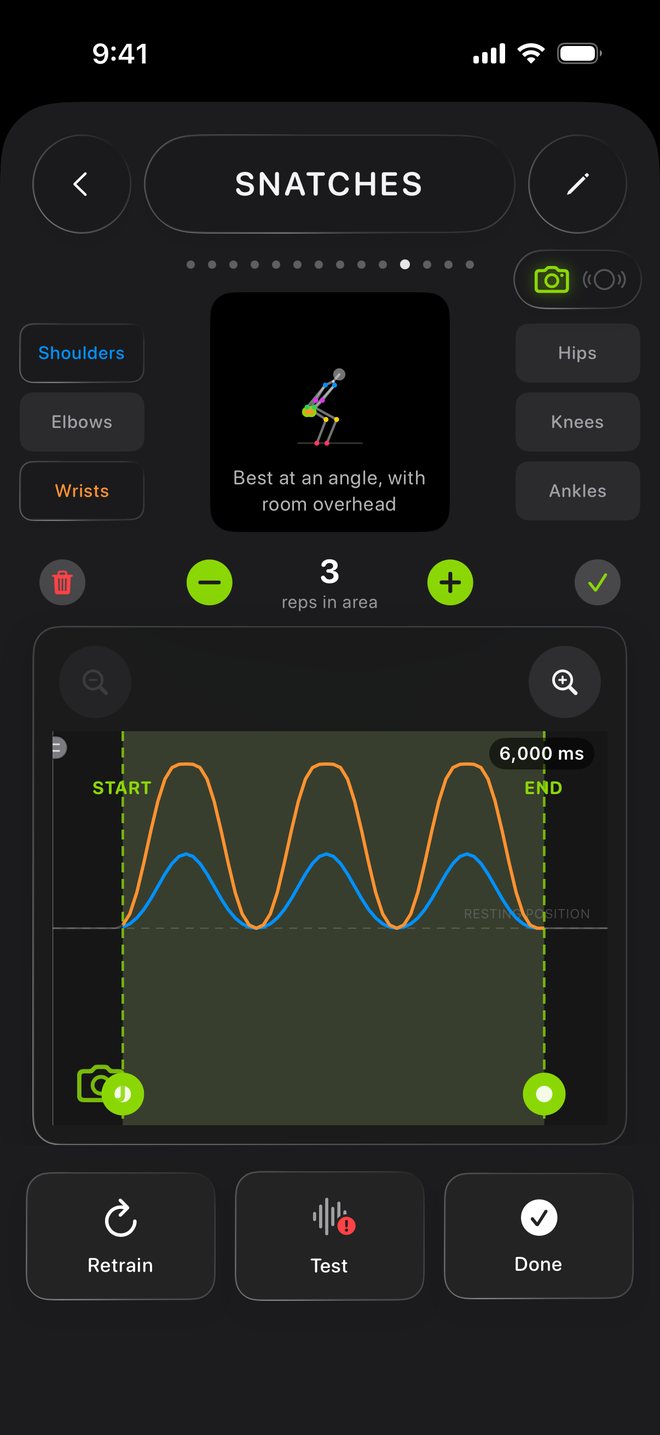
- Set up the phone. Stand it about 2 meters (6 feet) away, at an angle to you and well out of the bell's path, with room overhead in the frame. To check the spot first, open Trainer, WEIGHTS, SNATCHES and tap Test.
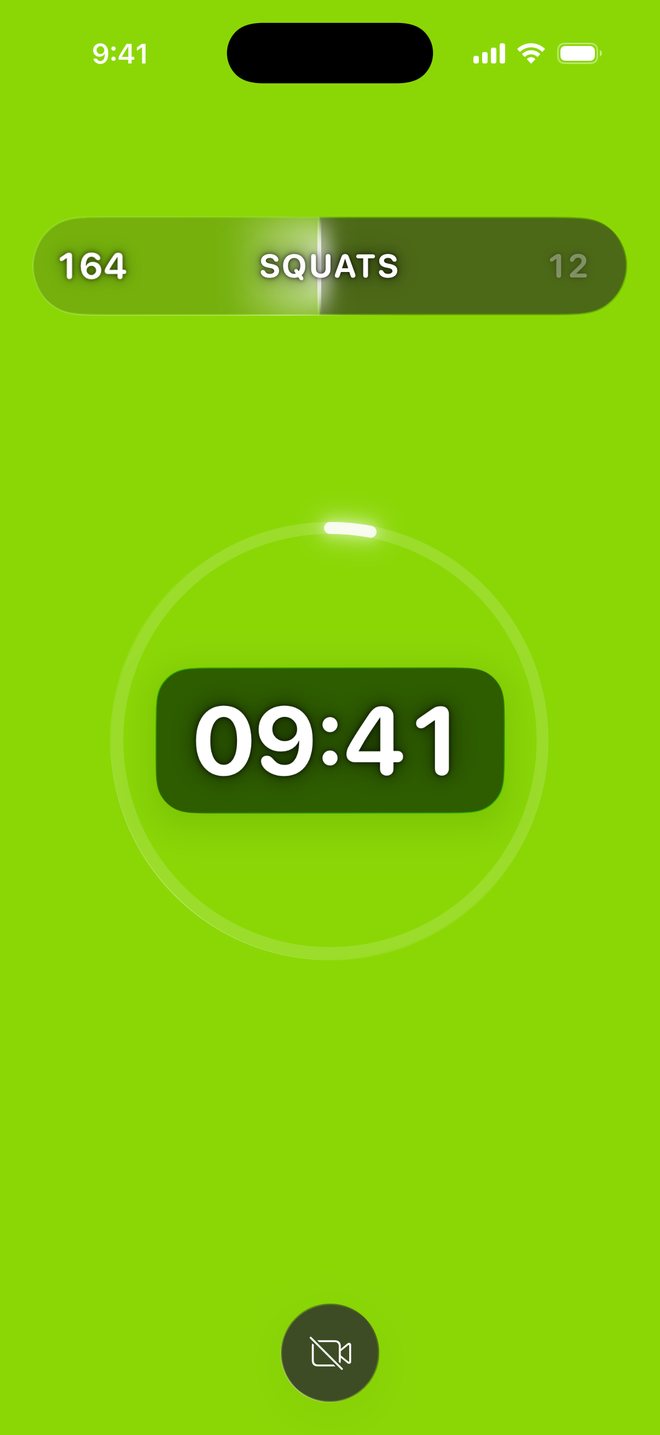
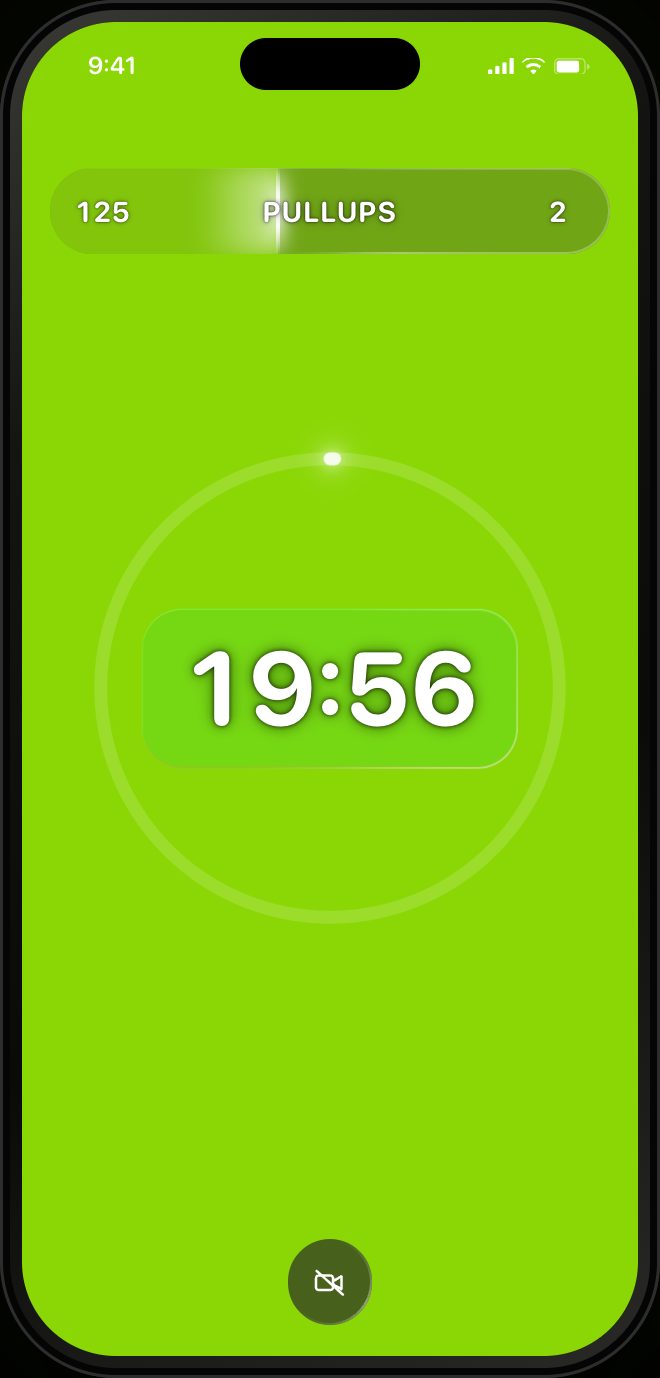
- Press play and snatch. The clock counts down while the camera counts your snatches. Set the bell down whenever you need to: the clock keeps running, as in the real test. When it runs out, your total is saved.
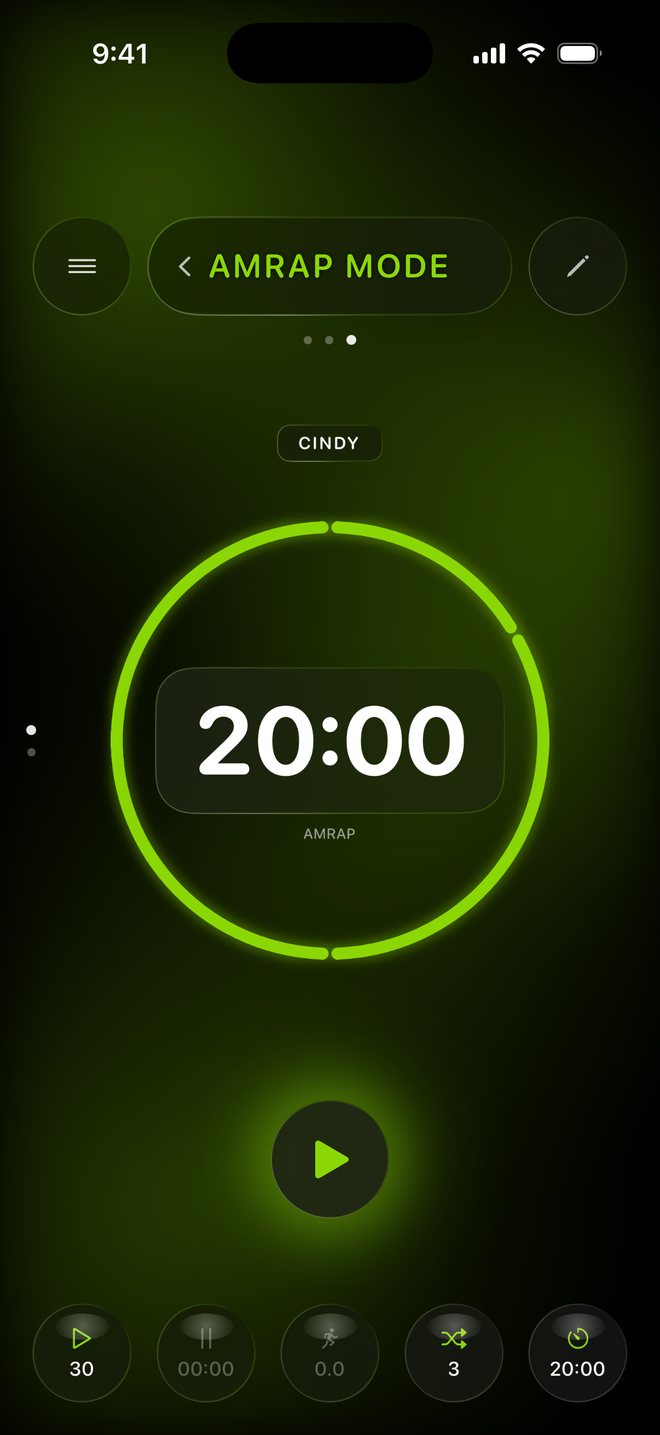
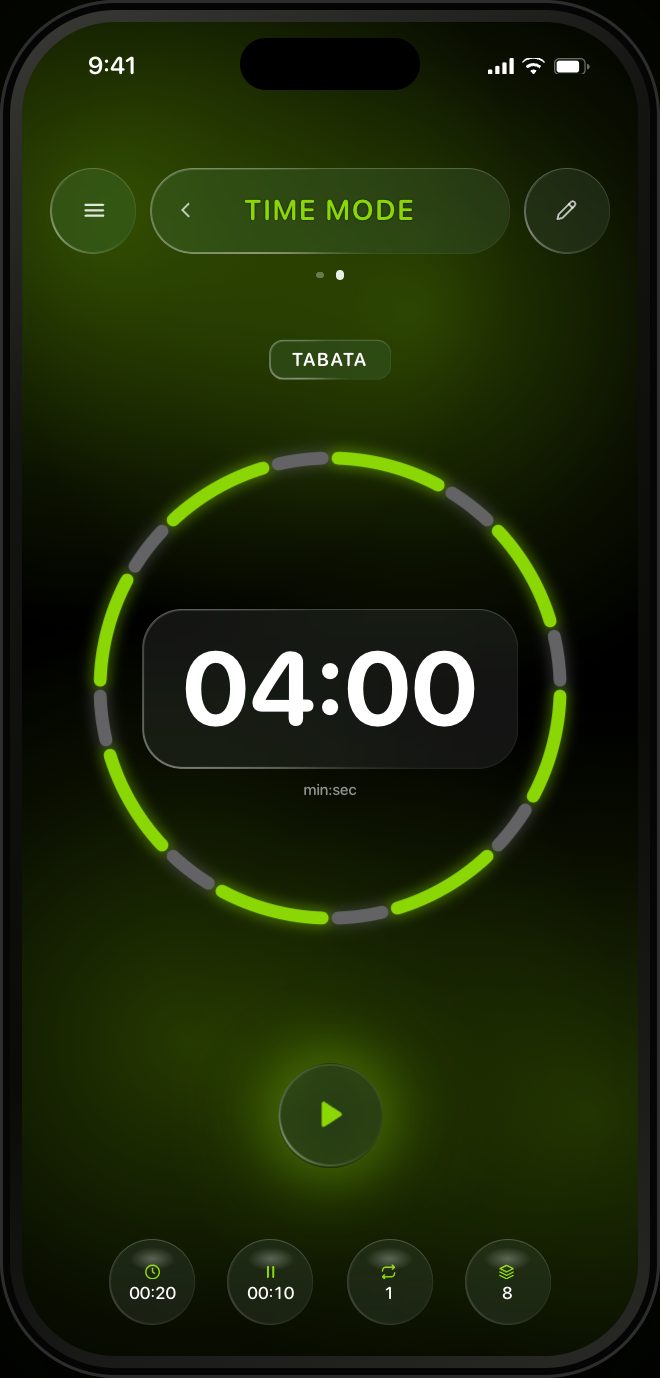
For the 15:15 workout, use TIME instead: 0:15 of work, 0:15 of rest and 40 rounds, with SNATCHES as the exercise. Your snatches build your SNATCHES rank, from Private to General of the Armies. One arm reps count toward it in pairs, a left and a right counting one, so both sides have to do the work.
Sources
- StrongFirst. SFG I kettlebell certification requirements: snatch test, bells and rules.
- Dragon Door. RKC certification requirements: snatch test, bells and rules (as archived 12 June 2025).
- Toshner D. The snatch: the tsar of kettlebell lifts. StrongFirst, 2023. The Secret Service Snatch Test.
- International Union of Kettlebell Lifting. Regulation of the IUKL Monthly Online International Cup, 2024.
- Falatic JA, Plato PA, Holder C, and colleagues. Effects of kettlebell training on aerobic capacity. Journal of Strength and Conditioning Research, 2015.
- Porcari J, Schnettler C, for the American Council on Exercise. Kettlebells: twice the results in half the time? ACE, 2010.
- Chan M, MacInnis MJ, Koch S, and colleagues. Cardiopulmonary demand of 16-kg kettlebell snatches in simulated Girevoy Sport. Journal of Strength and Conditioning Research, 2020.
- Lyons BC, Mayo JJ, Tucker WS, Wax B, Hendrix RC. Electromyographical comparison of muscle activation patterns across three commonly performed kettlebell exercises. Journal of Strength and Conditioning Research, 2017.
- Lake JP, Hetzler BS, Lauder MA. Magnitude and relative distribution of kettlebell snatch force-time characteristics. Journal of Strength and Conditioning Research, 2014.
- Ross JA, Keogh JW, Wilson CJ, Lorenzen C. External kinetics of the kettlebell snatch in amateur lifters. PeerJ, 2017.
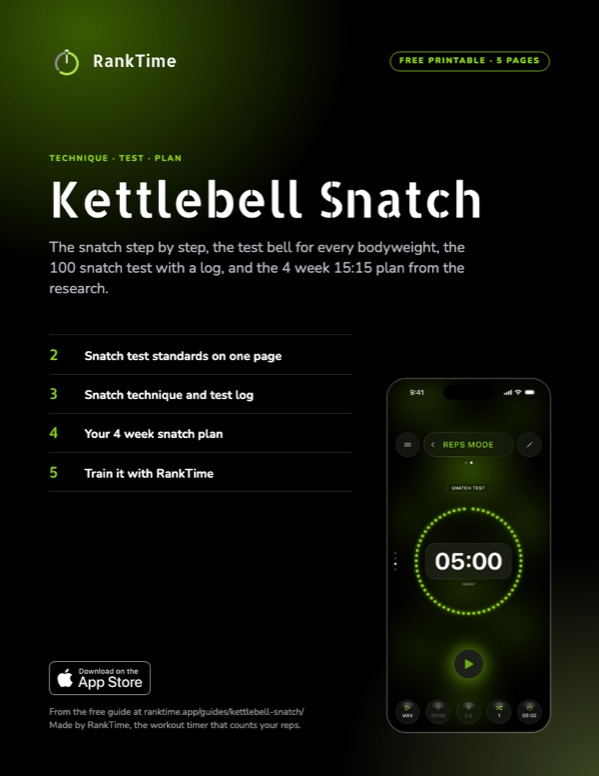
Print it: test standards, a test log and a 4 week plan
Five printable pages: every snatch test and its bells on one page, the technique with a log for 12 tests, and the 4 week 15:15 plan from the research.
Download the free PDF
Snatch with RankTime
Snatches counted by the camera with either hand, a 5 minute test clock you set once, 15:15 intervals, and a military rank that grows with every rep.

More guides