100 Push-Ups a Day: What It Does and How to Get There
Updated October 19, 2026 · 7 minute read
One hundred push-ups a day is one of the most popular fitness challenges there is: no gym, no equipment, and about ten minutes of your day. It works, as long as you build up to it and know what it will and will not do for you. Here is how to split the reps, how to get there from any starting point, and how to keep your joints happy along the way.
What is the 100 push-ups a day challenge?
| Reps | 100 push-ups a day |
|---|---|
| Sets | As many as you need |
| Time | 5 to 15 minutes |
| Equipment | None |
| Usual length | 30 days, or for as long as you keep the habit |
The only rule is the number. You do not have to do all 100 in one go. Most people split them into sets, either in one session or spread across the day, and that is how the challenge is meant to be done.
What 100 push-ups a day will do for you
- More push-ups in one set. This is the most reliable result. Doing the same movement every day builds endurance quickly, and most people see their best single set climb within a few weeks.
- A stronger chest, shoulders, triceps and core. A push-up is a moving plank. Your chest, the front of your shoulders and the back of your arms do the pushing, while your abs and glutes hold your body straight.
- Some muscle, if you are new to training. Beginners do build muscle from push-ups. Once 100 a day feels easy, growth slows down, because no single set is hard anymore.
- A habit that sticks. Ten minutes fits into any day, and showing up daily is half the benefit.
What it will not do is burn much fat on its own. A hundred push-ups take a few minutes and burn a few dozen calories. It also trains only the muscles that push, so it can leave your back and legs behind. Treat it as one part of your training, not all of it.
How to split the 100
There is no single right way. Pick the split that fits your level and your day:
- 20 sets of 5. Short sets with 30 seconds of rest. Every set stays easy, so your form stays clean. The best start for most people, and the default in RankTime.
- 10 sets of 10. Fewer, harder sets. A good next step once your best single set is past 20.
- Spread through the day. 10 easy push-ups every hour or so, never close to failure. This is sometimes called greasing the groove, and it adds up without ever wearing you out.
- A ladder. Climb up and back down: 5, 10, 15, 20, 20, 15, 10, 5. That is exactly 100. The big sets in the middle push your limit, and the small ones at the end let you finish clean.
Build up from where you are
Before you start, test yourself. Do as many push-ups as you can in one set with good form, write the number down, and pick your starting point:
| Fewer than 10 | Start with 50 a day in sets of 5. Do any set you cannot finish on the floor as incline push-ups, with your hands on a bench, a table or a wall. Add 10 reps a week until you reach 100. |
|---|---|
| 10 to 25 | Start at 100 a day in sets of 5, with 30 to 60 seconds of rest. If a set starts to fall apart, rest longer rather than grinding out bad reps. |
| 25 to 40 | 100 a day in sets of 10. When that feels easy, cut the rest. |
| More than 40 | 100 a day in sets of 20 to 25, or make each rep harder: lower slowly, pause at the bottom, or put your feet on a step. |
Test again every two weeks. If your best set is going up, the plan is working. If it is going down, or a joint aches, you are doing too much: drop the daily number for a week, then build back up.
Good push-up form
- Hands just wider than your shoulders, roughly under them, fingers pointing forward.
- One straight line from head to heels. Squeeze your glutes and brace your abs so your hips do not sag or pike up.
- Elbows at about 45 degrees from your body, not flared straight out to the sides.
- Full range. Lower until your chest is close to the floor, then push all the way back up to straight arms.
- Every rep the same. Half reps are easier to count and do much less for you.
Should you do 100 push-ups every day?
Most healthy people can, once they have built up to it. Your muscles recover quickly from push-ups. Your joints are the thing to watch: wrists, elbows and the front of the shoulders take the same load every day, and a small ache can turn into an injury if you push through it.
- Take a day off when a joint hurts. Missing one day costs nothing. A sore shoulder can cost you a month.
- Change your hand position. Switch between your normal width, a little wider and a little narrower, or use push-up handles to keep your wrists straight.
- Balance it with pulling. Rows or pull-ups keep your shoulders healthy when you push every day.
- Sleep and eat enough. That is when the muscle is actually built.
If you have a shoulder, elbow or wrist injury, or a heart condition, check with a doctor or physical therapist before you start a daily challenge.
How to do 100 push-ups with RankTime
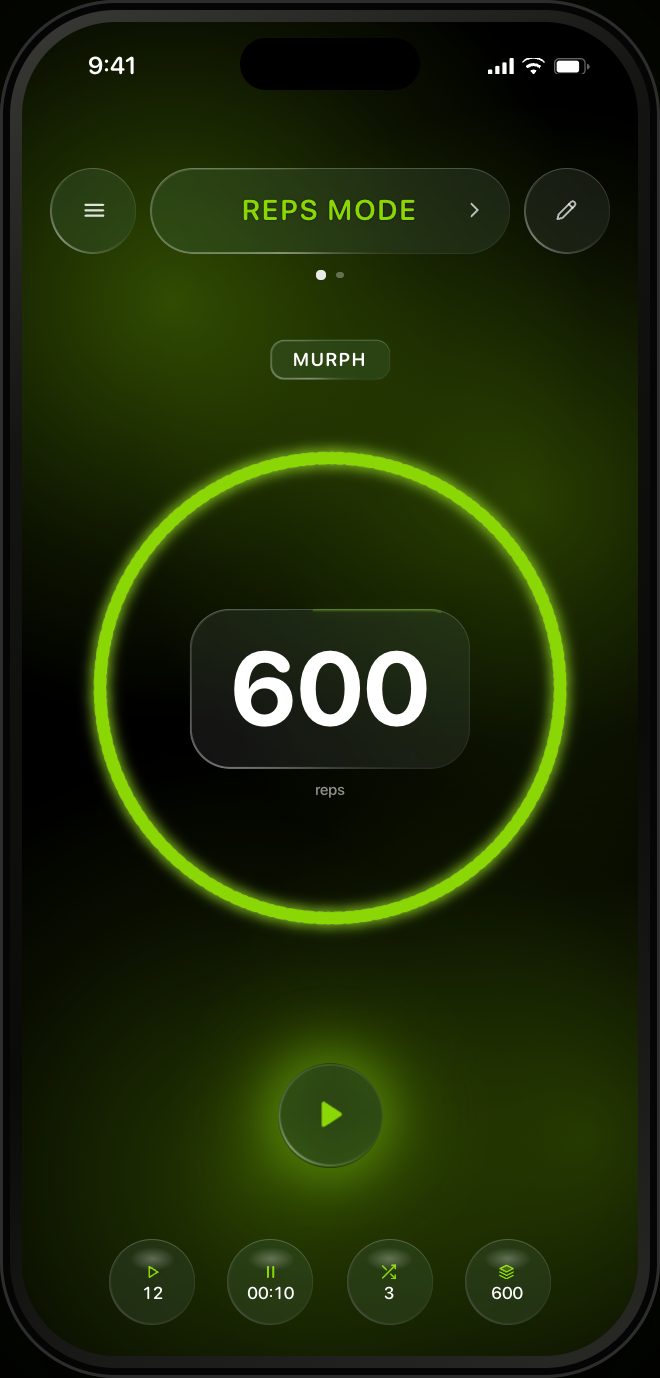
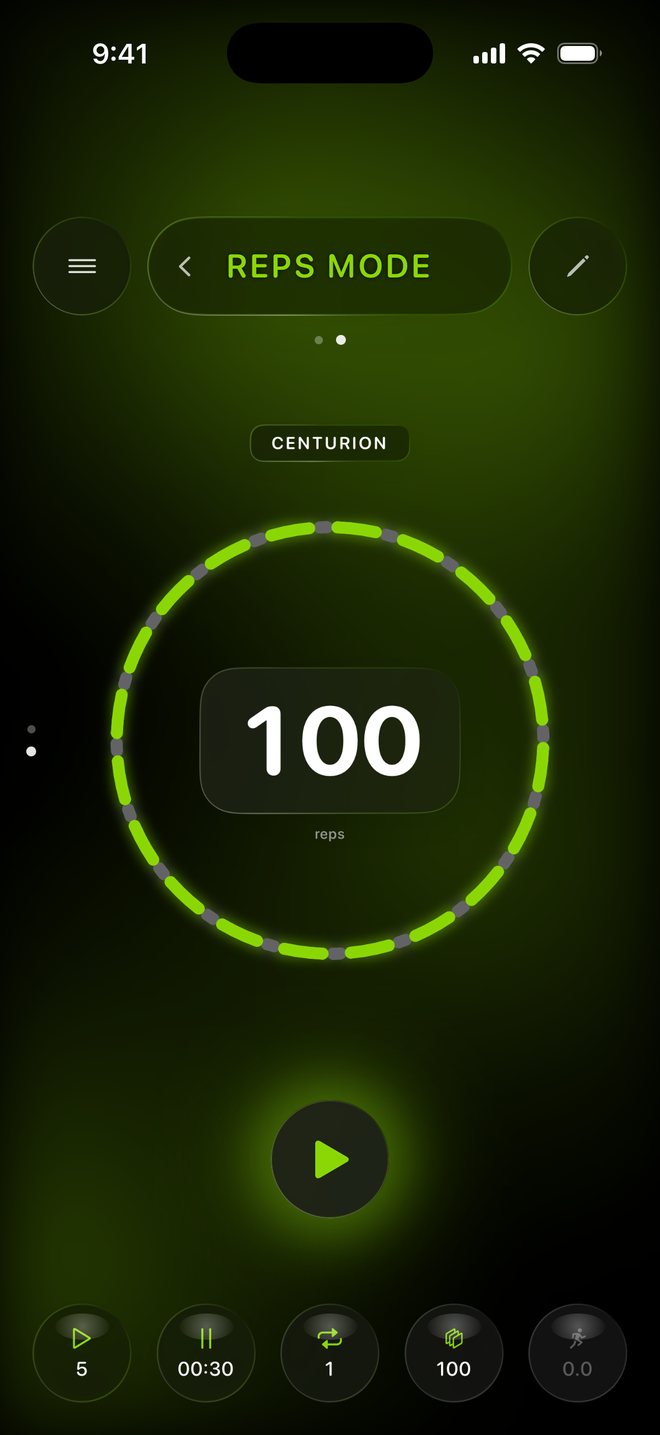
RankTime has this challenge built in. Open the app, swipe to REPS mode and pick CENTURION: 100 push-ups in sets of 5, with 30 seconds of rest between sets. The ring shows all 20 sets before you press play.
- Prop the phone up where it can see you, about 2 meters (6 feet) away, with your whole body in the frame.
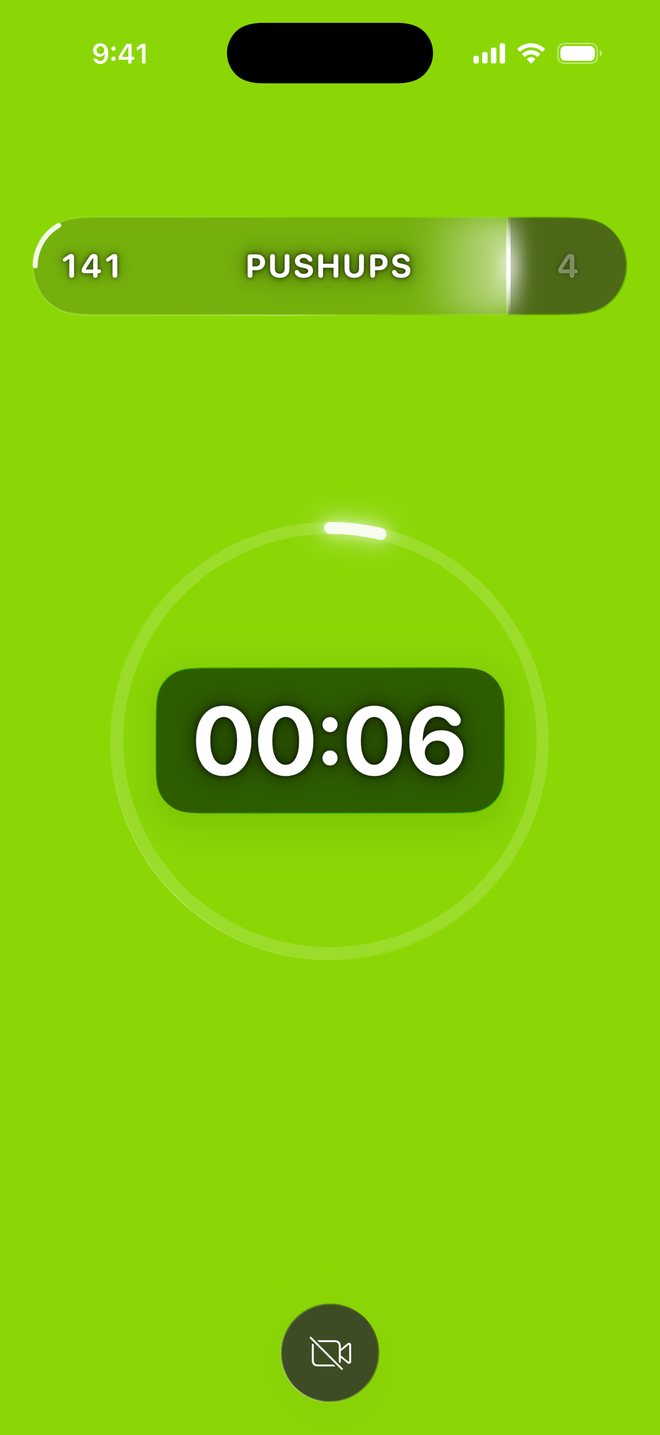
- Press play. A short get ready countdown gives you time to get into position.
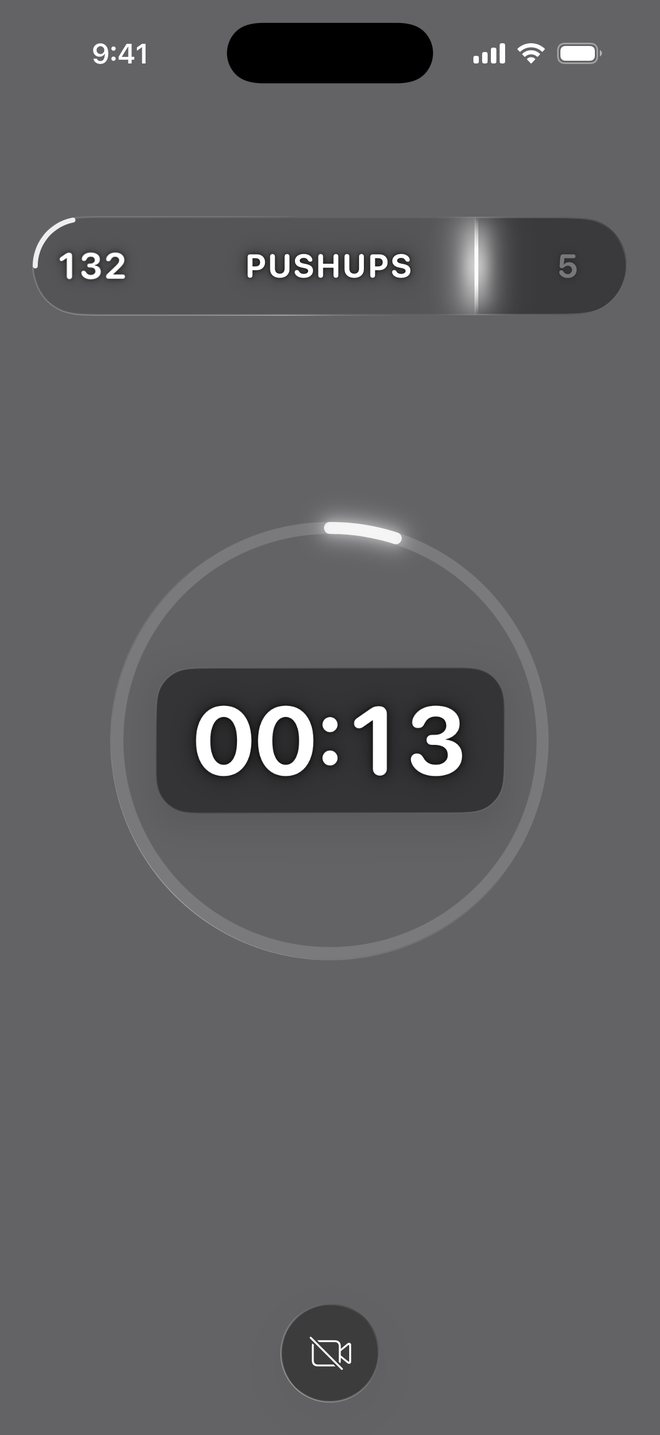
- Let the camera count. Push-ups come trained out of the box, and the counting happens on the phone itself. Nothing is uploaded. As soon as you finish the 5 reps of a set, the rest starts on its own.
- Rest when it turns grey. The screen turns lime again when the next set starts, with sound and vibration cues so you do not need to look.
- Bank the reps. Every push-up counts toward your rank, and training on three separate days in a week earns that week's medal.
Want 10 sets of 10 instead? Tap the Reps/Set circle at the bottom and change it. For the ladder, tap the same circle, switch it to Ladder and type 5-10-15-20-20-15-10-5. The ring redraws every set before you start.

Do your 100 with RankTime
CENTURION ready on launch, camera rep counting, heart rate, and a military rank that grows with every push-up.

More guides